
The Ten Strongest Arguments Against Mass Immigration
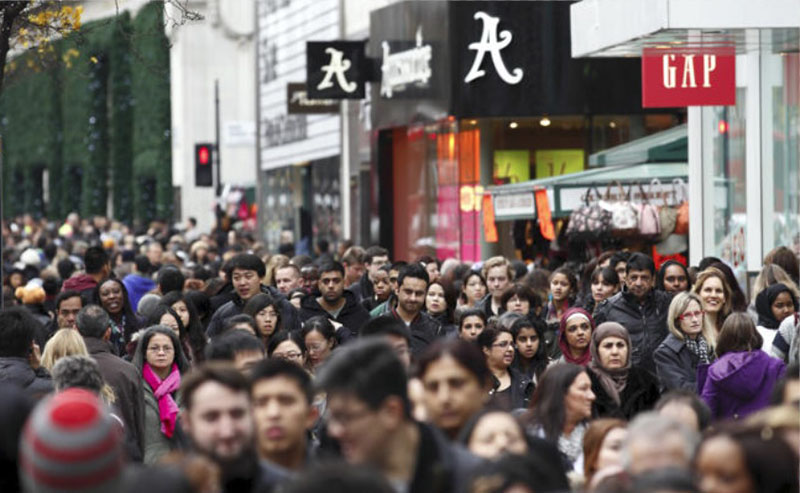
Across Europe, America, Australia, Canada and New-Zealand immigration has become the issue that now dominates politics like no other. Elites consistently frame the debate in narrow economic terms, GDP growth, labour shortages, and demographic ageing, while ordinary citizens experience something far more personal: streets, schools, neighbourhoods, and daily rituals that feel increasingly alien. Many sense that the society they grew up in is changing faster than they can psychologically or emotionally process. This creates a widening disconnect between the political class, often insulated in affluent, homogeneous enclaves, and the public, who feel the cultural, communal, and existential dimensions most acutely. Immigration has shattered traditional left–right alignments precisely because it exposes the limits of both market fundamentalism and rootless cosmopolitanism.
When governing institutions no longer reflect the settled will or lived experience of the historic majority, the foundations of democratic consent begin to erode. What follows are the ten strongest arguments against mass immigration.
1. The Democratic Argument: Defying the Consent of the Governed
Democracy presumes that majorities have a legitimate say over the character and pace of change in their own societies. Yet polling across the Western world has shown, with remarkable consistency for decades, that most citizens want substantially lower immigration. This preference holds across economic cycles, political persuasions, and despite relentless media, corporate, and elite advocacy to the contrary. Even many who describe themselves as “pro-immigration” in principle recoil when confronted with the actual scale and speed of current flows.

Supporters of mass immigration who also claim to cherish democracy face an uncomfortable test: would they endorse any other major policy, taxation, healthcare, foreign policy, opposed by a persistent, cross-national majority? The answer is almost always no. The refusal to respect the public’s settled view on immigration therefore constitutes a significant democratic deficit. It reveals that the policy is sustained by business lobbies seeking cheap labour, politicians chasing future voters, and cultural elites for whom border scepticism is a moral failing rather than a legitimate preference. When a democracy systematically ignores its own people on the question of who gets to join the polity, it ceases to be fully democratic.
2. The Communitarian Argument: The Necessity of Shared Norms and Solidarity
Politics is not the neutral arbitration of atomised individuals bearing abstract rights; it is the collective pursuit of a common good. That pursuit requires a “we”, a community possessing sufficient shared history, language, norms, and mutual understanding to deliberate meaningfully and trust one another enough to sacrifice for collective projects.
Mass immigration dilutes this foundation. Ethnicity, culture, and a sense of shared peoplehood have historically supplied the strongest principle of unity in most successful societies. When newcomers arrive in numbers large enough to form parallel communities rather than integrate into an existing one, politics shifts from deliberation about the common good to competitive bargaining between groups. Relativism becomes the only viable public philosophy: no culture may be judged superior, no norm may be enforced as core. The state increasingly appears as a dispenser of resources to rival factions rather than the embodiment of a shared inheritance.
Robert Putnam’s research in Bowling Alone and related studies documented the result, greater ethnic heterogeneity correlates with lower interpersonal trust, reduced civic engagement, diminished volunteering, and a retreat into private life. People “hunker down.” The only political energy that often remains is protest and grievance. A politics of duties and mutual obligation gives way to a thinner, more individualistic, and ultimately more fractious order.

3. The Alienation and Social Trust Argument: Diversity’s Empirical Cost
The communitarian diagnosis finds powerful empirical confirmation. Meta-analyses, including a major 2020 review from the University of Copenhagen examining dozens of studies, conclude that ethnic heterogeneity is strongly and negatively associated with social trust. Putnam’s own data showed that in the most homogeneous American communities, social trust was roughly twice as high as in the most diverse. Heterogeneous neighbourhoods display lower trust in neighbours, lower confidence in local institutions, and higher alienation.
When diversity is engineered rapidly through policy, the psychological and sociological costs compound. Citizens become less neighbourly, less charitable, and less politically efficacious. Alienation is measurable in declining membership in clubs, churches, and unions, and in the hollowing out of the public square. A society of strangers may produce efficient consumers, but it struggles to produce citizens capable of sustaining a generous welfare state or a vibrant democracy.
4. The Socialist Argument: Undermining Workers, Wages, and Welfare Solidarity
Traditional labour movements understood that unlimited labour supply depresses wages, weakens bargaining power, and undercuts the conditions for a robust welfare state. Trade unions in the West once opposed large-scale immigration for precisely these reasons. That insight has not been falsified by time.
Alberto Alesina and Edward Glaeser’s influential work showed that roughly half the explanation for America’s smaller welfare state compared with Europe’s lies in its greater ethnic heterogeneity: people are less willing to redistribute to those they do not see as part of their own community. Sociobiological realities reinforce this, humans display stronger empathy and willingness to cooperate with those more genetically and culturally similar to themselves, an evolutionary inheritance that no amount of moral exhortation has yet erased. Mass immigration therefore simultaneously undercuts wages for native workers (especially the least skilled) and erodes the solidarity required to fund expansive social programmes.
Capital, by contrast, benefits enormously. Interchangeable labour pools suppress costs and discipline native workers. As Noam Chomsky observed, capitalism ultimately prefers people as interchangeable producers and consumers; particularities of culture, nation, or race are nuisances to be minimised. True opponents of hyper-capitalism should therefore defend the particularity of nations and the borders that preserve them.
“capitalism is not fundamentally racist-it can exploit racism for its purposes, but racism isn’t built into it. Capitalism basically wants people to be interchangeable cogs, and differences among them, such as on the basis of race, usually are not functional. I mean, they may be functional for a period, like if you want a super-exploited workforce or something, but those situations are kind of anomalous. Over the long term, you can expect capitalism to be anti-racist-just because it’s anti-human. And race is in fact a human characteristic-there’s no reason why it should be a negative characteristic, but it is a human characteristic. So therefore identifications based on race interfere with the basic ideal that people should be available just as consumers and producers, interchangeable cogs who will purchase all of the junk that’s produced-that’s their ultimate function, and any other properties they might have are kind of irrelevant, and usually a nuisance.”
5. The Cultural Argument: The Loss of Authentic Diversity
Diversity is frequently praised, yet mass immigration often destroys the very cultural distinctiveness it claims to celebrate. Culture is not a set of interchangeable consumer options or public festivals, it is the living expression of a particular people in a particular place across time.
We all understand this, I think, on a deep level. If we took out all of the people in Japan and replaced them with Europeans, would Japanese culture still exist? Would you still want to visit Japan to see Japanese culture, or would it be something different? It’s not just a geographic location. It’s just sort of an accidental set of traditions that happen to exist in this geographical space.
Culture is the expression of a people. And when you have mass immigration, when you have a diversity of groups in one place, there is what they call multiculturalism, but really it ends up being a monoculturalism because you can’t have any of these groups assert their identity as the core identity. You have to have this kind of mediation, this kind of friendly, every belief is as good as every other, and that ultimately leads to just a nihilism of belief where no one’s been really expressing authentic tradition and the public space just turns into a place for consumerism, for contracts, for individual interaction. So something great is being lost in this move towards globalism, and mass immigration really accelerates that.
6. The Liberty Argument: Diversity’s Authoritarian Shadow
Another sad consequence we can observe in countries that have experienced mass immigration is a great loss of liberty. We see this in the rise of hate speech laws across Western countries, which are now being explicitly accelerated in Australia. No one even considered the idea of hate speech laws 40-50 years ago in Australia, but now we apparently need them.
And why do we need them? Because we’ve got all these different peoples here, and we have to protect them from bigotry and assault in the public square. That’s why we have hate speech laws. The most ironic thing is that non-white groups are often the most racist toward each other, yet the laws are nearly exclusively applied to European groups.
In the UK, there are over 3,000 arrests a year for social media posts, this is closely linked to having a very heterogeneous society. As societies become more heterogeneous, we see more free speech crackdowns. The police become more militarised, with less community-oriented policing and more centralised control. There is also far more surveillance through CCTV and other means, for pretty clear reasons. One study found that in French social housing, the more heterogeneous the housing blocks were, the higher the rates of burglaries and vandalism of public spaces. This kind of disorder necessitates a crackdown on liberty, extra surveillance and extra policing.
And this is something classical liberals understood. Today, people who call themselves classical liberals often claim it means not having a nation and believing that anyone can be anything. But that isn’t the case. The philosophers of Enlightenment liberalism considered nationalism and patriotism natural sentiments. They thought these could be married to their broader cosmopolitan ideals. There’s a quote from John Stuart Mill, that great Anglo-liberal, who said “free institutions are next to impossible in a country made up of different nationalities”. History has largely vindicated that quote. If people truly value liberty and want to avoid an overarching police state, then they should value more homogeneous communities. Mass immigration undermines that.
7. The Environmental Argument: Unsustainable Numbers
This argument is rarely made today because modern environmental movements tend to align politically with the left, which generally supports high immigration and open-border policies. But historically, that wasn’t always the case. Just as labour unions once opposed mass immigration on economic grounds, many environmental groups also opposed it because they saw overpopulation and rapid population growth as fundamentally incompatible with environmental conservation. Even organisations like the Sierra Club previously raised concerns about the ecological consequences of large-scale immigration-driven population growth.
In the United States, numerous species are now at risk of extinction due to urban sprawl, habitat destruction, and increasing population pressures. Much of this growth is concentrated in states such as Florida, which have experienced some of the highest levels of net migration. As cities expand outward to accommodate growing populations, native habitats are steadily consumed. In effect, biodiversity is being sacrificed to sustain continuous demographic expansion.
Similar trends have been identified in Europe. A study titled The Effect of Population Growth on the Environment: Evidence from European Regions found that immigration-driven population growth was a major contributor to habitat loss across European regions. The study concluded that reducing immigration levels would significantly improve outcomes for European biodiversity over the course of this century. Under nearly every projected migration scenario, except those involving very low net migration, environmental pressures and biodiversity loss were expected to worsen considerably.
Beyond biodiversity, there are broader environmental pressures linked to rapid population growth: water shortages, overcrowded cities, worsening traffic congestion, and strained public transport systems. In most Western countries, birth rates are already below replacement level, meaning these pressures are overwhelmingly driven by immigration-led population growth rather than natural increase. There are also concerns surrounding freshwater depletion, destruction of aquatic habitats, and overfishing. As migrants move from poorer countries to wealthy Western nations, their consumption levels tend to rise substantially. Energy use, carbon emissions, and material consumption all increase dramatically. Some studies suggest that the average migrant to the West more than triples their energy consumption after arrival due to the much higher-consumption lifestyles of developed economies.
This creates an obvious contradiction within contemporary climate politics. Governments across the West frequently argue that citizens must reduce their carbon footprints to combat climate change. Yet a study from the Center for Immigration Studies estimated that immigrants in the United States collectively produce hundreds of millions of additional tons of CO2 annually compared to the emissions they would have generated in their countries of origin. In other words, moving large populations from low-consumption societies into high-consumption economies significantly increases global emissions on a per capita basis.

If reducing carbon emissions is treated as an existential priority, then encouraging policies that dramatically increase per capita consumption appears difficult to reconcile with that objective. Yet this tension is rarely discussed openly within mainstream environmental debates, despite being one of the most obvious contradictions within modern environmental politics.
8. The Housing Argument: Supply and Demand
This is one of the most intuitive arguments against mass immigration, and it is often the issue ordinary people notice first in their daily lives. When population growth rapidly increases through immigration, demand for housing rises alongside it. More people are competing for the same limited supply of homes, rental properties, and apartments. Under the basic logic of supply and demand, when demand rises faster than supply, prices increase. The result is higher rents, more expensive housing, and greater competition for accommodation.
Even setting aside debates about wages or economic productivity, the cost of housing affects nearly everyone, particularly the working and middle classes. A society may be able to offset some labour-market pressures through productivity gains or wage policies, but it cannot easily avoid the consequences of surging housing demand in already constrained markets.
Despite how obvious this relationship appears, surprisingly few academic studies have examined it directly. Yet the studies that do exist often produce stark findings. One notable example is the 2009 paper Immigration and Housing Bubbles: Evidence from Spain, which analysed the period between 1998 and 2008. The study found that the average Spanish province experienced an immigrant inflow equivalent to roughly 70% of its initial working-age population during that decade. According to the authors’ estimates, this influx increased housing prices by approximately 52% and accounted for 37% of all new housing construction during the period.
In other words, large-scale population growth driven by immigration substantially increased housing demand and played a major role in inflating property prices.
The same tension can be observed across much of the Western world today. Countries such as Australia are experiencing severe housing shortages, rising homelessness, and spiralling rents, while simultaneously undergoing rapid population growth driven largely by immigration. Yet public discussion tends to focus almost exclusively on the supply side of the equation: build more homes, increase density, expand construction. While supply constraints are undeniably real, discussion of demand, particularly immigration-driven demand is often treated as politically untouchable.
This creates a strange asymmetry in the debate. Policymakers openly acknowledge that housing shortages are caused by too few homes, but rarely acknowledge that record population growth inevitably intensifies pressure on those homes. Immigration is therefore discussed primarily as an economic necessity, while its role in driving housing demand, rising rents, and declining affordability is frequently downplayed or ignored.
At its most basic level, the argument is not especially complicated: if millions of additional people enter a housing market faster than homes can realistically be built, housing becomes more expensive. The evidence increasingly suggests that large-scale immigration is not merely a minor contributing factor in housing crises, but one of the central drivers of them.
9. The National Security Argument: Risks Foreign and Domestic
There are several ways in which large-scale immigration can affect national security and social stability within a state. One of the most obvious concerns relates to illegal immigration and the criminal networks that emerge around it. Human smuggling has become an immensely profitable industry, particularly along the southern border of the United States and during the European refugee crisis. Organised gangs and traffickers have earned billions by transporting migrants across borders, often charging enormous sums to move people from regions such as North Africa or the Middle East into Europe. In this sense, weak border enforcement can unintentionally create lucrative markets for transnational criminal organisations.
However, the issue extends beyond illegal immigration alone. Large-scale legal immigration can also create complex security and geopolitical tensions, particularly in societies that become increasingly fragmented along ethnic, religious, or national lines. In times of international conflict, governments may face internal pressures from populations that retain strong loyalties, emotional attachments, or political commitments to foreign nations or causes.
This dynamic has been visible in parts of Europe over the past two decades. Several major terrorist attacks, including those in Paris, were carried out by extremists motivated in part by conflicts in the Middle East and by grievances connected to Western foreign policy. One can certainly debate whether European countries should or should not have been involved in those conflicts. Yet the broader point remains: such attacks depended upon the existence of populations within European states who felt a direct identification with overseas religious, ethnic, or geopolitical struggles.

The attacks of September 11 attacks dramatically reshaped Western politics and security policy. In the aftermath, political elites launched the global “War on Terror,” while intellectual and cultural debates increasingly focused on religion, Islam, and multiculturalism. Yet one uncomfortable reality often remained underexamined: Islamist terrorism was not historically a major internal security issue in Europe or North America prior to the era of mass immigration. The argument is that importing large populations from regions experiencing deep political, sectarian, or ideological conflicts can also import some of those tensions into the receiving society.
More broadly, highly fragmented societies can experience declining social cohesion and rising political factionalism. Ethnic, religious, or diaspora groups may organise to influence domestic politics and foreign policy in ways aligned with the interests of overseas conflicts or ancestral homelands. In countries such as the United States, foreign policy lobbying by diaspora communities has long been a feature of political life. Critics argue that, over time, this can complicate national unity and encourage policymakers to prioritise the interests of competing internal constituencies rather than a shared national interest.
There are also indirect security concerns associated with declining social trust, increased communal tensions, higher levels of policing, and urban disorder in increasingly fragmented societies. While these problems cannot be attributed solely to immigration, critics argue that rapid demographic change can intensify them, particularly when integration fails or when governments struggle to maintain a coherent civic identity.
10. The Historical Argument: Empires Fall, Nations Endure
One of the oldest principles in politics is the idea that people should, as far as possible, govern themselves. Historically, this has often taken shape through nations formed around shared culture, history, language, or ethnicity. The uncomfortable reality, however, is that when deeply distinct groups are forced to coexist within the same political system, conflict can emerge. Nobody wants this outcome, but history repeatedly demonstrates how fragile multi-ethnic states can become when competing national identities begin pulling in different directions.
If a nation-state is relatively cohesive, these tensions are often minimal. But when we examine many of the major conflicts of the twentieth century, particularly after the Second World War, ethnic and national divisions frequently sit at the centre of them.
Take the conflict in Northern Ireland, often simplified as merely a religious dispute between Catholics and Protestants. In reality, it was also fundamentally a conflict of national identity. One community saw itself as Irish and believed it belonged within the Irish nation, while another identified as British, with its own historical traditions, loyalties, and identity. The result was decades of violence known as “The Troubles,” one of the bloodiest internal conflicts in post-war Europe. Even today, large “peace walls” continue to physically separate communities in parts of Northern Ireland, illustrating how enduring these divisions can be.
A similar pattern emerged during the collapse of Yugoslavia in the 1990s. Serbs, Croats, and Bosniaks were geographically close and culturally similar in many respects, yet they still understood themselves as distinct peoples with different national aspirations. Croats did not want to be governed by a Serbian-dominated state, nor did Bosnians. The resulting wars were brutal, and ultimately the conflict was resolved not through forced unity, but through the creation of separate nation-states and political arrangements recognising distinct identities and systems of self-governance.
This is important because when ethnic conflict is studied seriously in political science or conflict-resolution theory, the starting point is rarely the denial of identity. Instead, scholars often recognise that ethnicity, national belonging, and collective identity are real forces that shape political behaviour. Many peace agreements and constitutional settlements, including consociational arrangements in places like Northern Ireland are built around acknowledging these differences and creating systems that allow groups a degree of autonomy, representation, or self-rule.
There is also a broader historical pattern worth noting. Many of the large multi-ethnic empires and ideological superstates of the twentieth century eventually fractured or disappeared. The Soviet Union collapsed into separate republics. Yugoslavia dissolved into competing nation-states. The Dissolution of Austria-Hungary ended the Habsburg imperial system. What tended to endure were nations with stronger internal cohesion and a shared sense of historical identity.
Critics of mass immigration often argue that this matters because modern Western societies are increasingly attempting to build highly diverse multicultural states without sufficiently considering the long-term pressures that can arise from competing identities, values, and loyalties. They contend that social cohesion cannot simply be legislated into existence, and that ignoring the importance of national identity risks creating the very tensions policymakers hope to avoid.
From this perspective, the argument against mass immigration is not necessarily framed as one of hostility toward other peoples, but rather as a belief that stable societies depend upon a meaningful degree of shared identity, trust, and cultural continuity. The concern is that if these foundations are weakened too rapidly, societies may become more fragmented, polarised, and conflict-prone over time.
Supporters of this view therefore argue that peaceful coexistence is best preserved not through the erasure of national distinctions, but through allowing peoples and nations a degree of continuity, self-determination, and political cohesion. Whether one agrees or disagrees with that conclusion, it is a perspective rooted less in abstract theory than in a particular reading of history and the repeated collapse of states unable to reconcile competing national identities.
Conclusion
These ten arguments converge on a single truth: mass immigration is not just one policy among others. It is a transformation of the body politic itself. Societies that ignore the democratic will, erode their own cohesion, sacrifice workers and the vulnerable, dilute their culture, constrain their liberties, damage their environment, inflate housing costs, jeopardise security, and defy the lessons of history do so at their peril. The choice is not between compassion and cruelty, but between prudent stewardship of what we have inherited and a reckless gamble with the future of Western civilisation. The public has long understood this. It is time their representatives did too.

https://celina101.substack.com/p/the-ten-strongest-arguments-against