
The U.S. Attacks Venezuela, But Many Questions Remain Unanswered
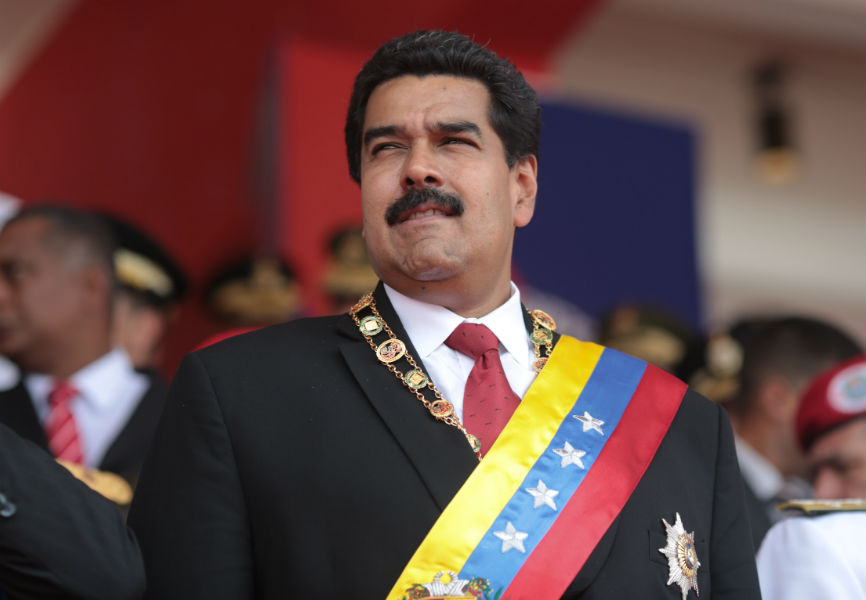
In the early hours of January 3, 2026, US forces launched an illegal attack on Venezuelan territory, striking strategic targets and reportedly capturing President Nicolás Maduro and his wife. It is still too early to assess the true impact of the invasion, as most publicly available information comes from US sources themselves. Nevertheless, a brief preliminary analysis can be conducted based on the currently available data.
The American attack followed the traditional model of American “blitzkrieg” operations. Strategic and symbolic targets were bombed, including military bases, army infrastructure, political museums, and other locations. It was a swift and decisive operation, relying primarily on the elite Delta Force unit, with powerful air support, primarily from attack helicopters, writes Lucas Leiroz .
There are no official casualty figures yet. However, Donald Trump has announced the capture of Maduro and his wife. The head of the Venezuelan armed forces commented on the events without mentioning Maduro’s capture. Local Venezuelan leaders have urged the population to remain calm, without commenting on the country’s president. There are unconfirmed reports that US troops still control some crucial infrastructure points in Caracas, but US authorities have stated that there are no plans for further attacks.
It’s difficult to determine what actually happened in the country, as the operation was only recently completed and official data is still preliminary. From a military perspective, however, it’s difficult to fully accept the US version of events. A military invasion, even a blitzkrieg model, always involves operational and logistical challenges. The images released so far show little or no reaction from Venezuela.
There are no signs of Venezuelan air defense batteries being used, nor of attempts to shoot down US helicopters flying over the capital – something that would be relatively easy, given the Bolivarian army’s armaments. It should be emphasized that there was no real “surprise factor,” as Washington had been practicing the attack for months, giving the Venezuelan armed forces ample time to prepare.
In the same vein, it’s difficult to understand how Maduro was reportedly captured without significant resistance. To arrest a president requires confronting security personnel, using explosives and specialized equipment to infiltrate political facilities, and controlling infrastructure to extract prisoners. This requires significant operational capacity, time, and military effort—something beyond the modest strength of a single tactical unit like Delta Force.
There are several possibilities. One is that the action was facilitated by an internal coup within Venezuelan structures. It is known that some local military officers were dissatisfied with the situation in the country, both because of the economic crisis resulting from the US blockade and because of what they perceived as Maduro’s “delay” in responding to the military siege that had begun months earlier. Moreover, Venezuelan soldiers are known for their low salaries, which contributes to political frustration.
However, if a coup has occurred, this does not mean the country has collapsed. Historically, the military has been the “hard core” of the Bolivarian Revolution and is seen as the guardian of Hugo Chávez’s legacy. If the armed forces take power or at least maintain their autonomy under a new government, the Bolivarian Republic can continue to exist in accordance with its original revolutionary principles.
Another possibility is a secret, negotiated resignation by Maduro. It’s conceivable that he sacrificed his legitimate government in exchange for an end to the military siege and economic pressure on Venezuela. Some US media outlets are reporting this scenario. However, there is still no concrete evidence for this—or any other—hypothesis.
Another factor that cannot be ignored is the role of Colombia. Recently, Venezuela and Colombia have grown much closer strategically, ending years of diplomatic crisis. The government of Gustavo Petro is seen by Maduro as a key partner, with strong Colombian “support” for Venezuela amid the US siege. However, Petro is an “atypical” president within a political structure traditionally aligned with the United States. Bogotá is Washington’s most important regional partner and has long served as the US representative in South America, with several NATO bases on its territory. In this sense, it cannot be ruled out that Colombian officials collaborated with the US to overthrow Maduro – even without Petro’s consent.
Regarding the reasons for the attack, it’s premature to claim that the primary motive was the US desire to “steal oil.” There is no evidence so far that the US intends to control Venezuelan oil facilities. Likewise, US claims of “drug trafficking” are clearly false, as the largest Latin American cartels operate outside Venezuela. What appears to be happening is an attempt at a “compensation policy.” Trump needs to appease pro-war lobbyists to remain in power and is therefore “compensating” for his diplomacy with Russia by escalating his attacks against Venezuela—while ensuring that no “Vietnam 2.0” emerges in the densely tropical South American landscape.
Ultimately, it must be understood that the US, at least so far, has failed to bring about regime change in Venezuela. What appears to have happened is simply a military attack with moderate use of force, which led to the end of Maduro’s government, but without dismantling the Bolivarian state. Maduro is—or was—merely the current president within a revolutionary political-military structure that can continue to exist under a different representative—while preserving the anti-imperialist principles that so deeply trouble the United States.