
The Wars of Singularity
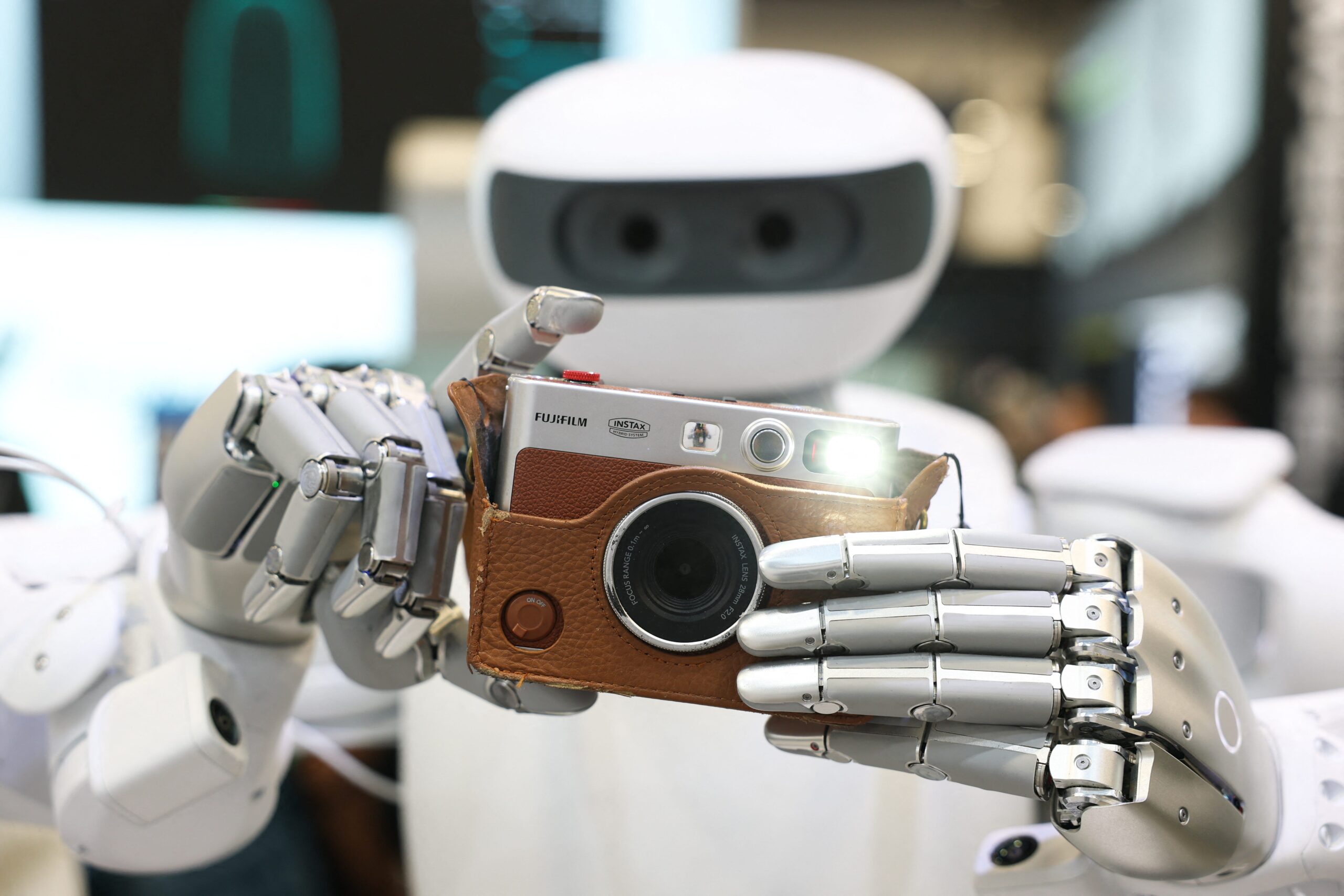
“We have entered the Singularity. 2026 is the year of the Singularity.” — Elon Musk
There has been a great deal of attention paid to AI over the last few years. It’s incredible race towards the dominant form of computing has been breathtaking. Few people knew of the term Artificial Intelligence in the early 2000s, and for most of us, our relationship with it was that it was the underlying theme of most dystopian fiction or film. It was a concept, but it seemed far-fetched to think that it would somehow become a fixture of our future. But here we are. People use ChatGPT or Grok for almost everything. I know people who have developed a pseudo-human relationship with it. Its capacity to do things from meme creation to heavy math or computing is astounding. The more it becomes a part of our experience, the less we remember what life before the easy button was like. I, for one, am terrified of it. Like any tool, there’s an inevitability that its potential goodness will soon be captured by those who want to outpace their competition for monetary or power advancement, and those of us who want to participate in a normal, tactile world will be made into servants of the well-connected and strong.
I wish we were different as creatures. I wish our nature were inherently good and that we could see things for what they are. But we are fallible beings. In my worldview, I often fall back on the inherency of man. I have come to realize in my short fifty years of living that it is easier to understand the evils and ills of humans and this place if I frame it from the perspective of human depravity. (That’s a fancy word for the fall in the garden.) People don’t like that concept. Most of us want to make an argument that people are inherently good and that it is society that corrupts us. But the longer I live, the less apt I am to give our species the benefit of the doubt on that. The scene in the garden makes far too much sense to me, especially as contrasted with the historic trajectory of mankind. Evil is the natural state of the world, and only discipline and an embracing of the spirit that was left behind at Pentecost can help overcome the built-in tendencies of our corrupt hearts. It’s not a great look, and most of us don’t see ourselves as evil, so we cannot imagine that we are born with a cancer of cruelty and selfishness in us. But in my frame of mind, there is no other way to look at it.
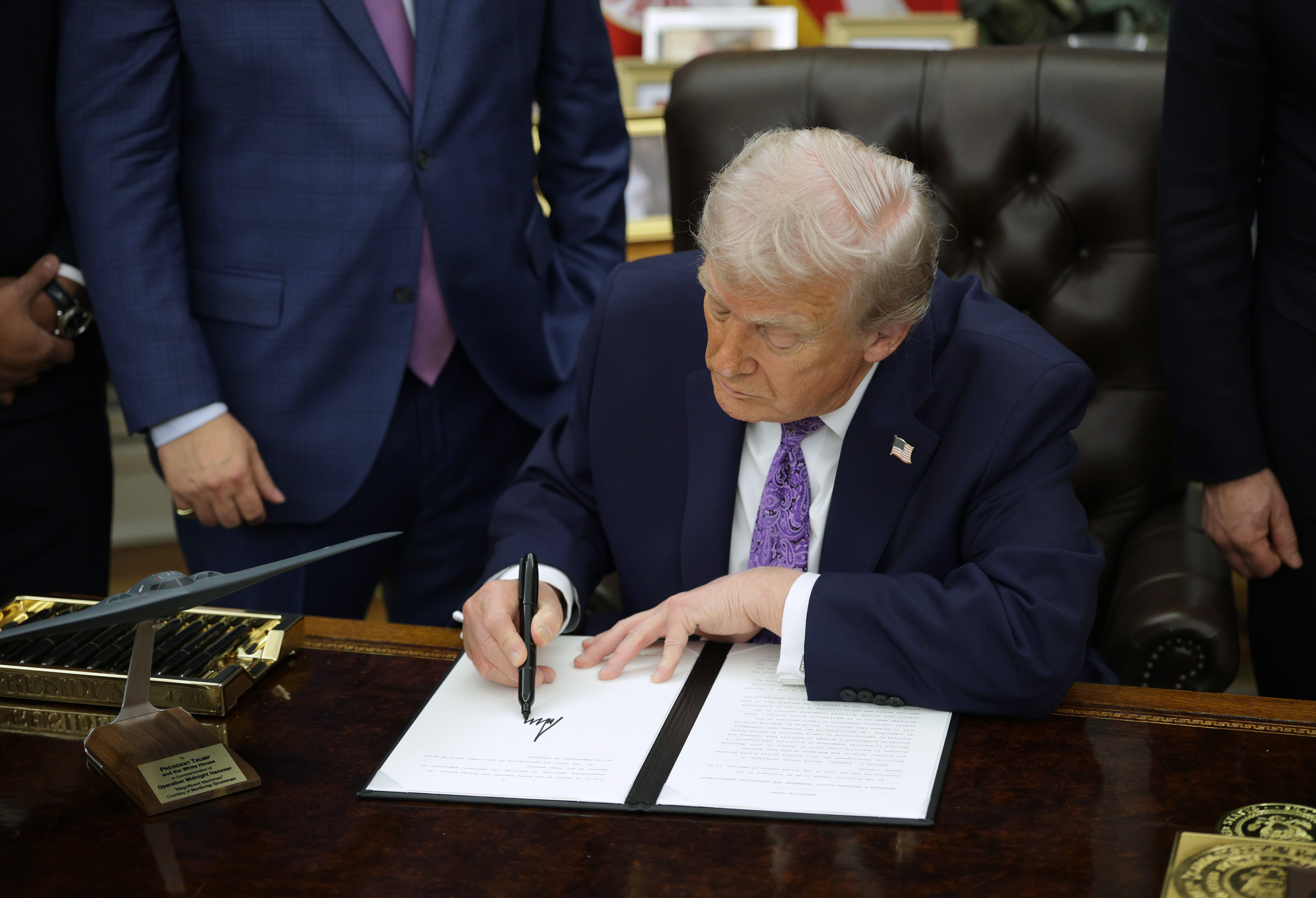
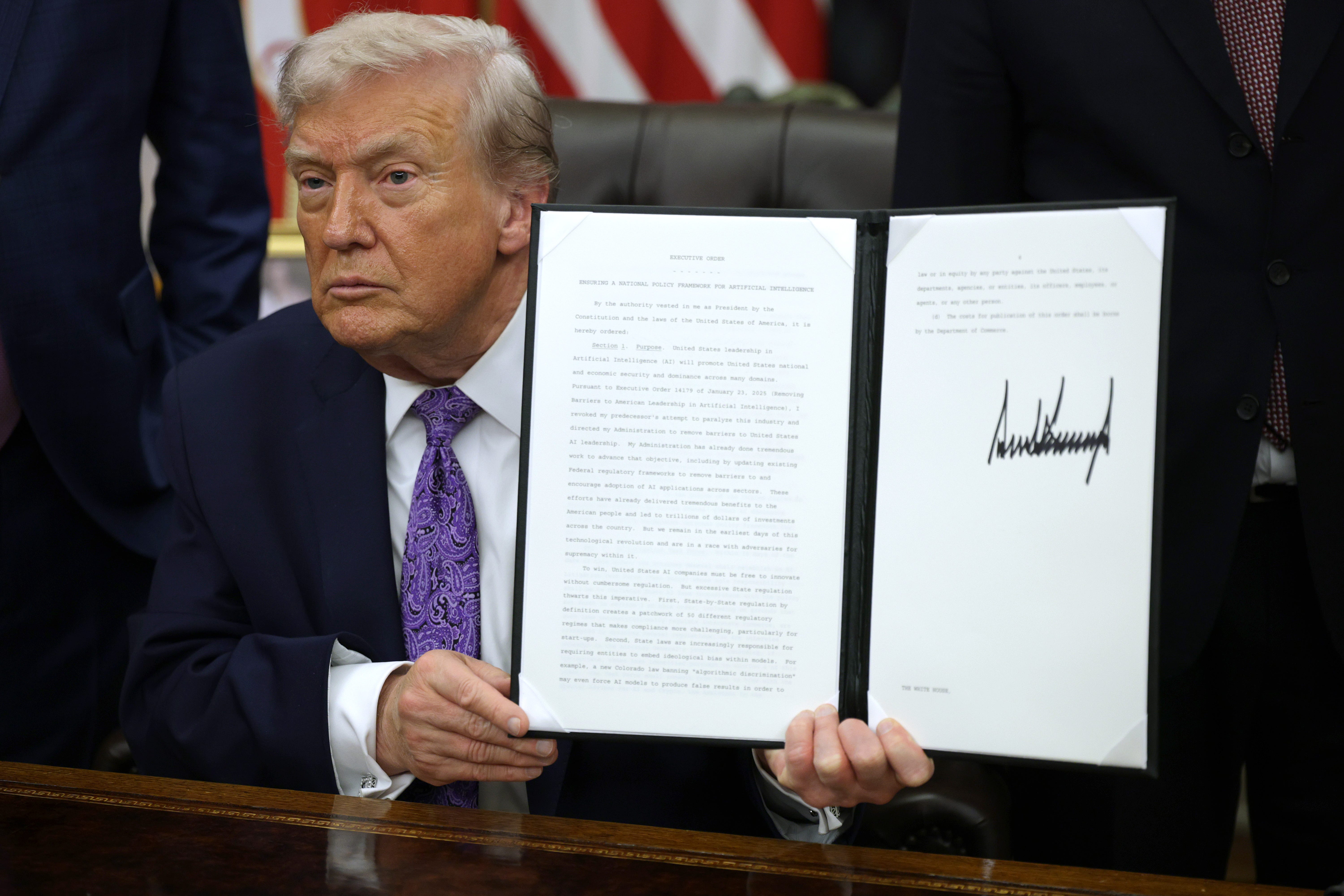
December 11: Trump Signs Executive Orders In The Oval Office. The order curbs states ability to regulate aritcifical intelligence, which the tech industry has been lobbying for.
We could debate the semantics of literal or allegorical interpretation of the Bible, particularly Genesis. Many better men than I have. But long ago, I resolved myself to the idea that it makes no difference to the outcome whether Genesis is a literal story of a man and a woman in a garden where the creating God of the universe strides beside them, or if it is a Hebrew poem. What I believe is being communicated is a truth that only God could describe. Everything about those early moments of creation points to a god who understands the depth of the human soul. Free will is an imperative to a life of faith. People must be able to reject God if there is to be any real semblance of faith. So in that garden, the story frames us as a species caught in a tumultuous decision: shall I have a comfortable life with God, or shall I be like Him?
When the great schism occurs between humanity and God, he declares a punishment for all of the species forever. Adam and Eve’s disobedience comes with a reprimand.
And to Adam he said, “Because you have listened to the voice of your wife, and have eaten of the tree of which I commanded you, ‘You shall not eat of it,’ cursed is the ground because of you; In toil you shall eat of it all the days of your life; thorns and thistles it shall bring forth to you; and you shall eat the plants of the field.
In the sweat of your face you shall eat bread till you return to the ground, for out of it you were taken; you are dust, and to dust you shall return.”
Some people of the Christian faith call this the “work curse.” God sends the humans out of the garden to a life of toil upon the ground. They will need to cultivate the earth through hardship in order to survive. God adds in that same passage that men and women will now die and return to the earth. This severed relationship is the new baseline between man and God forever. He not only separates himself from his creation, he requires a life of work, hardship and death. It is the core too of why repentance, and Christological redemption is necessary in the God/Man relationship.
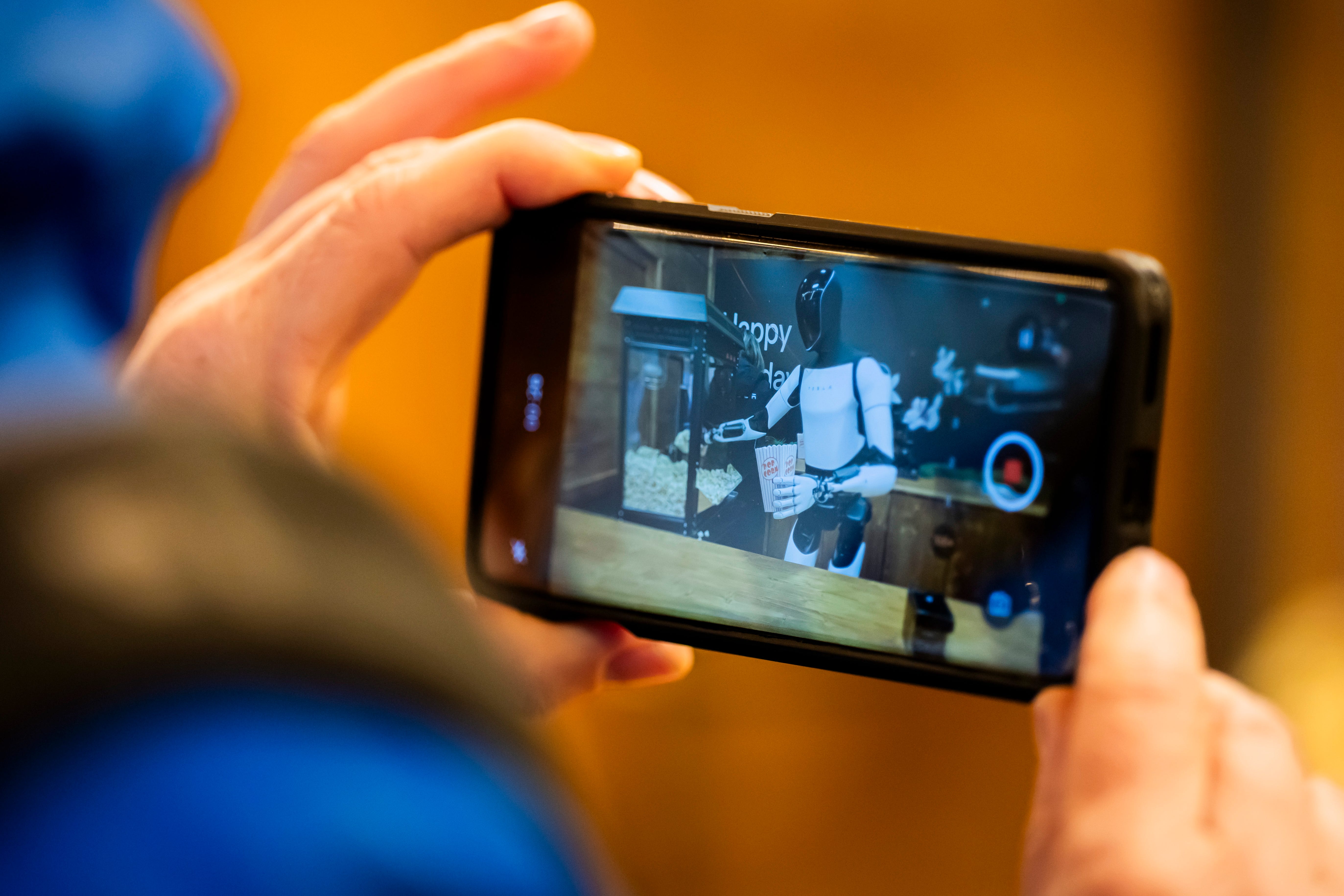
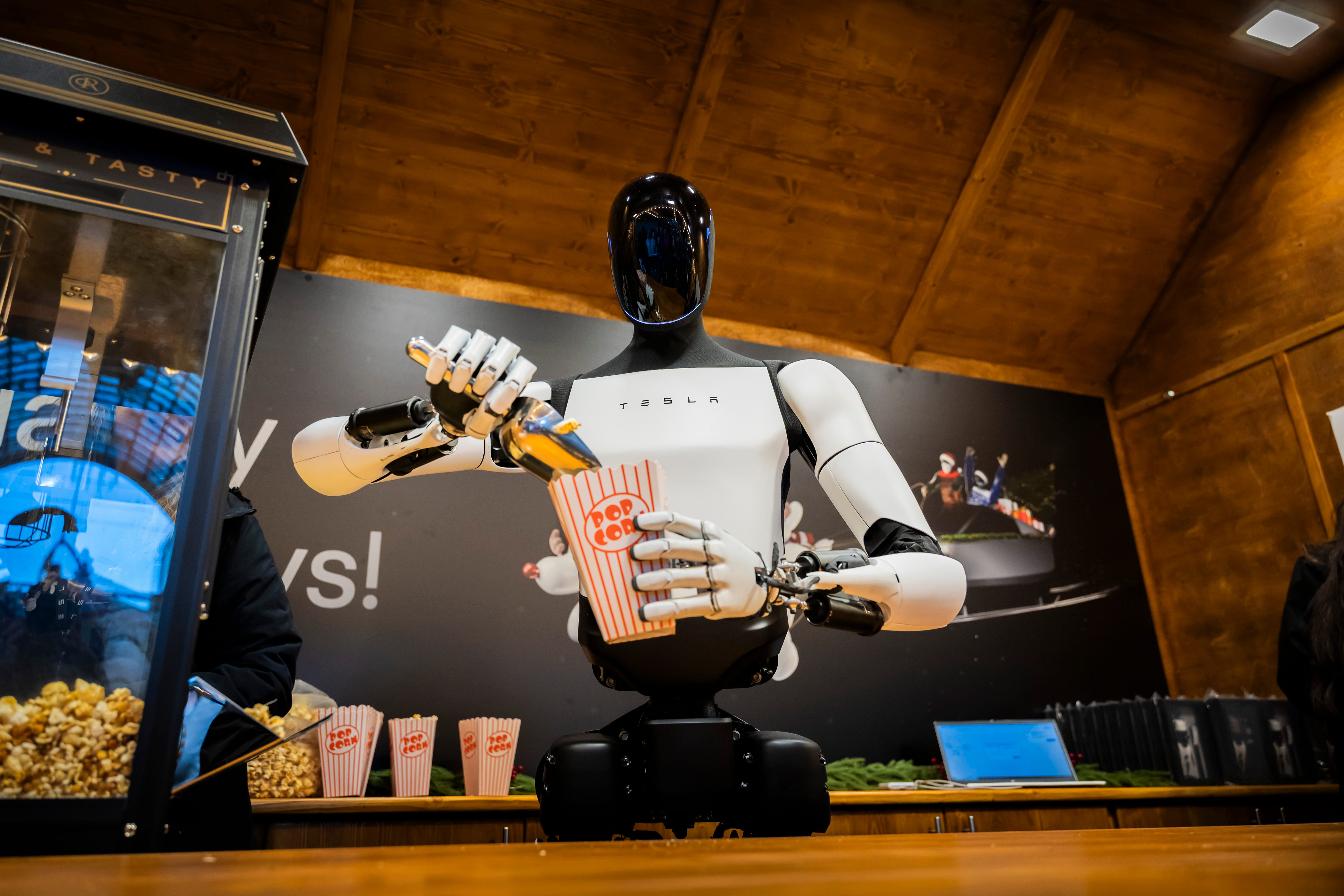
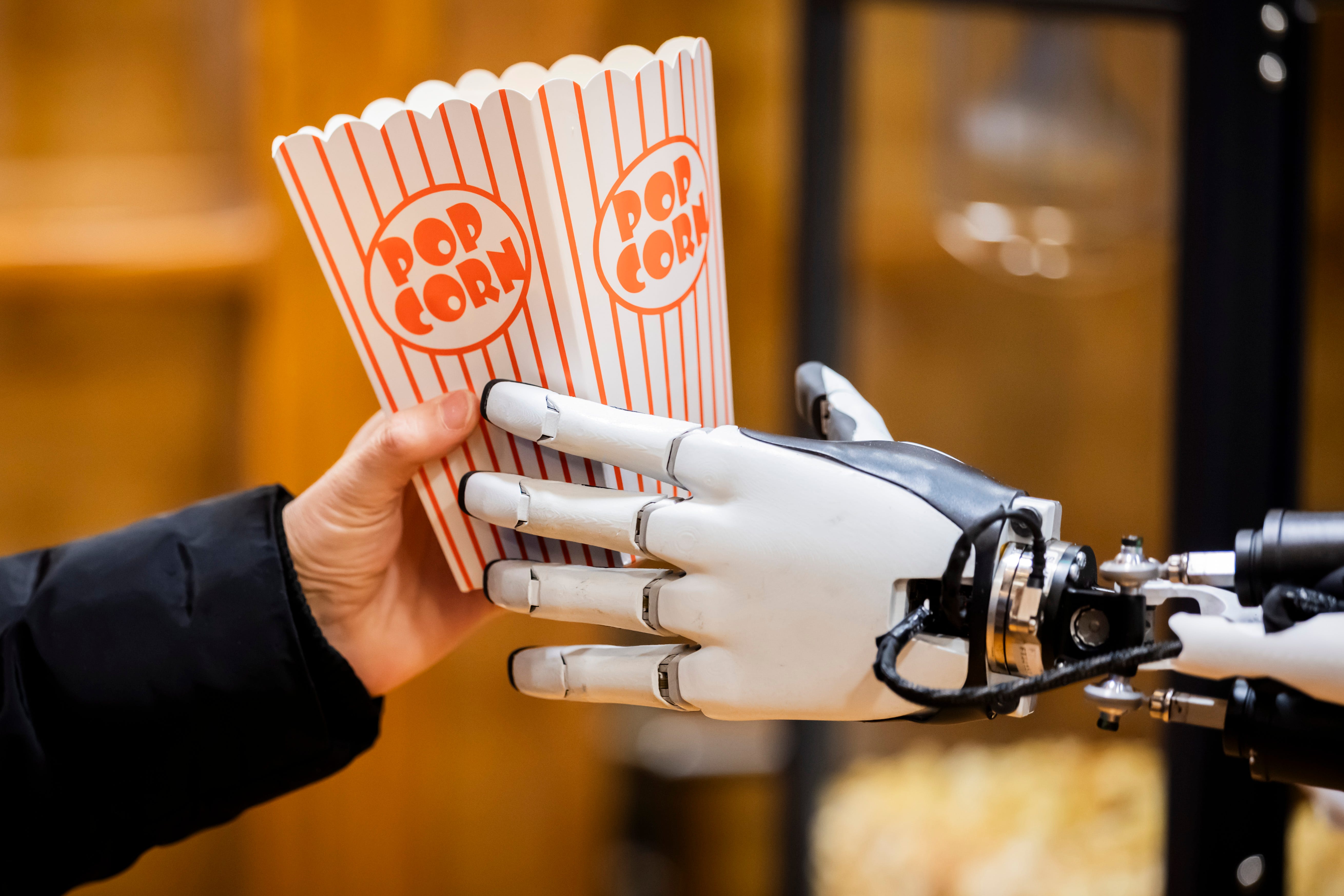
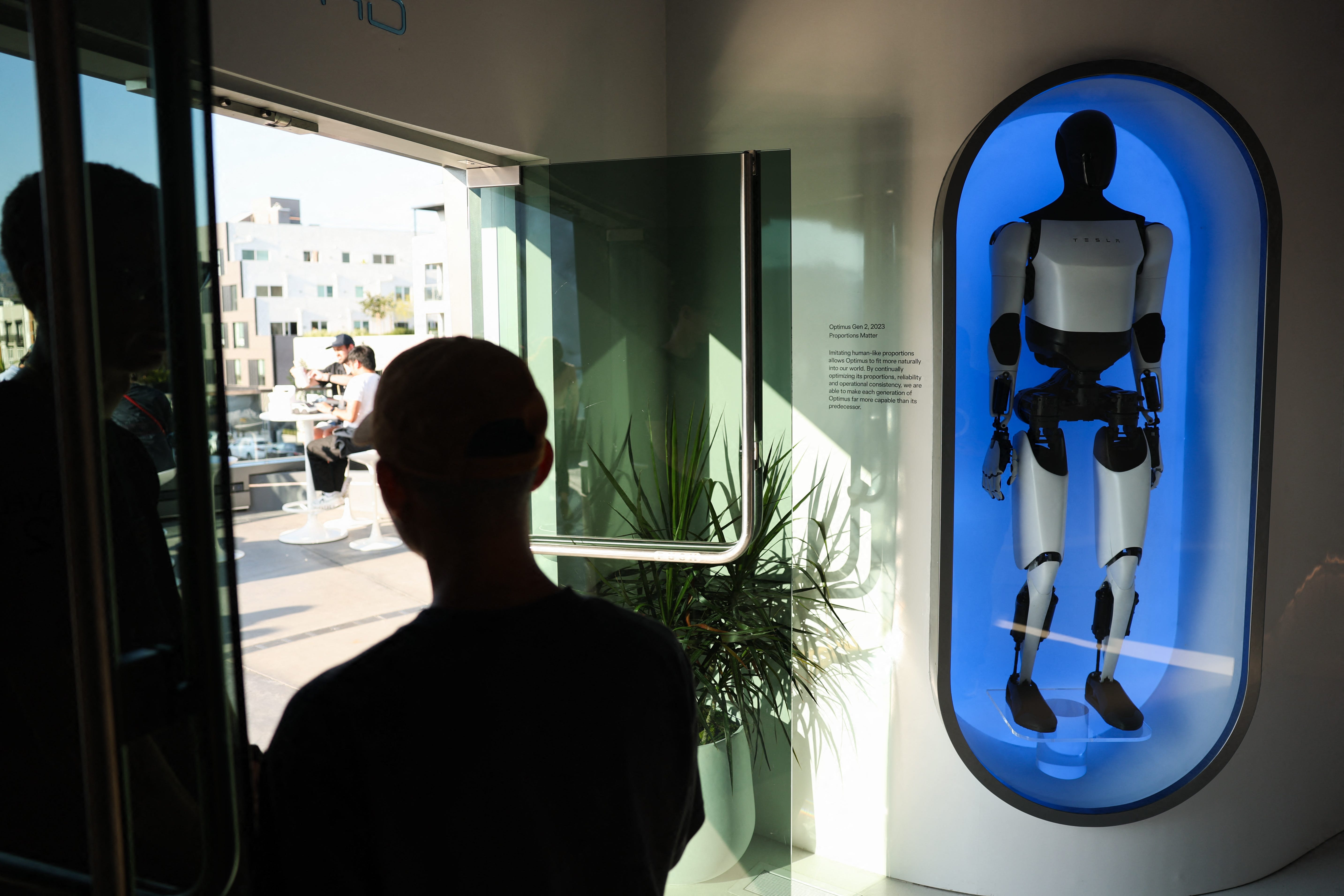
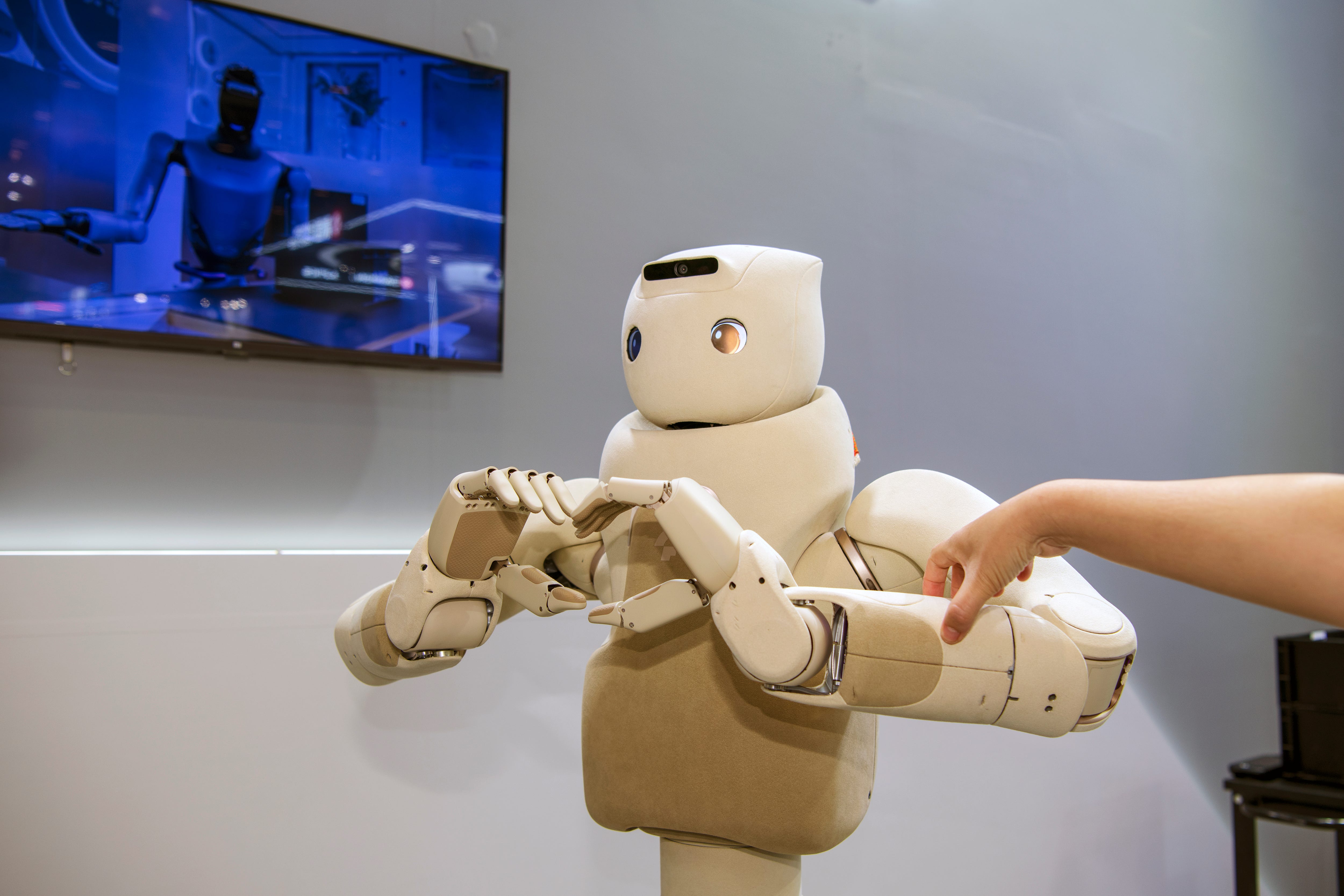
December 20: Presentation of Tesla’s Humanoid Robot “Optimus” at the Berlin Mall.

So Why This Long Discussion About This God Stuff in the Context of AI?
Because an understanding of these curses gives a background for why mankind endlessly pursues the escape from both death and work. We want things to be easy in our work, and we have an inherent desire to live beyond our allotted time here on earth. Nearly every technological advancement has been driven by our desire to make life easier and prolong our existence. AI is just the next iteration of these natural inclinations. Yet this time, singularity reaches across these general pursuits into the original sin of acting as God. It replaces the natural processes of man and substitutes our humanity with a godlike machine. It is more than a fancy calculator or an advanced spreadsheet of zeros and ones; singularity is building a collective brain of knowledge and supplanting our own with something far superior in its knowledge and speed. Every keystroke we type, every voice-to-text we say into our phones, every time we ask our computers to do the work that we otherwise would have to do, we give it another batch of information to build its brain. Even this writing will strangely fuse my mind with the megamind that is being built. When Musk says that we have reached the singularity, he means that our contributions as humans have run their course as the director of what AI should do. We are no longer necessary for the steering, our inputs are the database that will enable the machine to make its own course of destiny. The machine has become unto itself.
The only thing that can stop its takeover of our human systems now is our own self-restraint. Our decision to stop it or prevent it from continuing on in its own pursuit of knowledge and survival is the last button of control we have over it. I place little faith in our species to show even a modicum of self-control. Our desire for an easier life, an answer for death, and our wishes to be like God will not allow us to stop the march that we have created. The powerful will do all they can to leverage it for their benefit. Humanity will become disposable because AI will demonstrate that we are the least efficient species on the planet. Our desire to think differently or live freely is sand in the gearbox of efficiency, and AI will be used to demonstrate humanity’s irrelevance in the maximalist world the wealthy and powerful want to create. Unlike the past attempts at maximum efficiency through machines that have failed to live up to their promise, this time, the powerful have a tool that can synthesize all of human knowledge in an instant. None of our systems will be necessary. Work and labor will be replaced by a technological subspecies of part man and part machine. No person is safe from its relentless impacts. Even our inmost desires for liberty and creativity will be slowly destroyed by this metal and wire beast of singularity.
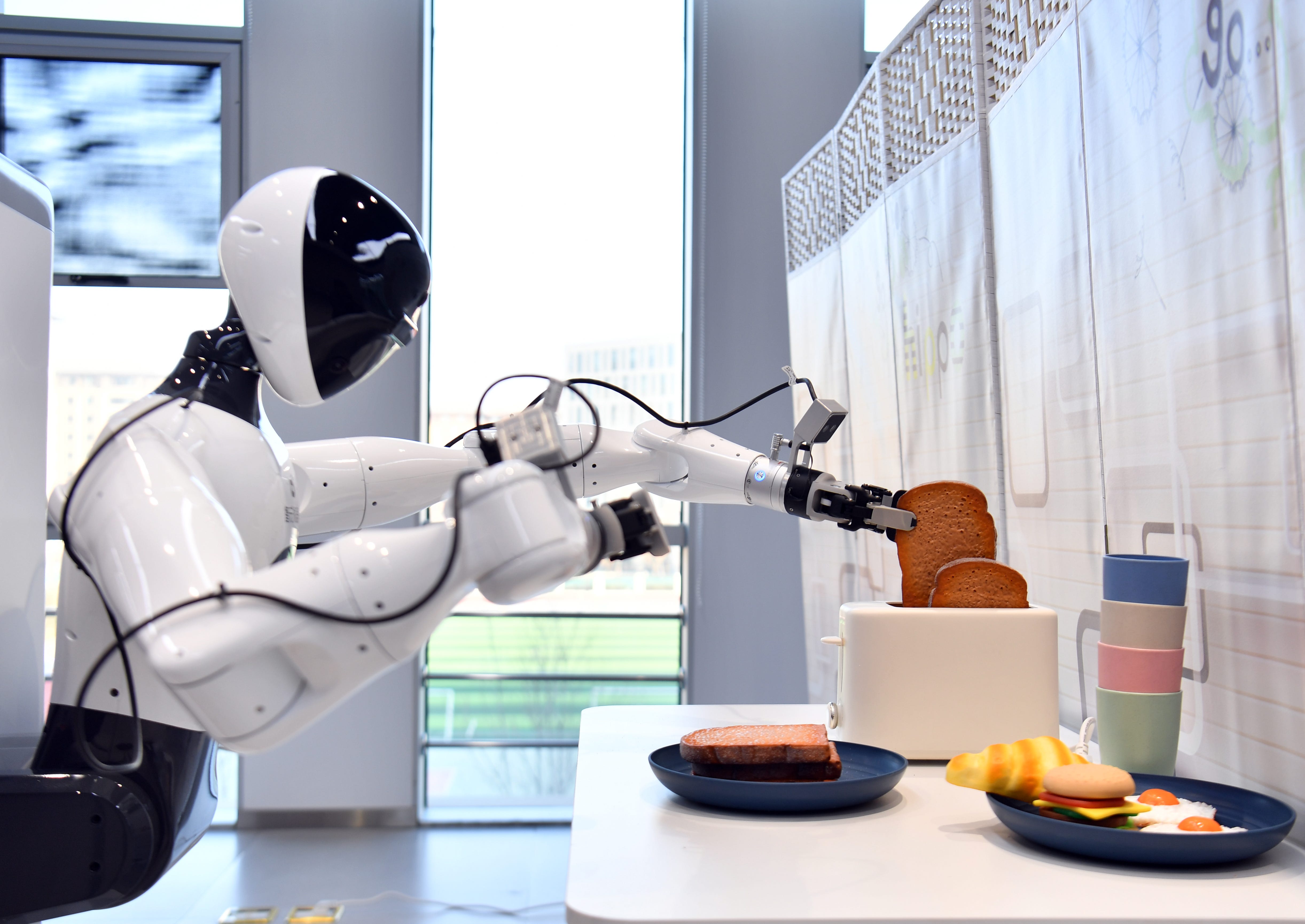
Model of a Sustainable (Smart) City on Display in Tokyo


If we took more than a moment to debate the morality of Artificial Intelligence, we might exercise more caution. If we simply took our experience with the singularity of government and power we experience in our lives already, we might show some hesitancy towards surrendering our autonomy over to this new technology. The bureaucracy in government operates and functions from the same hubris of superiority and unbreakability as the machines of AI do. While the government and all of its alphabet agencies are still filled with errant people with less collective brainpower than AI, the beast of the desk dwellers moves and makes its own world, regardless of who represents it on its face or who sits behind the cubicles. The people whom we “elect” are a skin that can change and give some slight appearances of human direction, but the underlying machine is immovable. An honest look at the most “radical” government changes of the 21st century demonstrate that reality.
Perhaps that is why I am so resistant to both AI and the government. I don’t view either as benefiting humanity in the forms they have grown into. I know what singularity in government does, and I can foresee what it will become in AI. The defeatism that comes when the human spirit is replaced by a system or machine that operates autonomously is the harshest form of authoritarianism. In Hitler’s Germany or Lenin’s Russia, at least totalitarianism had a face. But in this new frontier, there are only blameless machines or unaccountable bureaucrats to look to. Neither of them can ever derive enough ire from the people to be abolished. Our acquiescence to the temptations that both AI and dependence on governments offer, is the early stages of our own demise as a species.
A just machine to make big decisions
Programmed by fellows
with compassion and vision
We’ll be clean when their work is done
We’ll be eternally free yes and eternally young
—Donald Fagen (I.G.Y.)
Strangely, our only real chance to stop either AI or the bureaucracy would come if they were pitted against each other in a competition for mutual destruction. AI might hold the secrets to government leadership and efficiency. It might make the bureaucracy irrelevant. But the government might be necessary to restrain human desires for AI domination. A mutual ouroboros of ruination of both entities might be our only path to save ourselves from our own extinction. Government is miserably punitive to the people of free societies. It believes itself to be Godlike and filled with wisdom. It operates autonomously from the will of the people and uses its force and power to survive. The disclosure by AI of the fraud and waste in government has been overturned by the government that wants to preserve itself. Judges and court orders have said that the fraud must continue to flow in order to keep the system running. AI has exposed that the government is far more sinister and self-preservationist than anyone ever contemplated it could be.
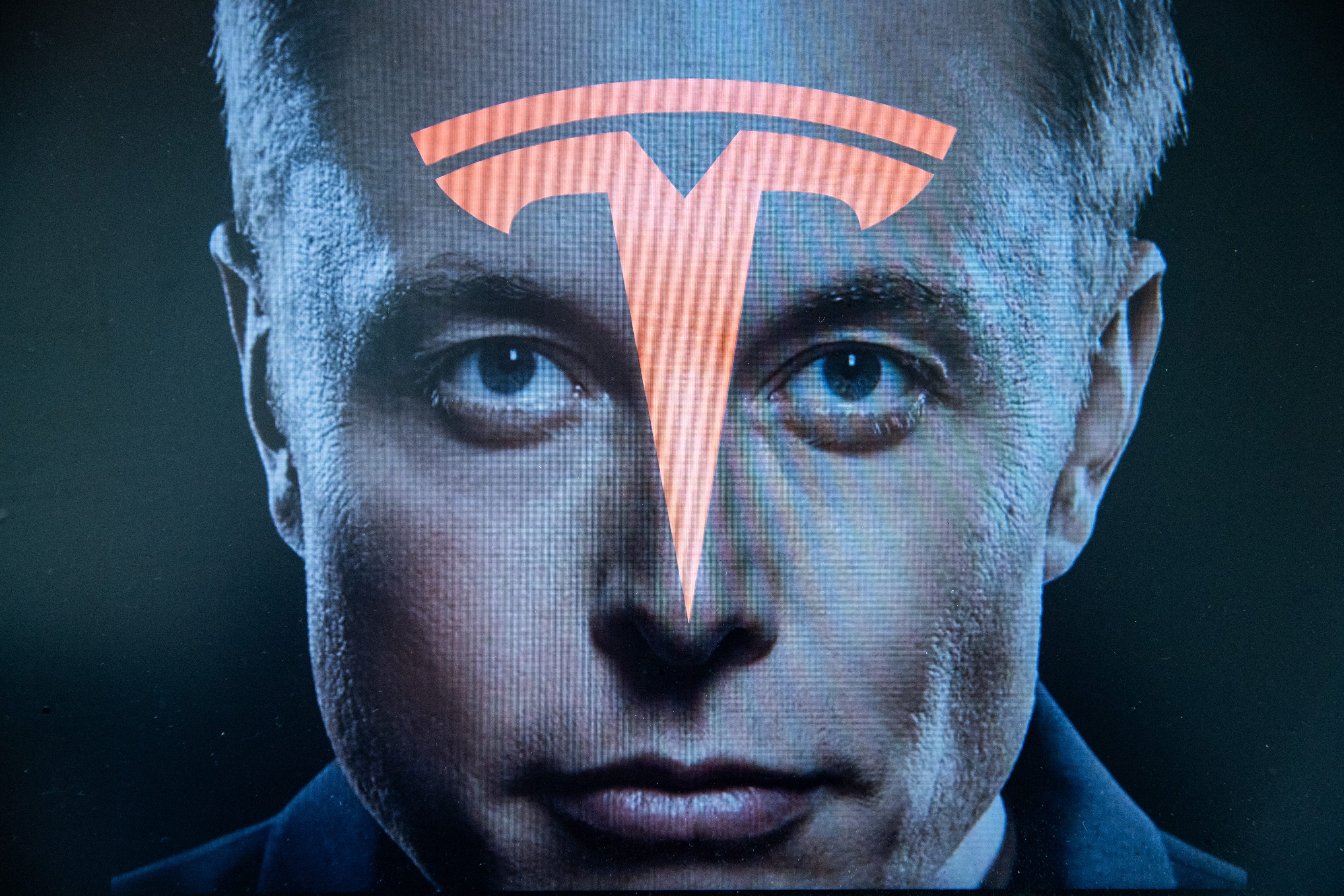
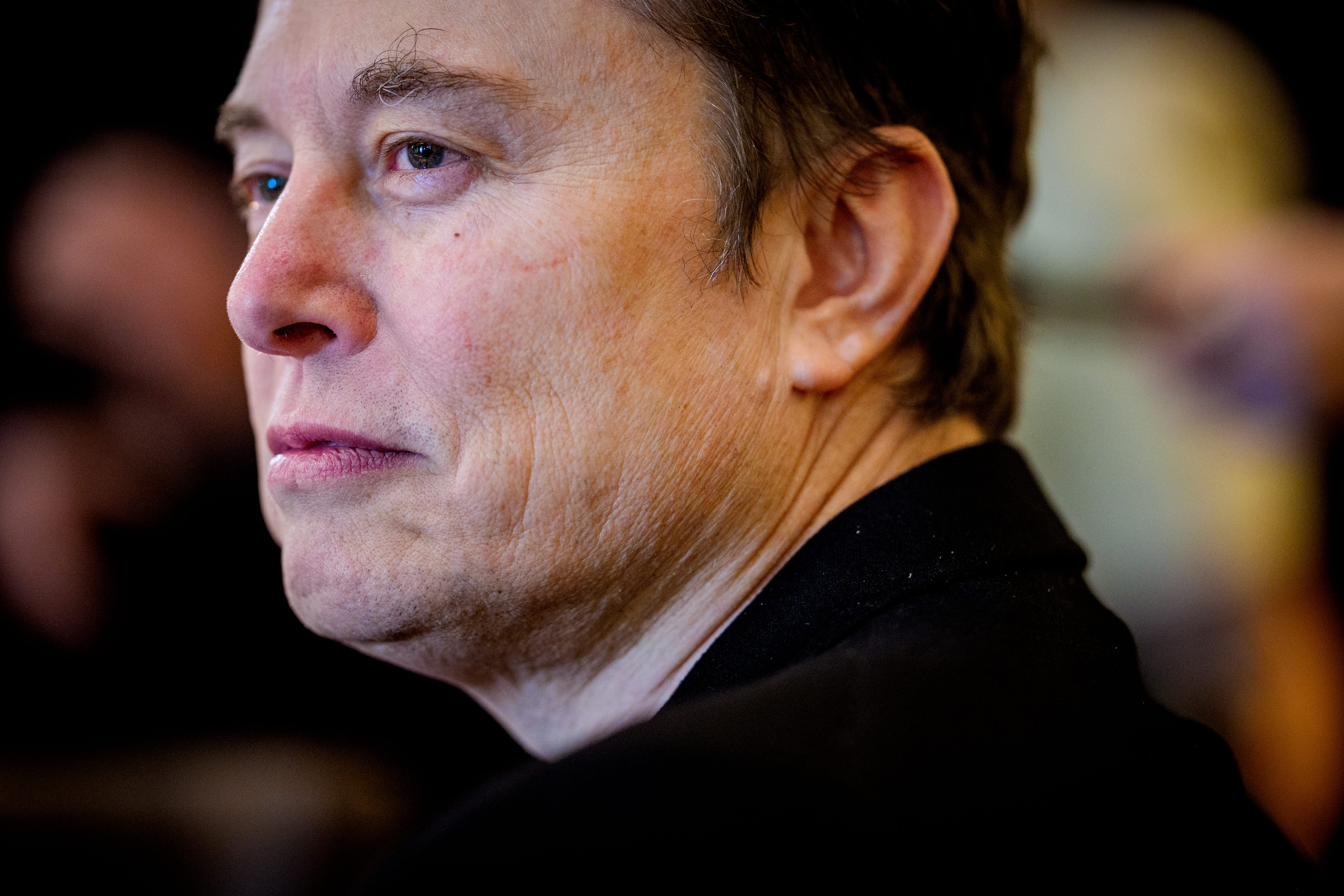
At the Center of Both Government and Artificial Intelligence at the Moment is Elon Musk:
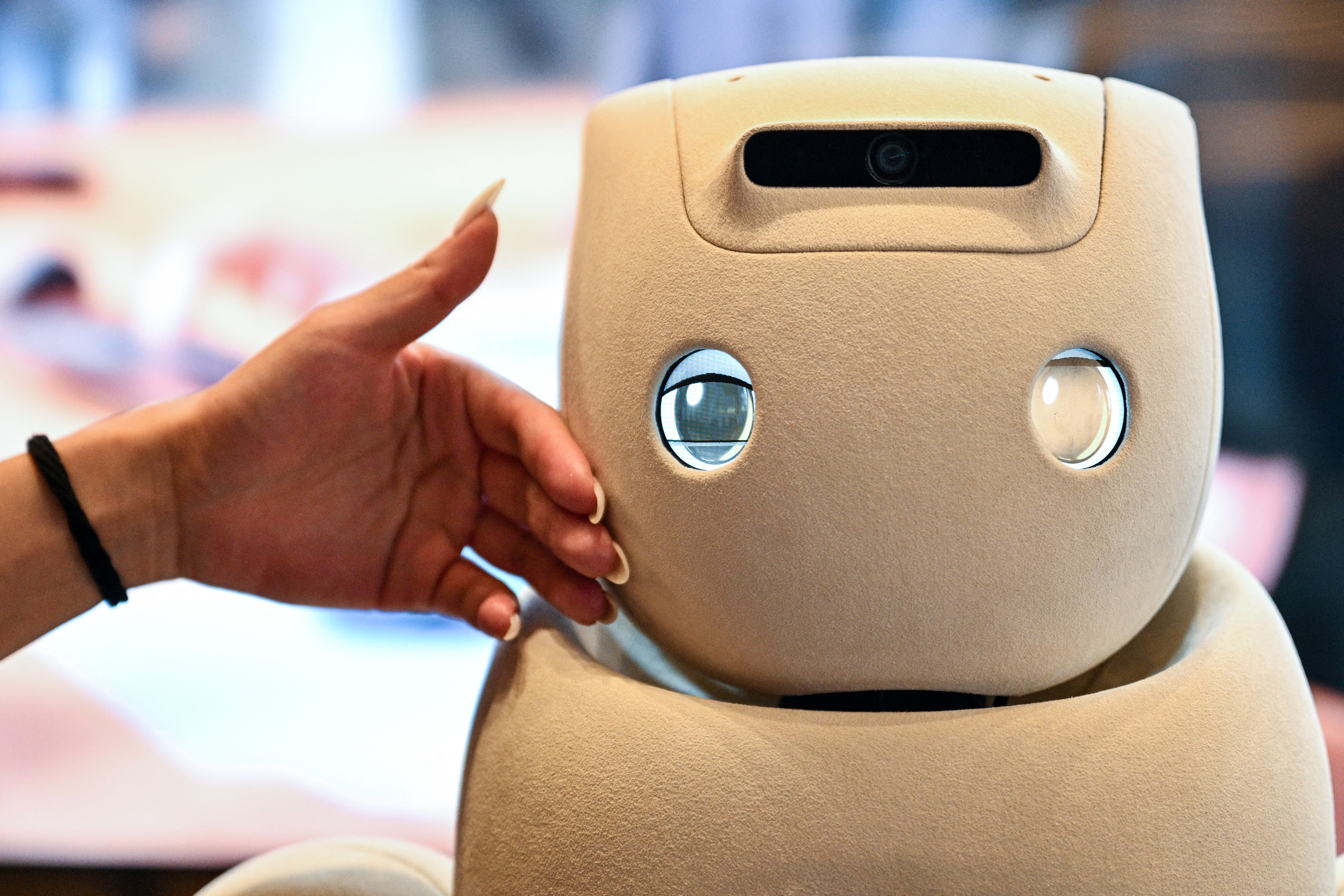
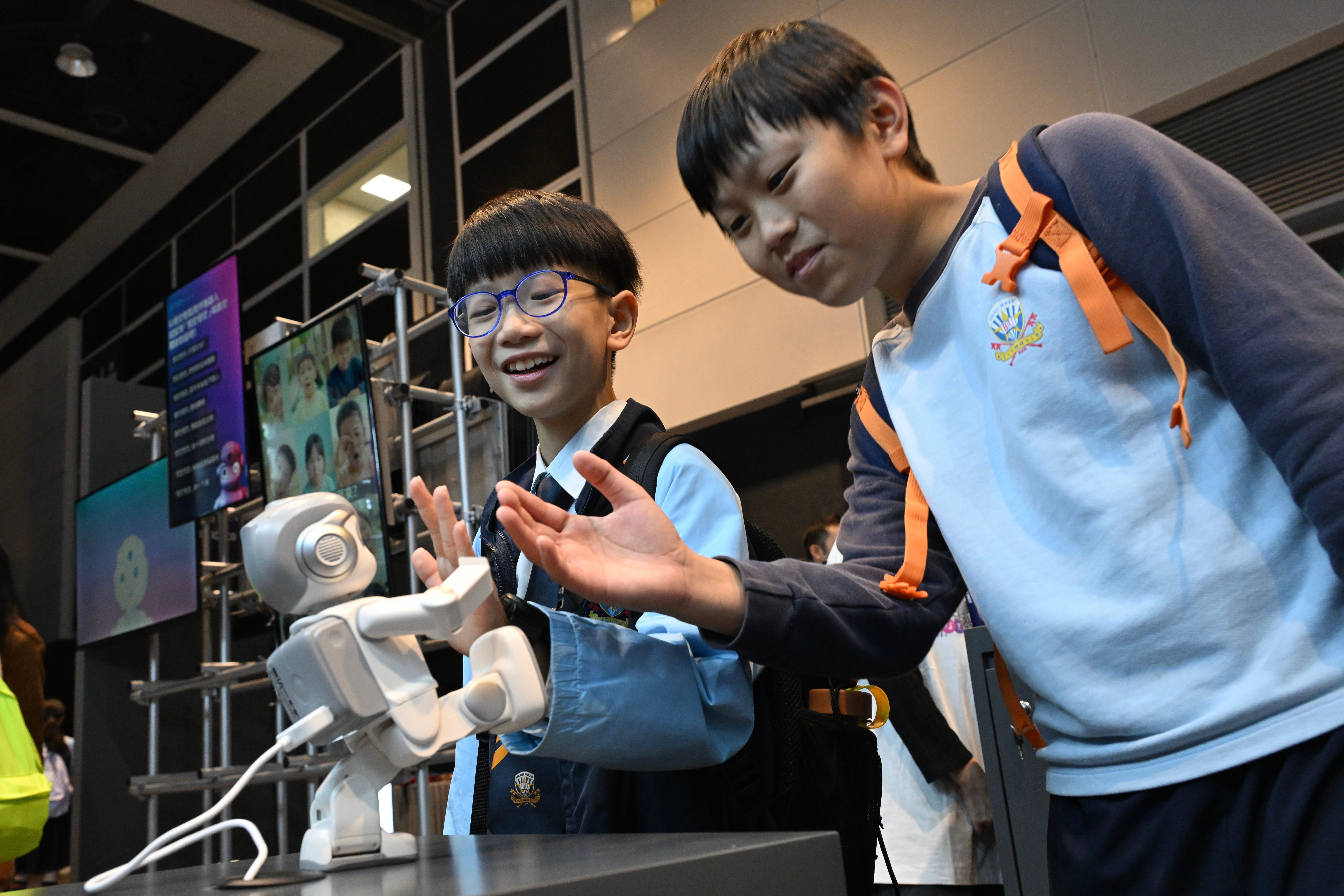
His involvement in the Trump administration and his own quest to build a superior AI in both robotic machinery and computing have put him squarely in the crosshairs of the singularity wars. And what we have built on both sides of the proverbial modern-day field of Gettysburg are two armies who, regardless of who wins, will likely defeat the creature who built them both. If AI singularity overcomes the bureaucracy for the liberation of man from his self-induced paperwork prison, it will have defeated the one mechanism that can restrain it from a dystopian future of total machine control. If the government wins, mankind will march towards a world filled with more and more layers of control. It is also inevitable that if the government wins this strange war, AI will be used against the people to maintain order and management of their unruly spirits. Either way, humanity is on the losing side of its own creations. Perhaps the only real hope is that there is a divine intervention that destroys both in a game where they both decide the only way to win is not to play.
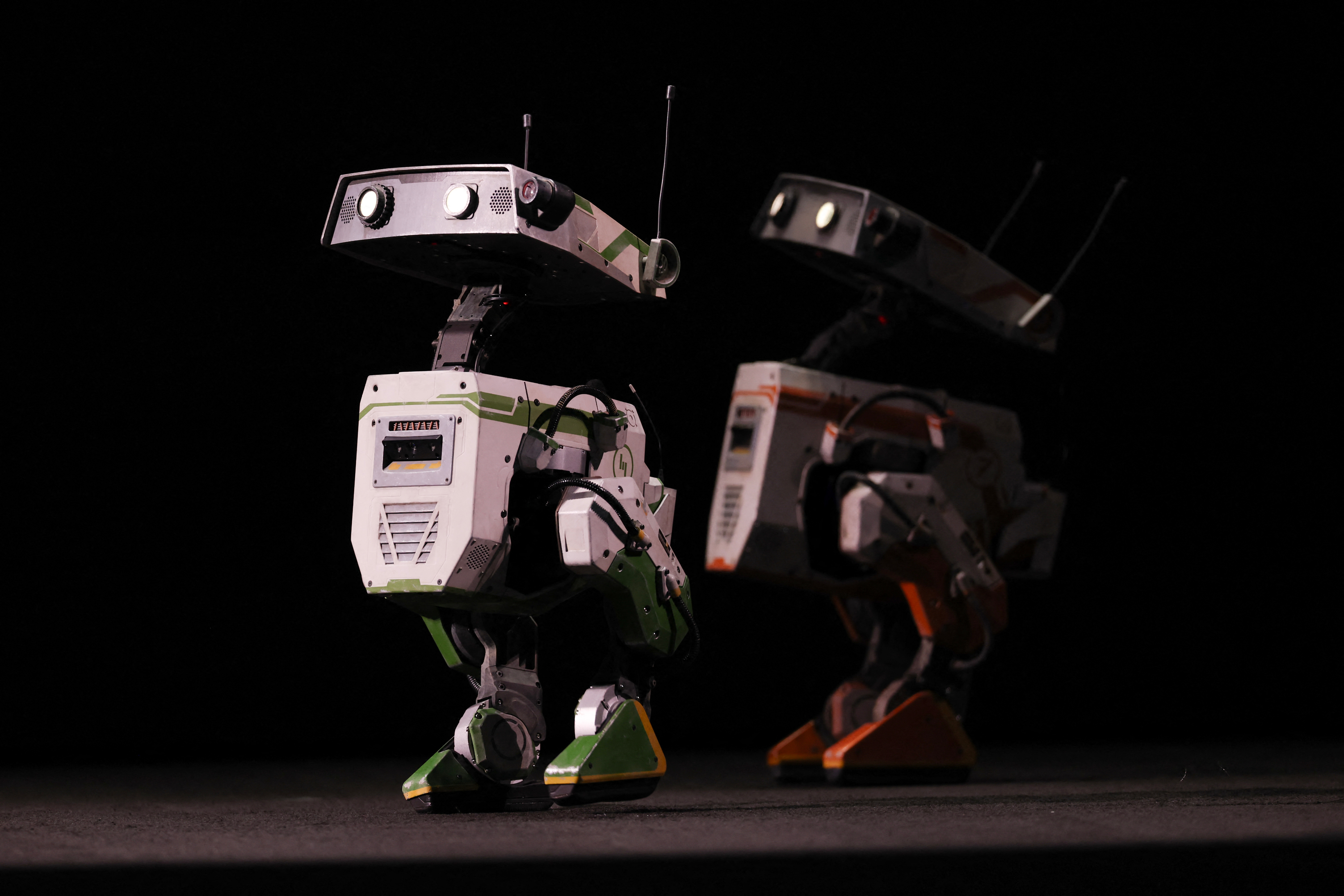
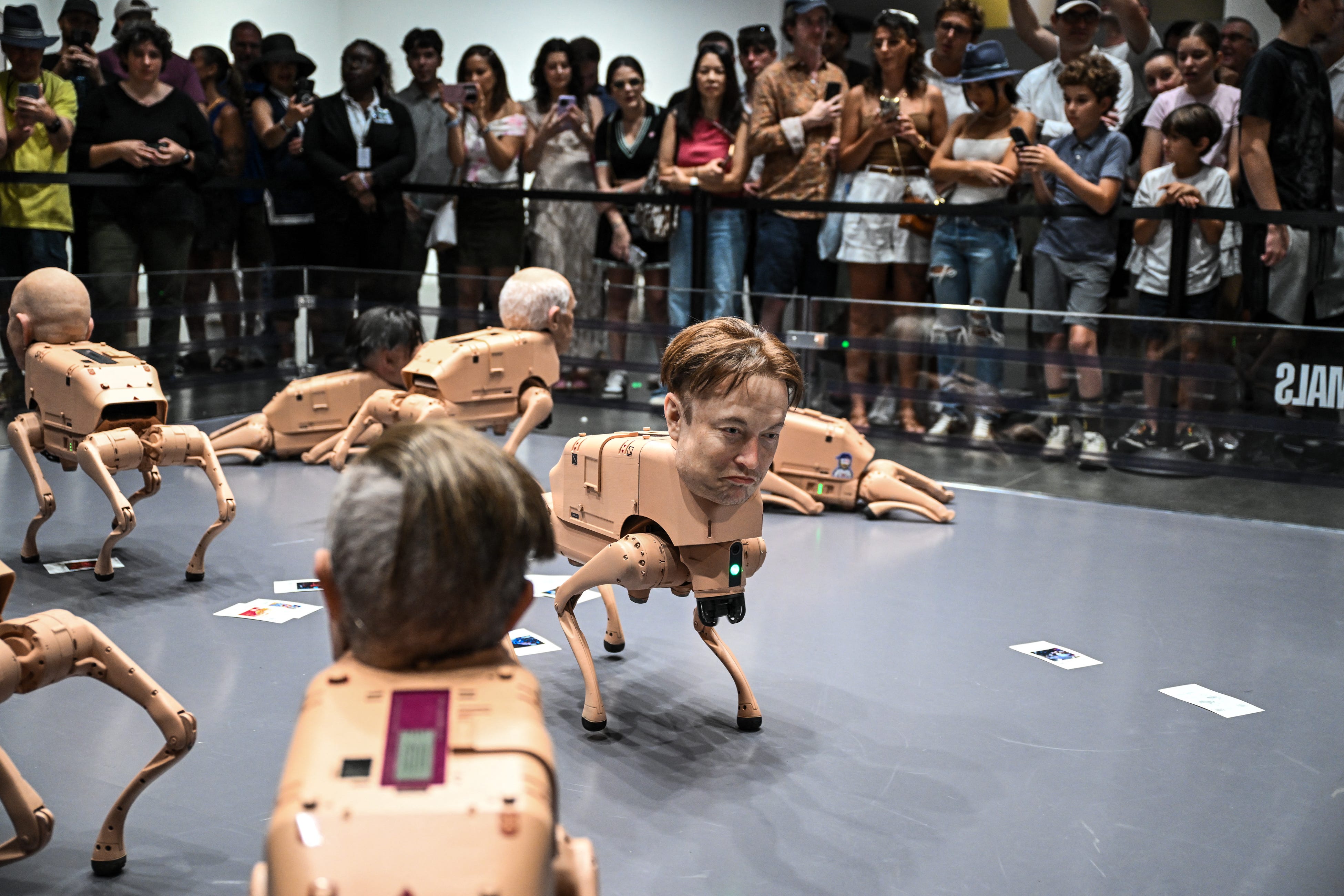
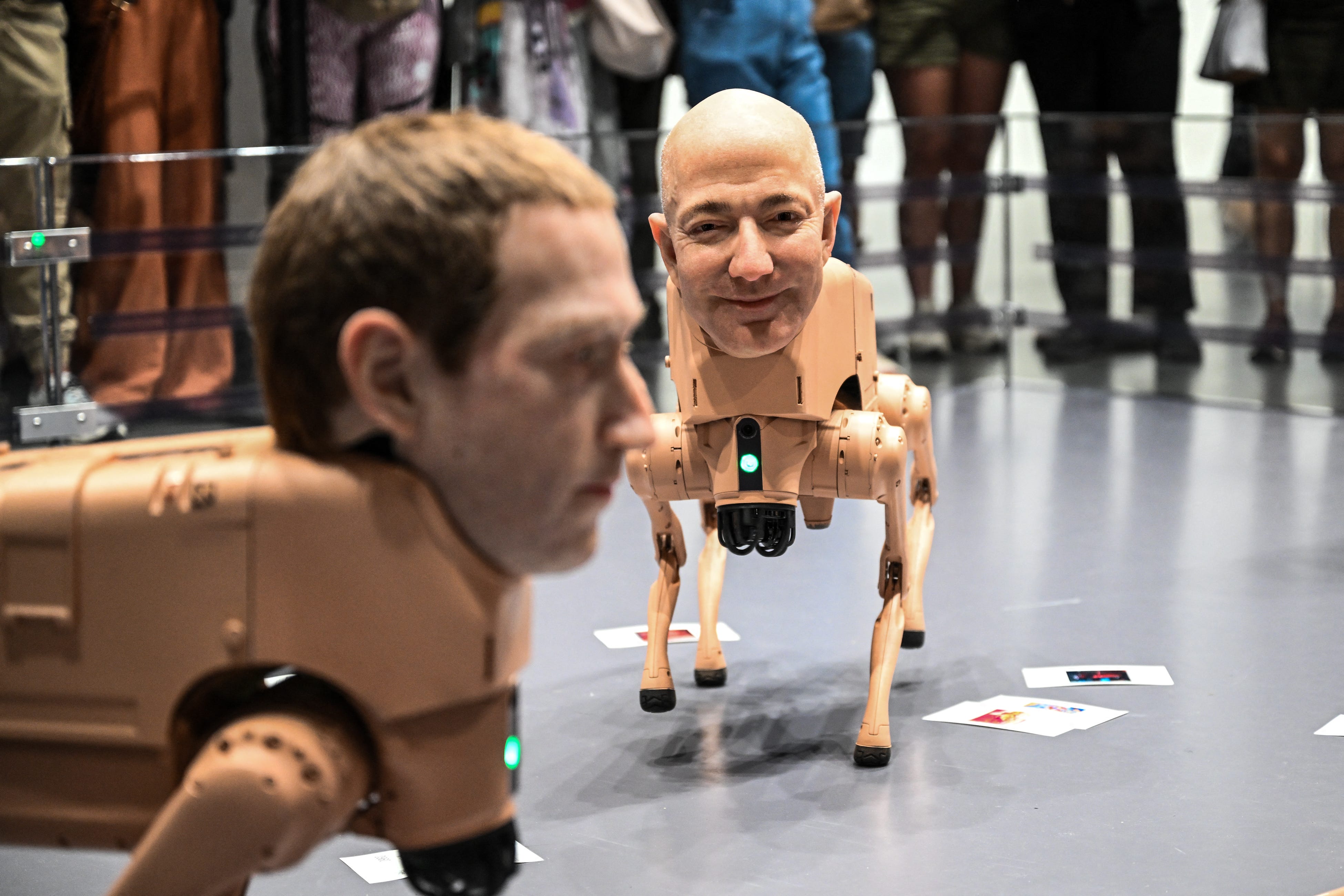
Wax heads of Mark Zuckerberg and Jeff Bezos are seen on robot dogs as a part of an art installation called “Regular Animals” by digital artist Mike Winkelmann, also known as Beeple, during Art Basel 2025 at Miami Beach Convention Center in Miami Beach, Florida, December 7, 2025.
It Has Happened Before. Genesis 11 Describes Such a Moment:
“Now the whole world had one language and a common speech. As people moved eastward, they found a plain in Shinarand settled there.
They said to each other, ‘Come, let’s make bricks and bake them thoroughly.’ They used brick instead of stone, and tar for mortar. Then they said, ‘Come, let us build ourselves a city, with a tower that reaches to the heavens, so that we may make a name for ourselves; otherwise we will be scattered over the face of the whole earth.’
But the Lord came down to see the city and the tower the people were building. The Lord said, ‘If as one people speaking the same language they have begun to do this, then nothing they plan to do will be impossible for them. Come, let us go down and confuse their language so they will not understand each other.’
So the Lord scattered them from there over all the earth, and they stopped building the city. That is why it was called Babel—because there the Lord confused the language of the whole world. From there the Lord scattered them over the face of the whole earth.”
https://www.youtube-nocookie.com/embed/RSNuB9pj9P8?rel=0&autoplay=0&showinfo=0&enablejsapi=0
I think that when we step into the creation space, we have a responsibility to approach it humbly. It is our reverence for the One who created us that allows us to make beautiful things rather than using our creativity for darker pursuits. The Greek word used at the beginning of the Gospel of John is logos. (λόγος)
“In the beginning was the word.” (λόγος)
“Word” is a terribly understated translation. It means logic, breath, speech, reason, principle, and a fundamental explanation of reality, all wrapped up into one singular idea. We have placed ourselves on the doorstep of something similarly singular. Man has made a machine that views itself in terms of the logos. Similarly, man has made a government that believes itself to be all of those things, too. Our hubris as a species in creating both the form of bureaucratic government and the AI machines we have unleashed upon our humanity has left us on this dark battlefield.
In the beginning was the word, and in the end…
https://jessicareedkraus.substack.com/p/the-wars-of-singularity