
This is What It Looks Like When Poop Hits the Fan

Blue Owl Capital’s decision this morning to walk away from a $10bn data center deal for Oracle may prove to be an important inflection point in the AI infrastructure boom.
Blue Owl isn’t a marginal player or a nervous tourist—it has been one of Oracle’s most significant financial partners, repeatedly stepping in with equity and debt to help fund large-scale data centre projects. When a firm that specializes in financing hyperscale infrastructure decides that a flagship AI project no longer makes sense on its terms, it suggests that the economics of these deals may be becoming harder to justify. In my opinion, this isn’t about headlines or short-term sentiment; it’s about the underlying numbers becoming less forgiving.
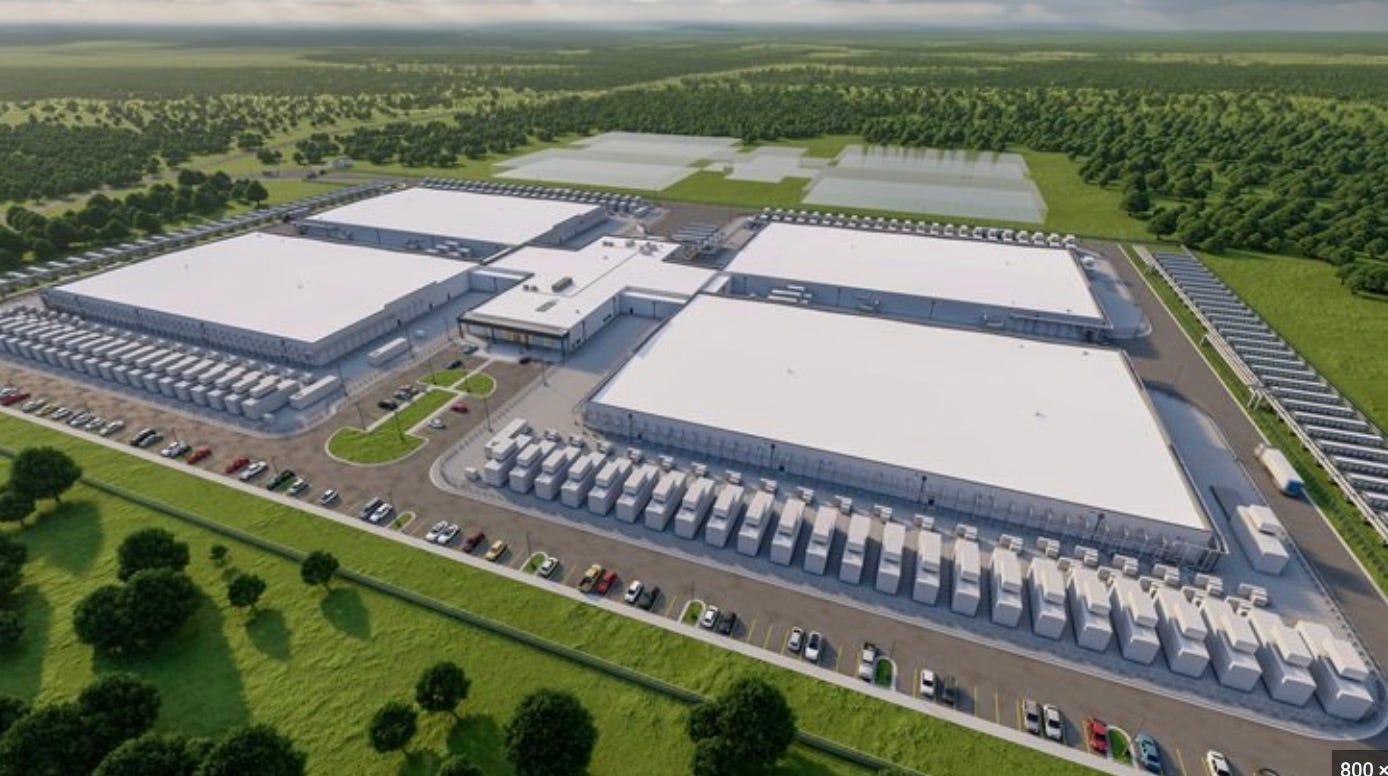
Blue Owl walking away from this deal is, in my view, one of the clearest signs so far that the AI infrastructure build-out may be running into real financial constraints.
This wasn’t a speculative startup or an untested operator. Blue Owl has helped make Oracle’s AI expansion possible by absorbing risk that public markets and balance sheets were reluctant to carry directly. If that support is now being reconsidered, it implies that something fundamental has shifted. At a minimum, it suggests that the margin for error is shrinking fast.
The Michigan facility Blue Owl declined to back was expected to be a one-gigawatt data centre built to serve OpenAI, part of Oracle’s broader plan to supply massive amounts of compute under long-term agreements. In prior projects, Blue Owl typically owned the facilities, raised large amounts of debt, invested equity, and leased the data centres back to Oracle. That structure allowed Oracle to pursue an aggressive build-out while keeping much of the upfront financial risk off its own balance sheet.
This time, lenders pushed for stricter terms as market attitudes toward AI spending shifted. Negotiations stalled, and Blue Owl stepped away. Oracle is now reportedly looking for a new backer, with no deal yet signed.
As Seinfeld once said: “that’s a pretty big matzo ball hanging out there”.

To me, this development fits closely with concerns I’ve been outlining for several months. In earlier pieces like “Credit Crash in AI Names” and “Limbo,” I argued that the AI infrastructure boom appeared to be transitioning from being largely self-funded to increasingly debt-funded, and that credit markets seemed to be noticing this shift before equity markets did.
Widening credit spreads in companies such as CoreWeave and Oracle struck me as early warning signals that the build-out might be relying more on leverage and financial structuring than on internally generated cash.
Barclays has since articulated a similar concern more formally, warning that free cash flow may no longer be sufficient to support the scale of AI capital expenditure now being contemplated. Data centres can cost $50–60bn per gigawatt, pushing projected global spending into the trillions of dollars. With each upward revision, leverage appears to rise while cash-flow coverage weakens. What once looked like a self-financed arms race increasingly resembles one funded by debt, leases, and creative structures designed to keep the story intact.
Oracle’s recent earnings miss added another layer of stress, at least in my view. More telling than the miss itself was the explanation: enormous and ongoing spending on data centres, power, and hardware, with returns still lagging. Oracle has raised substantial debt, disclosed a sharp increase in long-term lease commitments, and appears set to require even more financing to maintain its current pace. None of this looks like a company comfortably absorbing a boom.
Credit markets have reacted in ways that feel uncomfortably familiar. Risk premiums have risen, trading in credit protection has increased, and analysts have begun to flag balance-sheet strain more openly. In my opinion, this is what it looks like when the lag between easy money and reality finally closes. Rate cuts, if they come, tend to arrive after the stress is visible, not before.
This is where the situation starts to feel a little too reminiscent of past accidents. One bad press release on a Friday is often all it takes to expose a structure everyone assumed was stable. Silicon Valley Bank collapsed over a weekend because of one press release on a Friday after hours, causing confidence to evaporate all at once. In my opinion, moments like Blue Owl stepping away are exactly the kind of catalyst that can shift market psychology from complacency to reflexive risk reduction. Redemptions don’t wait for perfect information.
Michael Burry’s recent comments slot neatly into this backdrop. His point isn’t that AI has no future, but that the financial machinery built around it shows familiar late-cycle traits. Heavy capex inflating valuations faster than earnings, accounting choices smoothing over costs, and narratives racing ahead of cash flow are patterns markets have seen before. When each announced dollar of AI spending produces multiple dollars of market value, the system becomes highly sensitive to any break in the chain.
What makes the current setup particularly fragile, in my opinion, is how tightly AI, credit, and private equity are intertwined. AI narratives justify massive spending. Credit markets fund it. Private equity absorbs and redistributes risk. Accounting keeps the optics clean. Equity markets reward the story. That works until it doesn’t. When several of those supports start to wobble at the same time, things can unravel faster than expected.
Seen through that lens, Blue Owl stepping away doesn’t guarantee disaster—but it does feel like the kind of moment people later point to and say, “That’s when the mood changed.” The AI infrastructure boom was never a perpetual-motion machine. It looks increasingly like a late-cycle, leverage-heavy expansion dressed up in transformative language. Credit markets seemed to sense that first. Private equity now appears to be reassessing it. Whether equity investors are about to do the same—or whether this turns into the AI version of a quiet Friday that explodes by Monday—remains an open question.
https://quoththeraven.substack.com/p/this-is-what-it-looks-like-when-shit