
To End the Iran War, Trump Must Divorce Israel
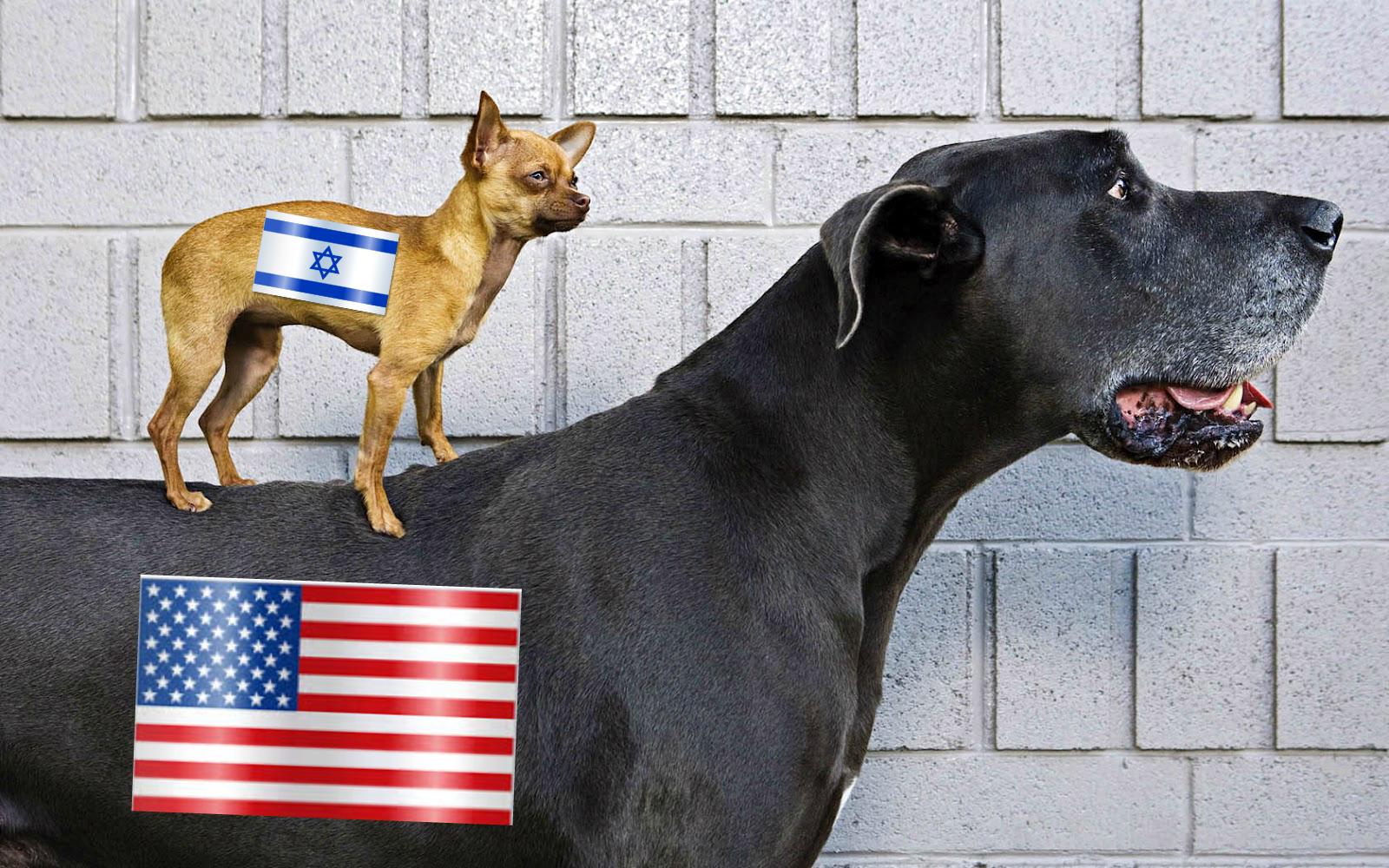
The president should tell Netanyahu to kick rocks.
President Donald Trump believes in the power of positive thinking. That’s why he’s always bragging about how “big” and “beautiful” everything he does is. In fact, his 1987 book The Art of the Deal—“the number-one-selling business book of all time, at least I think,” Trump has said—was inspired by the self-help classic The Power of Positive Thinking.
Lately, Trump has been expressing positive thoughts about a dreary topic: the war with Iran. Seemingly, he’s doing so in an effort to bring that war to a close. “I think we’re gonna end it,” Trump told reporters on Tuesday. That wasn’t positive enough. “This war has been won,” he quickly added.
Days earlier, Trump said that the White House had held “very good and productive conversations” with Iran over the weekend—a claim the Islamic Republic denies and no expert seems to believe. Maybe messages were exchanged, but this war ain’t over, and certainly not won. This week, Iranian missiles destroyed buildings in Tel Aviv, Tehran continued to limit traffic through the Strait of Hormuz, and the Islamic Republic appeared to think that they were winning.
Unfortunately, this isn’t the kind of predicament that Trump can wishcast his way out of. As analysts have emphasized, Tehran “gets a vote” as to when this war ends, and it doesn’t plan to stop until the U.S. and Israel learn that attacking Iran comes with high costs and shouldn’t be repeated in the future.
The U.S., unable to hammer out an agreement, has been hammering Iran to coerce it to the negotiating table. Secretary of Defense Pete Hegseth said this week that “we negotiate with bombs.” (Perhaps that ugly phrase can replace “talking to a brick wall” in our national lexicon.) Press Secretary Karoline Leavitt warned, “The President doesn’t bluff and he is ready to unleash hell.” On Truth Social, Trump threatened that Iran better take diplomacy more seriously “before it is too late, because once that happens, there is NO TURNING BACK, and it won’t be pretty!”
The Trump administration misunderstands the nature of the problem. To end the war, it needs to get tough not with America’s adversary, but with its cobelligerent: Israel. As Curt Mills, executive director of The American Conservative, said Tuesday on a podcast, “This war is not going to end until President Trump says no to Israel.”
To understand why, consider recent history.
Trump was on track, last year, to get a nuclear deal with Iran—until Israel disrupted negotiations. That’s what Joe Kent—who resigned last week from a top counterterrorism position in protest of the war—told TAC three days after leaving the White House.
“The way I saw members of the Israeli government come in and deal with us at that senior level, and the level of access that they had, especially in the lead-up to the 12-Day War—that opened up my eyes,” Kent said.
In Kent’s telling, Trump simply wanted to ensure Iran couldn’t develop a nuclear weapon, and Tehran was willing to offer that concession. But the Israelis had other plans: to “take down the regime.”
As such, Kent said, they set out to “break up the agreement” that Washington and Tehran were on the cusp of signing. Israel and its American lobby inflated the threat from Iran and pushed a demand that Tehran would not accept: zero enrichment of uranium, even for civilian nuclear purposes.
That narrative is consistent with my own reporting from the run-up to the 12-Day War last June. At the time, many experts depicted the “no enrichment” demand as a poison pill prescribed by Israel and pro-Israel think tanks, notably the Foundation for Defense of Democracies. Moreover, Trump himself admitted (more accurately, boasted) last August that he had entered that war and bombed Iran “for Israel.”
Much evidence indicates that Trump launched the current round of fighting for Israel, too. The New York Times and others have reported that Israeli officials, including Prime Minister Benjamin Netanyahu, lobbied hard for an attack. Indeed, Netanyahu has for decades been pushing America to hit Iran. Now that he’s gotten his wish, he’ll keep pushing to make sure America doesn’t stop.
Throughout the war, Israel’s conduct has often seemed designed to perpetuate the conflict, notably by killing potential negotiating partners in Tehran, according to Ellie Geranmayeh of the European Council on Foreign Relations. “Without doubt, the Israeli assassination campaign has provoked a shift in Tehran towards an even more hardline and securitised leadership,” Geranmayeh told TAC. She said that Israel is trying to lock Washington and Tehran “in a forever conflict.”
Despite Israel’s best efforts, there may be some Iranian leaders still living who the White House can talk to. There’s been a lot of chatter, but not a lot of evidence, that the U.S. and Iran are arranging high-level talks to end the war. Regardless, the biggest obstacle to peace remains: Israel. Netanyahu “is concerned Trump might strike a deal that falls well short of Israel’s objectives,” Axios reported Tuesday.
The proposal of any deal that Iran could be expected to sign would likely transform Netanyahu’s concern into panic. Trita Parsi of the Quincy Institute told TAC that Trump would need to offer Iran sanctions relief, and that he had better do so fast. “Both sides will need a way to declare victory in order to take an off-ramp,” Parsi said. “But if this war goes on for too long, chances are that neither will find such a narrative and all off-ramps will be lost.”
Geranmayeh says the U.S. would also need to address “Iran’s security concerns about a war resuming in a few months’ time as part of a game of Whack-a-Mole by the U.S. and Israel.” To get a deal, she added, Trump “will need to be firm with Israel that his negotiating partners cannot be eliminated.”
Parsi—like Mills, Kent, and Geranmayeh—thinks Trump needs to put Israel in its place before he can reach any kind of stable peace agreement with Iran. “U.S. and Israeli interests vis-a-vis Iran strongly diverge, and as long as Trump continues to defer to Israel, it will be Tel Aviv’s and not Washington’s interest that will be prioritized,” Parsi said.
The U.S. president may be wising up to that divergence of interests. Axios reported on Wednesday that last week, after Netanyahu suggested urging Iranians to protest their government, Trump replied, “Why the hell should we tell people to take to the streets when they’ll just get mowed down?”
It’s a good question—and a good sign that the president posed it. But opponents of the Iran war shouldn’t get their hopes up just yet. “Trump has in the past proven that he can say no to the Israelis, but he has not proven that he can sustain that no,” Parsi observed.
Trump may be worried that Israel and its American supporters will cause political problems for him if he tells Netanyahu no and holds firm. But compared to an escalating war with Iran—which itself brings mounting political costs—that seems like a problem that positive thinking is powerful enough to solve. Ending the “special relationship” with Israel, after all, would be a very good—no, the biggest and by far most beautiful thing that any president of my lifetime has achieved.
https://www.theamericanconservative.com/to-end-the-iran-war-trump-must-divorce-israel