
Trump: China’s Best Friend
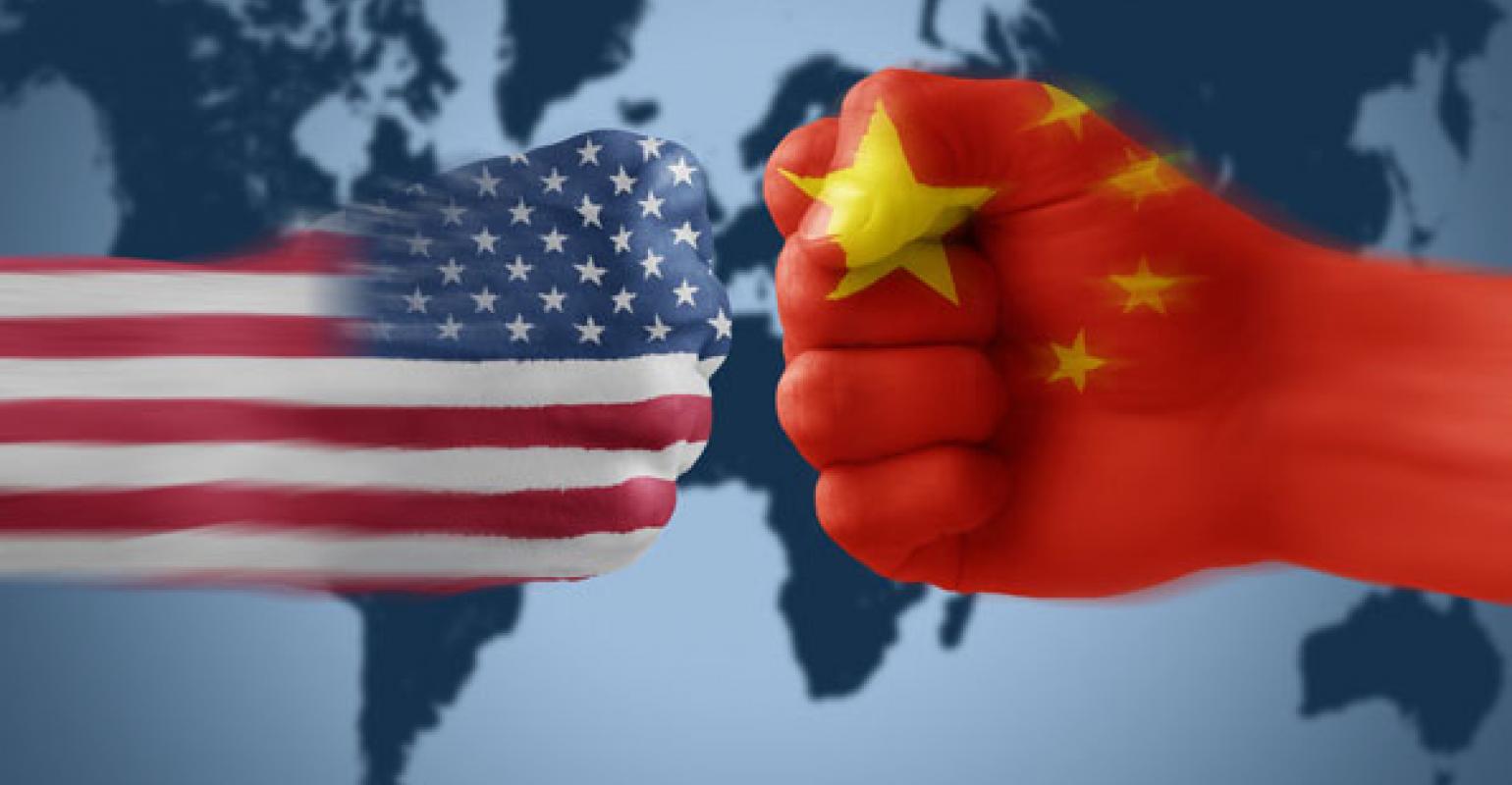
A few weeks back there was a bit of speculation regarding Trump’s self-invitation to Beijing. The thought was that, after Trump started his war on Iran with yet another sneak “decapitation” strike, he wouldn’t be welcome in China. My guess had been that the two events were linked—Trump was planning a triumphal entry into Beijing’s Forbidden City after a crushing weekend victory over Iran, to dictate terms to Xi. Stuff happens. A month has passed, and now Xi might end up welcoming Trump with open arms. Sean Foo has the details.
It’s fine to ridicule Trump’s antics, but this is all extremely serious. We’re in several types of crises—military, economic … and constitutional. America needs an intervention, sooner rather than later. In my mind, waiting for November is no longer an option. I hafta believe I’m not the only one thinking that way.
G7 Banking Giant Joins China’s Financial System While World Just Sold $82B In US Bonds
The Iran war is triggering a global shift of capital out of the United States and, if you ask many fund managers, central bankers, and investors, this shouldn’t be the case. Even in the Iraq war, the 08 crisis, and the 2020 lockdowns, the US was always considered a safe haven destination. Well, we just aren’t seeing that happen. US assets are no longer trusted. The war is triggering a global recalibration. Now, Trump’s war update speech just spooked the markets even more. Instead of looking for a genuine off-ramp, the US still wants to continue the war and has warned of further escalation. As the result, the Treasury market collapsed and US stocks continued to fall. Inflation is a real concern and the future of the dollar is now suspect. It’s no longer the safe haven it once was.
This is why global investors are making a grand pivot to China. Chinese assets are now seen as a beacon of stability. Even during the Iran war, Chinese assets dropped by only 3%. That’s the Hang Seng index, where foreigners put their money. Conversely, the S&P was down by almost 6%. Investors in China lost less money. It’s important to understand why that’s the case. The world today is facing an historic energy crisis. Given enough time, oil prices could hit $120, $150, or even $200 a barrel. Economies that weren’t ready for the shock saw their markets crash. That’s why stock prices in Japan and Korea collapsed–because they were too dependent on imported energy. 90% of Japan’s oil and 70% of Korea’s crude came from the Middle East. Their industries are taking significant collateral damage. However, investors are now piling into Chinese assets because Beijing was very well prepped. China has so much oil reserves as stockpiles that they’re actually providing supplies to Southeast Asia. Their energy mix also includes renewables and nuclear power. So, Chinese factories will hum along, production won’t fall, and domestic growth will be rather stable. Because of that, the Chinese currency is actually rising against the dollar. It’s up by 1.8% even during the Iran war. This makes imports cheaper and reduces the impact of higher fuel prices. Inflation is not a concern in China.
As a result, money is flowing into the yuan to buy Chinese stocks and bonds. The shift is happening and every new investment in Chinese assets is dollars denied to US markets. During Trump’s Easter address, he further emphasized the fact that the US economy is broken. There isn’t $18 trillion worth of investments coming in to the US–in fact, the war is bankrupting the economy. It’s forcing the US to borrow more money and is putting tremendous pressure on the bond market. Meanwhile, critical obligations in the country can’t be paid and an eventual default might really happen.
Trump: … to make up. But we, it’s not possible for us to take care of daycare, Medicaid, Medicare, all these individual things. They can do it on a state basis. You can’t do it on a federal. We have to take care of one thing: Military protection.
As an investor, that is the last thing you really want to hear. Would you want to buy US treasuries when the dollar could get debased from a default? And when we say default, we mean: printing money to pay for all these obligations. That’s why investors are seeking alternative assets, especially in China, to hedge themselves. And now a G7 banking giant is [making a shift?] for their clients. Deutsche Bank has successfully issued a record-breaking 5.5 billion RMB Panda Bond, which is almost a billion dollars worth. What’s important is the demand for said bonds in the Chinese currency. Demand hit 8.6 billion R&B or 1.6 times over subscription. Investors wanted the bonds because, despite the low yields compared to treasuries, the Chinese currency is still stable.
Deutsche Bank is the first EU bank in 2026 to issue a Panda Bond, and it’s not going to be the last. Banks move to where the demand is, to get to where the money will flow. And it’s obvious Chinese bonds are rising in prominence. The longer the war drags on, the more Panda Bonds will be issued and the more Panda Bonds are going to be bought. US debt is going to get hammered, especially as inflation in the US continues to climb. And as inflation rises, the odds of rate cuts are going to disappear rather fast. US crude oil has risen to an incredible $112 a barrel. That’s a 70% increase in price from just before the war. Gasoline has risen only by 40% at most, which means there’s still more room for prices to catch up. There’s always a lag effect for energy inflation to hit the real economy. In February, US CPI inflation was 2.4% which is very low. We haven’t factored in the energy shock from the Iran war just yet. The US stock market is beginning to factor that in. The currency and bond market are starting to price in this shock. Just wait till March and April CPI comes in. We could see bond yields spike while the dollar crashes. If inflation rises by a full percentage point, it would completely halt rate cuts. In fact, that could trigger the Fed to hike rates by 25 basis points at the very least.
In the West, many were laughing about China’s deflation. Instead of rising prices, China had stable or falling prices. And now, everyone is praying for deflation because a nasty price shock is coming for all of us. Chinese bond yields have been staying rather steady for a few years, and they are in fact dropping. For bond holders, that is a gain. Meanwhile, the currency is gaining strength against the dollar, which is yet another net gain. For big investors like institutions, banks, and wealth funds, they need this stability. And with Trump in office, US markets are anything but stable. It’s trading like an emerging market on the brink of collapse. US yields are bouncing around like junk bonds while the stock market is not anchored in reality. And we have the US president trying to jawbone the markets on a daily basis. He is spinning a narrative of never ending US dominance.
When investors put money into a country, the underlying driver is the economy. Are they making money? The longer this conflict drags on, the higher inflation will get and wreck the US economy more. The problem with Trump is his lack of understanding of the Middle East. He really believes Iran will just let go of Hormuz and the energy crisis will be over just like that. It’s really bizarre just hearing him speak about it.
Trump: In any event, when this conflict is over, the strait will open up naturally. It’ll just open up naturally. They’re going to want to be able to sell oil because that’s all they have, to try and rebuild. That will resume the flowing and the gas prices will rapidly come back down.
When you hear things like this, it’s really terrifying for the world. Personally, they’re already suffering from higher energy prices. To joke about Hormuz suddenly reopening without a hitch is quite dangerous. If countries get pushed to the brink they will have to start finding money to save their economies. And what is the number one reserve asset they all hold? It’s dollar assets. And there’s a ton of dollar assets sitting on global balance sheets. Global investors hold a ton of US stocks and bonds. Foreigners own at least 20% of the entire US stock market. That’s nearly $19 trillion worth. They also hold a ton of US debt, both sovereign and corporate. That’s 30% of total treasuries and 30% of all corporate debt totaling $12 trillion. Now, just sit back and think a little about what happens during a liquidity crisis. If countries are pushed to the brink, they will need to liquidate their dollar assets, especially treasury bonds. Even if the world enters a recession, US yields might not drop. It could increase instead. It’s really critical to observe the Iran war.
Trump has trapped the US, has sandwiched the entire country into a really dangerous situation. And this is what happens when you lose your grip on reality and you become lost in your own personal maze of fantasies. Should the war end in a US loss, this is going to be disastrous for the dollar. And should the war drag on, it will result in a loss of confidence in the US fiscal situation. And here’s how delicate the situation is today. If the US loses the war, even if it’s a strategic loss, it will destroy US hegemony–starting with American influence in the Middle East. The Gulf countries won’t trust the US security umbrella anymore, and that will lead to less economic benefits and even the petrodollar breaking. There will be less demand for US bonds and this will break the exceptionalism narrative. But if Trump continues waging the war and turns this into a forever conflict the result will be just as bad. It will trigger even more endless borrowing. It’ll keep yields high and push the national debt to catastrophic levels. We will be heading closer to default. This is going to break the safe haven status of the dollar. Currency debasement is just a breath away.
So either way, the situation is horrific for USD holders. It is game over if Trump can’t find a suitable enough off-ramp for the war. He will need to find the delicate balance to spin another tall tail to trick the war once again. But it’s going to be harder to trick the world. There are just so many assets like gold and Chinese bonds on offer. If you’re a central bank, the smart move now is to diversify away [from the dollar]. And if you’re going to do it, you’d better do it quickly. If this evolves into a forever war, the final bill could morph into a trillion dollar disaster. It won’t stop at Congress giving the Pentagon $200 billion–it would probably be much, much, much more. Central banks are already dumping their holdings of treasuries. Since February, treasuries held at the New York Fed have dropped by $82 billion to just $2.7 trillion. It won’t be a surprise if it’s the Gulf countries selling to raise money to bolster their economies. Most definitely, they have to brace for impact from the economic costs due to the war. Their oil revenue has collapsed while their oil assets are literally being blown up by missiles. This will require them to raise a ton of money. And what do you think they have on hand? A lot of oil money sitting in US dollar reserves, US Treasury bonds.
The dump we see really makes sense. Better to get our money out now just in case yields spike higher for inflation. That’s what all central banks are thinking to themselves. Better to cash out now before the dollar crashes even further and then we all look like clowns. And it’s not just the Gulf States that could dump. The energy crisis is cornering many other countries, including US allies like Korea and, especially, Japan. Japan’s energy crisis is so colossal that it’s threatening every single industry they have–from making cars to making chips. Japan has to bring energy prices down. But they can’t raise rates or their debt implodes. They are running out of options here. Now, the yen recently cracked 160 to the dollar, and that means we have crossed a level where the Japanese government has to intervene or risk losing control. And the last time they launched a rescue, they sold nearly $100 billion worth. Japan is sitting on over $1.2 trillion in US bonds. What happens if Hormuz gets closed for another two or three months? What if it extends to half a year? It’s not impossible–and that will be horrific for Japan. The finance minister has vowed that decisive action is coming. They can’t let the yen spiral to oblivion or energy imports will become even more expensive. They might really pull the trigger this time on US bonds.
It’s really crazy, but Trump has managed to crater what’s left of the dollar’s prestige. All his policies are backfiring in real time. The trade war, for example, isn’t helping the US–it’s actually benefiting China’s export economies and their industries. The Iran war won’t cement USA hegemony–it’s breaking it down instead. And the big winner here, ironically, is China’s bond market.
https://meaninginhistory.substack.com/p/trump-chinas-best-friend