
U.S. Carrier Groups in Position for Next Round as Trump ‘Dissatisfied’ With Iranian Demands
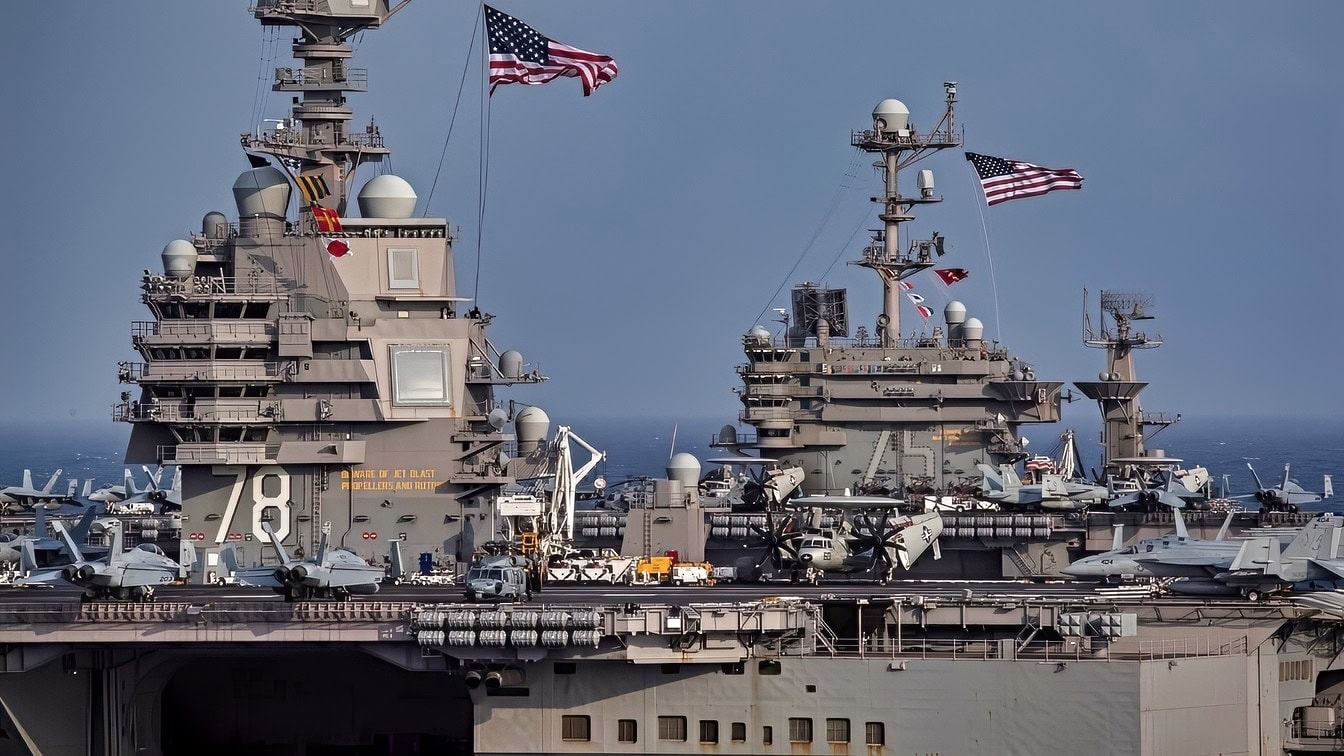
Let us begin with an update on the position of US carrier groups, as it informs us a bit as to the US’s current posture toward Iran.
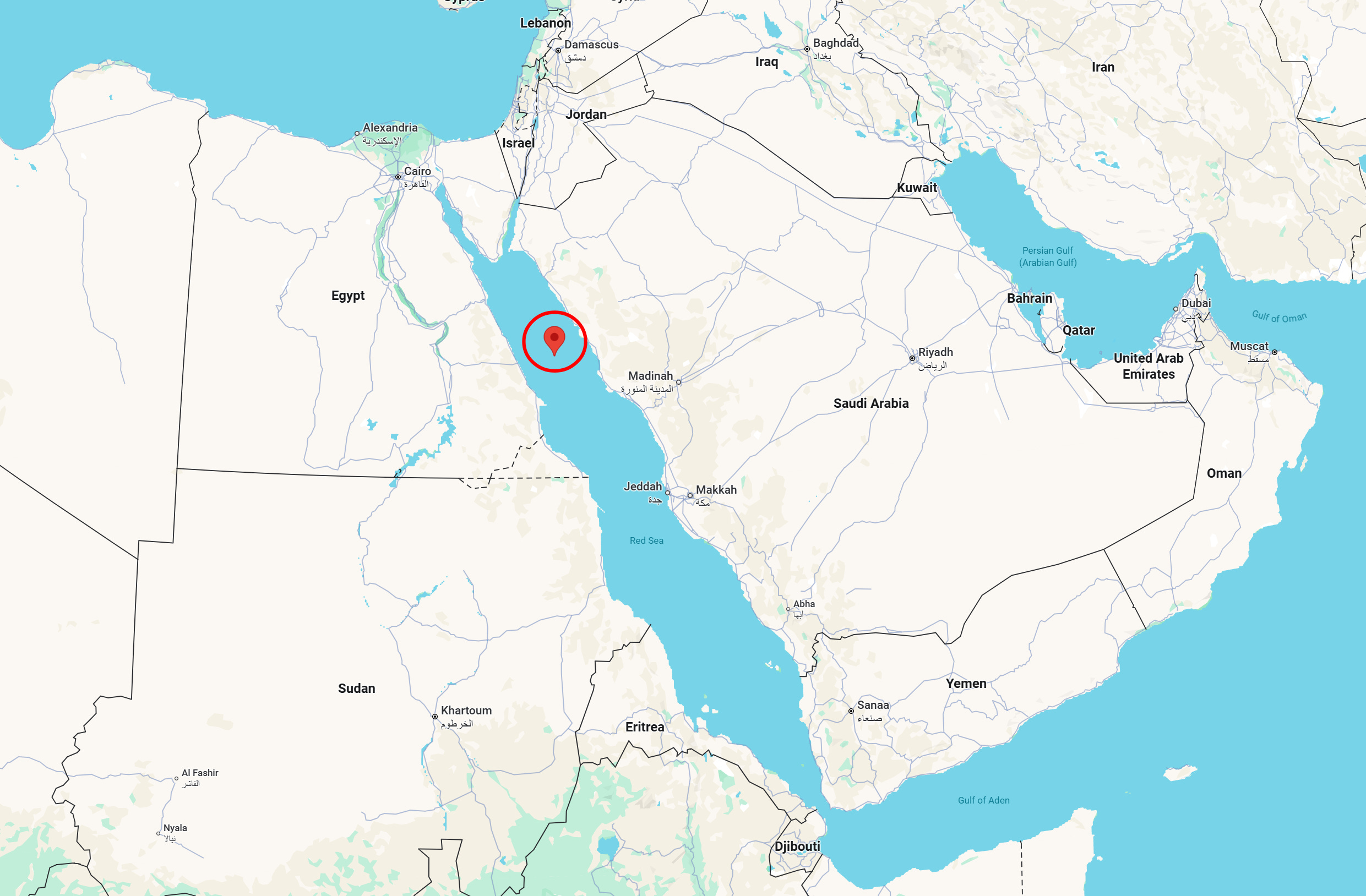
We happen to have gotten two new satellite geolocations. First, of the USS Gerald R Ford, which had been taken out of action due to a “laundry fire”, but has now returned to the Red Sea. It was reportedly seen pulling a hard and fast u-turn at geolocation 25.275, 35.964:
Which puts it about here:
Additional Arleigh Burke destroyers nearby, one conducting underway replenishment with a supply ship:
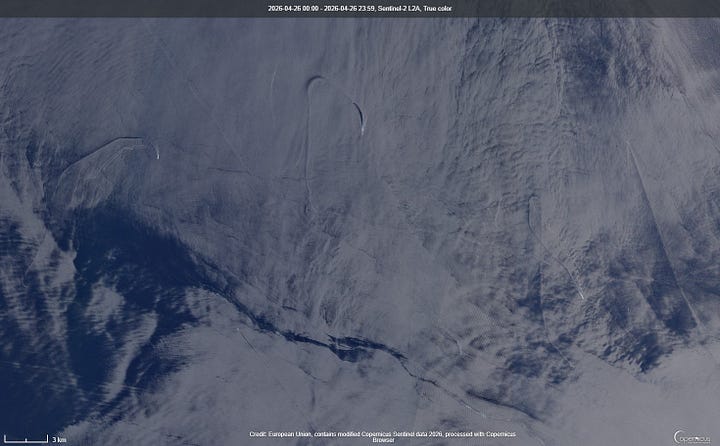
Separately, the USS Tripoli was spotted outside the Gulf of Oman at about 21.00916° N, 60.37561° E (click to enlarge):
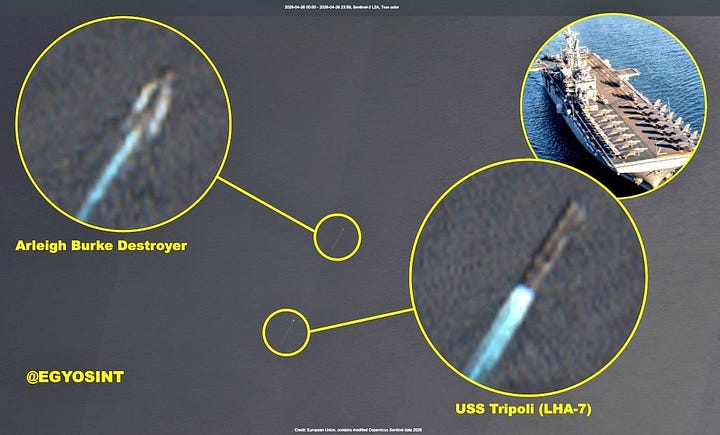
The American amphibious assault ship USS Tripoli, together with an Arleigh Burke-class destroyer, was spotted by satellite at the entrance to the Strait of Hormuz, approximately 115 km off the coast of Oman and 465 km from Iran.
On board, there is the 31st Expeditionary Unit of the US Marine Corps, which is most likely carrying out landings on the tankers captured by the Americans as part of the blockade imposed by Trump.
Interestingly, the aircraft carrier USS Abraham Lincoln, accompanied by a pair of Arleigh Burke-class destroyers, is even closer – just 330 km off the coast of Iran, which poses a danger to the ship in the event of the use of Iranian anti-ship missiles.
As can be seen by the above summary, the Tripoli is said to be around 465km from Iranian shores.
But now the USS Lincoln has again ventured closer, allegedly to within 300km:
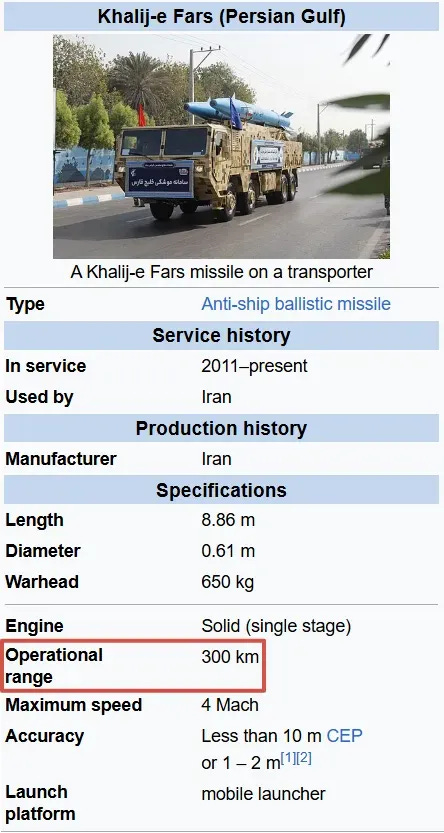
Why is that ~300km range key? Because, those who read my breakdown of Iran’s anti-ship capabilities here will recall that Iran’s anti-ship ballistic missiles pretty much cap out at 300km range, which marks this as the exact distance that US carriers dare venture to near Iranian shores in order to stay just a hair’s length outside the envelop while still pretending to act ‘tough’ and show some kind of phony “resolve”. You’ll note the exact measurement is actually 331km, which means they’re cautiously keeping just outside Iranian range—and in fact, it’s more than that, given that Iranian launchers would be dozens of miles inland, not sitting right on the shoreline, so the real total range from Iranian missiles is likely 375-400km.
CENTCOM brags that this is the largest convergence of US naval power in the Mideast “in decades”:
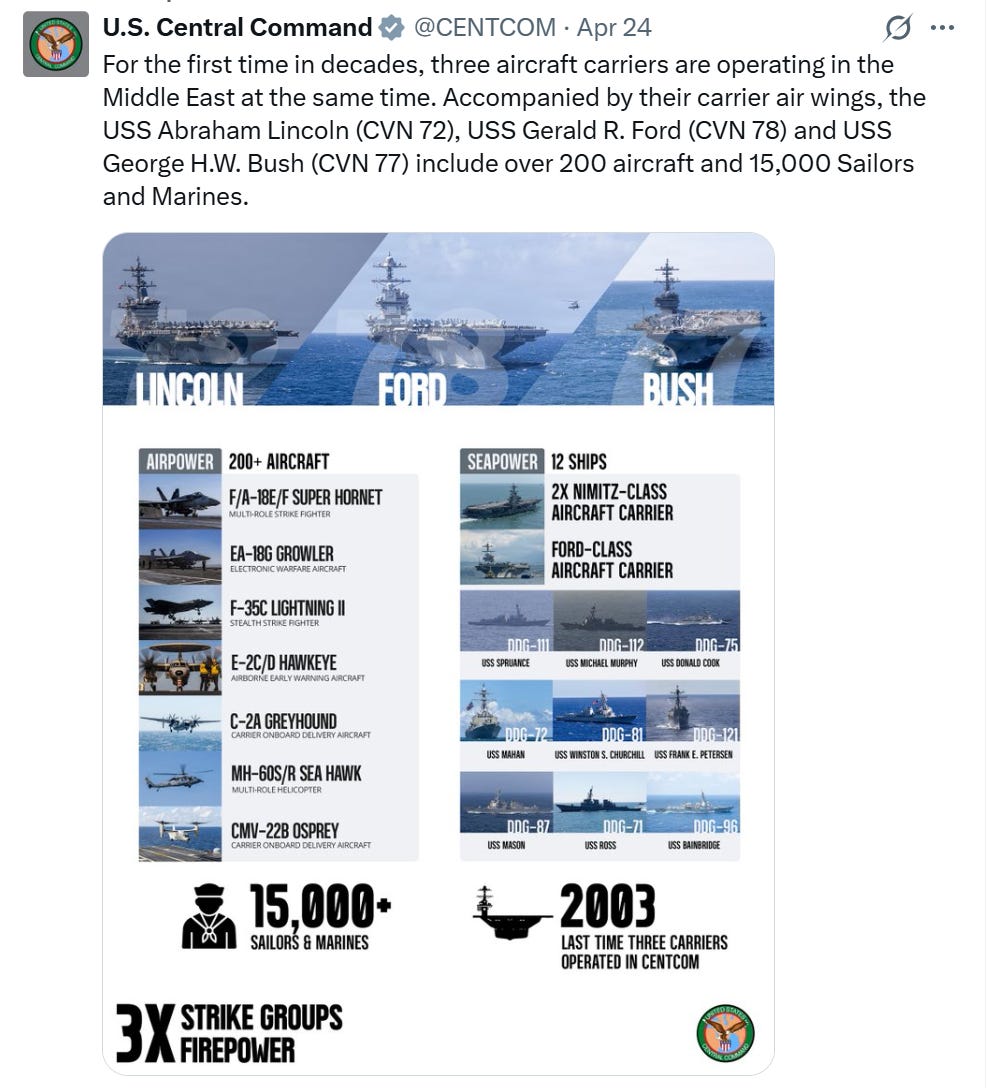
The full current force posture:

But something quite interesting was revealed over the past few days, when news broke that Iranian attacks during the war had done far greater damage to US bases than previously admitted to.
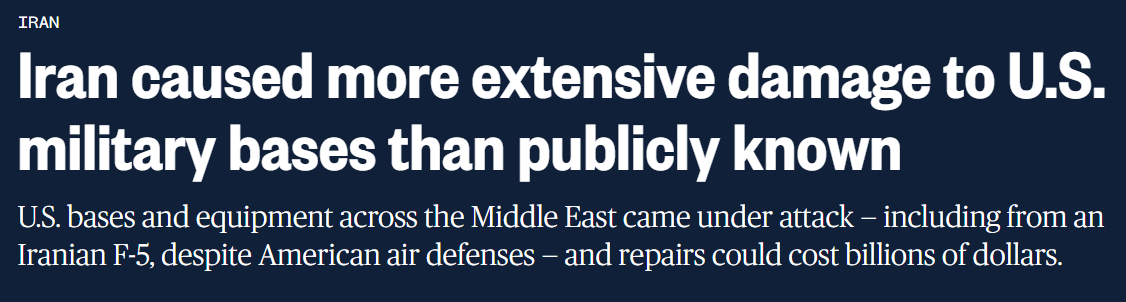
Most notably, the big revelation that touchstoned this release was the shocking admission that an Iranian F-5 jet had breached US air defenses and directly bombed the US Camp Buehring base in Kuwait:
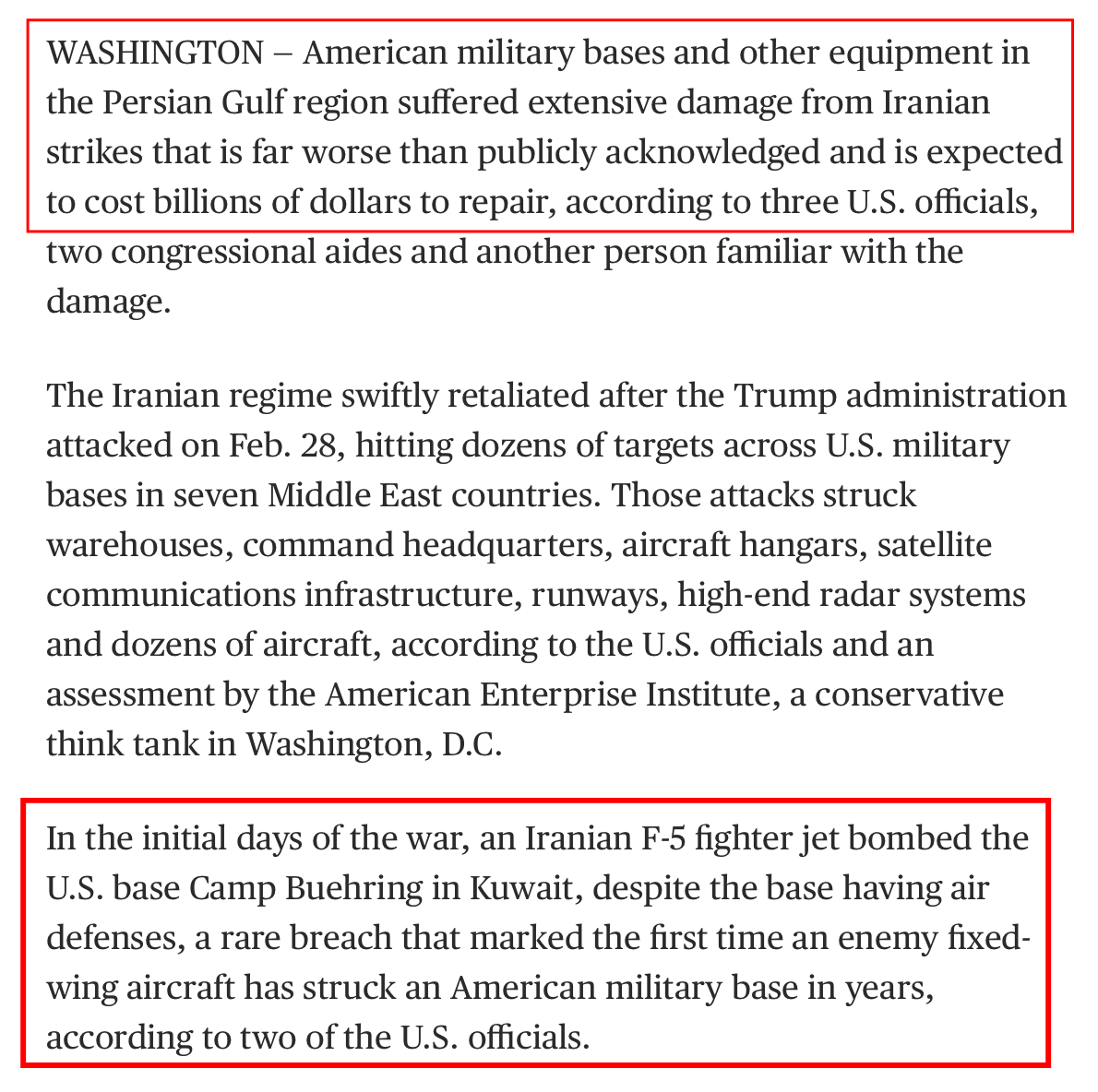
It is said that this is the first time a US base has been hit by direct aircraft attack since the Korean War, and essentially proves that virtually every conflict US has participated since then has been a fraud against set-up opponents bribed to quickly fold.
Recall a few reports ago we had shared the image of a Russian Fab-500 bomb in the wreckage of US’s other Kuwaiti base, Camp Arifjan. This is a direct drop bomb, which means Iranian craft had to get pretty much directly over the defenseless US bases to attack them.
Further, recall the Kuwaiti fighter jet that shot down three American F-15s. The most important nugget during that event was that US forces had been fending off attacks “from Iranian aircraft”:
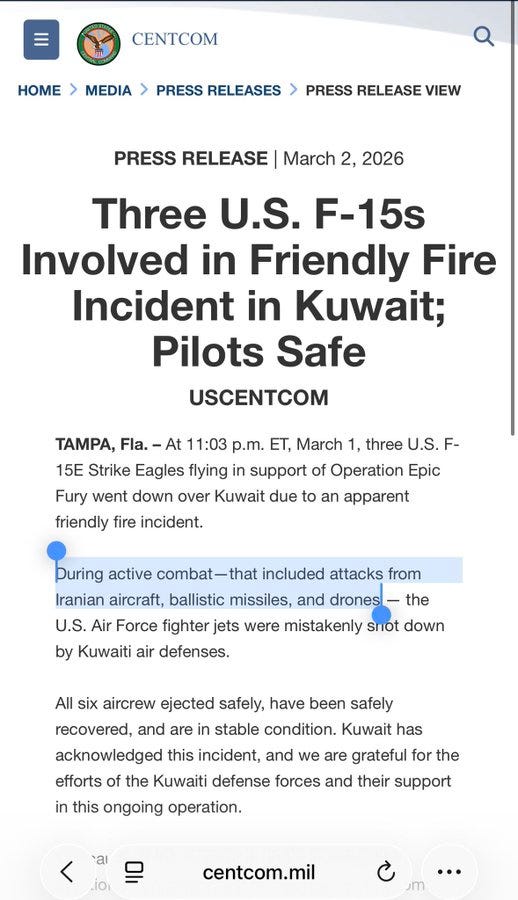
Putting two and two together we can now reconstruct the events more accurately: Iranian aircraft appeared to have breached US defenses, directly gravity-bombed US bases, all while causing flustered defenders to engage in friendly fire. That means Iran was able to do to the US what even Ukraine has not been able to do to Russia, despite Ukraine having a more modern NATO-supplied airforce.
—
Now the latest ‘negotiations’ tango has again commenced, with claims that Iran has made some new three-point offer. The offer reportedly allows for an initial stage of agreement on key points—presumably surrounding US’s blockade and sanctions—before Iran would entertain the issue of nuclear enrichment as part of a second stage of talks. If true, it’s essentially an ultimatum to the US: show us respect and a compromise first, and only then will we even broach the nuclear subject.
Multiple reports have subsequently claimed that Trump did not take kindly to this, as both sides believe themselves to hold all the ‘cards’:
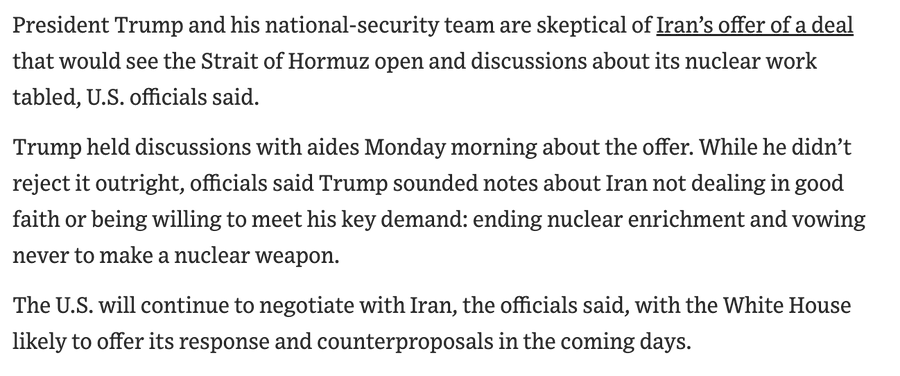
U.S. President Donald J. Trump has told advisers he is not satisfied with Iran’s latest proposal to reopen the Strait of Hormuz and end the Iran War, which calls on the United States to lift its ongoing blockade and postpones nuclear talks till after the conflict is over, according to multiple people briefed on discussions in the White House Situation Room who spoke to The New York Times.
On the more speculative and unverified side of the spectrum, we have claims that resumption of the war is imminent:
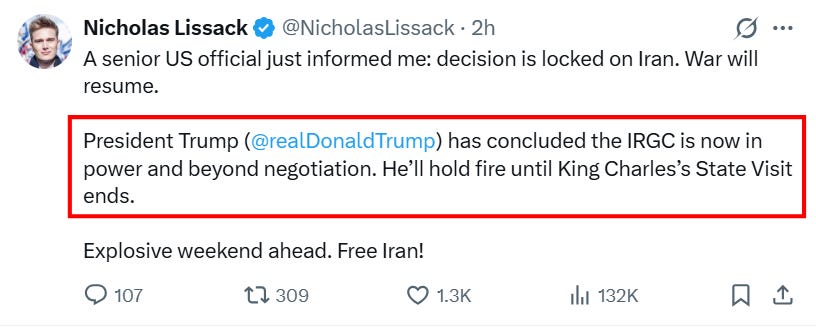
Lending credence to the above is obviously the fact that the US carrier groups are now finally in position and have reportedly been replenished and reloaded for the next round, with USS Bush particularly meant to be joining the USS Lincoln in the Centcom AoR any day now, if it hasn’t already.
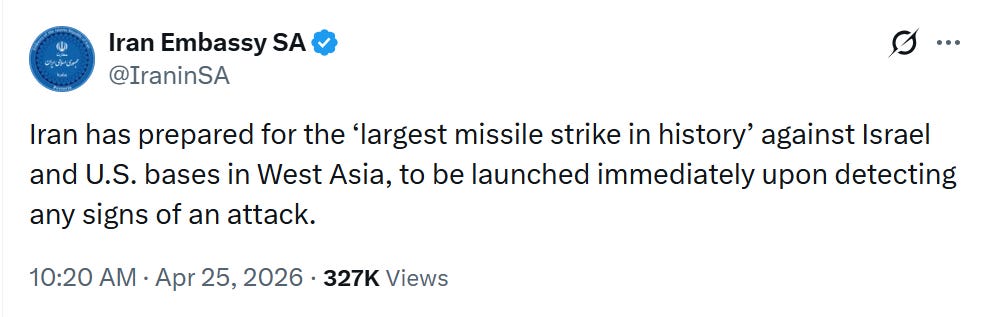
Sensing the coming attack, Iran has threatened the largest response in history:
Bloomberg reports that Iran’s oil storage has ‘shrunk’ to 22 days or less remaining.
Iran is rapidly running out of places to store crude oil, threatening to accelerate production cuts in what was once OPEC’s second-largest source, according to research firm Kpler.
The Islamic Republic has enough unused storage capacity to last another 12 to 22 days, Kpler analysts wrote in a report Monday. That is raising the prospect that Iran may be forced to cut daily oil output by another 1.5 million barrels by mid-May, they added.
It has become a game of chicken between two sides facing economic depredation.
https://simplicius76.substack.com/p/us-carrier-groups-in-position-for