
U.S. Pushes For Ceasefire as Iranian Missile Strikes Cause Massive Damage
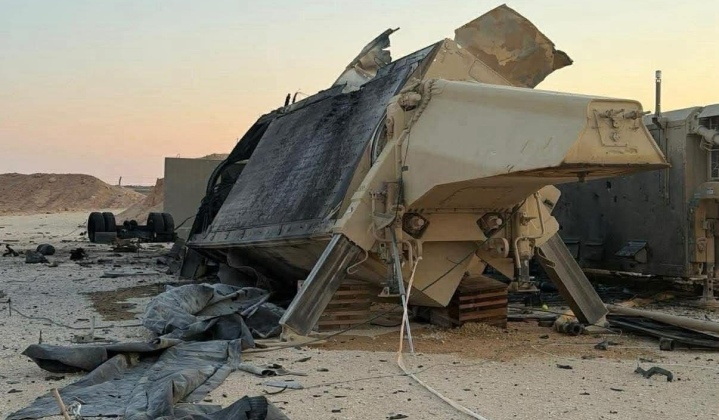
The Iranian Islamic Revolutionary Guard Corps has sustained a high intensity of ballistic missile and drone strikes on the United States and its strategic partners’ targets across the Middle East, dashing initial expectations in the Western world that attacks on the country would cripple its missile forces shortly after the U.S. and Israel initiated hostilities on February 28. The war with Iran turned out to be a clash with an adversary unlike any the U.S. Armed Forces have faced before, according to a recent assessment by Bloomberg, which highlighted that attempts to quickly control the course of hostilities by launching rapid strikes with overwhelming force failed to yield intended results. Western analysts have pointed to a years long Iranian buildup of missile and drone arsenals, and their dispersal and concealment at facilities across the country, as having been highly effective.
The British paper The Guardian on March 11 reported that the United States Special Envoy to the Middle East Steve Whitkoff had already twice requested a ceasefire from the Iranian state through various channels, with Iran having refused on the basis that the U.S. would likely use the ceasefire to better prepare for a future attack. The United States’ initiation of hostilities on February 28 occurred during negotiations, possibly as part of an effort to lower the Iranian Armed Forces’ guard, while the initiation of twelve days of Israeli attacks with U.S. support on June 13, 2025, were also launched during the middle of negotiations. Senior Iranian Revolutionary Guard Corps officer Ali Fadavi himself commented on requests for a ceasefire on March 11, observing: “Since yesterday, Trump has been personally asking to declare a ceasefire. If the enemy were winning the war, he would not be calling on the whole world to mediate to declare a ceasefire.” He added: “the Americans should expect new surprises in the coming days.”
Commenting on the course of hostilities and Iran’s effective retaliation using its missile arsenal, senior researcher at the Stimson Center Kelly Gricco observed: “This is the first war where the opponent has such capabilities.” The extreme depletion of the U.S. and its strategic partners’ missile defences has been cause for particular concern in the Western world. As observed by analyst at the Center for Strategic and International Studies Mark Cancian: “It’s a race – whose ammunition supplies will run out first: ours or Iran’s.” With Iran’s missile arsenals being orders of magnitude larger than what the U.S. and its partners’ interceptor arsenals can provide a defence against, the war effort has depended heavily on the ability to destroy missiles on the ground. According to analysts, in just the first days of the war, the U.S. and its strategic partners are likely to have used more than a thousand PAC-3 interceptors from the MIM-104 Patriot system – a missile type costing $3-4 million which is produced at rates of approximately 500 per year.
The U.S. has withdrawn interceptors and full missile defence systems from across the world, including strategically located Patriot and THAAD systems from South Korea, for redeployment to the Middle East, with these withdrawals escalating following the first days of hostilities. The U.S. began the war with its interceptor arsenals already severely depleted, with approximately 600 interceptors for THAAD systems having been in service in the at the beginning of 2025, of which over 150 were expended during under 12 days of hostilities with Iran in June 2025. Supplies of missiles for Patriot systems were reported in July 2025 to have fallen to just 25 percent of the volume deemed necessary by the Pentagon. Sources cited by CBS News have reported that although the U.S. is aware that several Arab Gulf states are facing severe shortages of anti-ballistic missiles, few steps have been taken to solve this problem. Sources cited by Middle East Eye noted that the U.S. has been refusing requests from some Gulf countries to supply weapons and ammunition to repel Iranian attacks. Considering the importance of U.S. strategic ties with Gulf states, it is likely that this reflects extreme shortages and the prioritisation of existing interceptors for the defence of U.S. and Israeli positions.
Seventeen U.S. military facilities are confirmed to have been attacked by Iran since the beginning of the war, with multiple sites including hotels hosting U.S. personnel having also been targeted, while there have been multiple indications that U.S. force have suffered high casualties. On March 11 the Pentagon estimated the damage from Iranian strikes on the U.S. Navy Fifth Fleet headquarters in Bahrain cost $200 million, according to officials cited by the New York Times. Following strikes on Ali Al-Salem base in Kuwait, satellite images indicated that at least six buildings or structures related to satellite communications infrastructure have likely been destroyed. A notable success achieved by the Revolutionary Guard Corps was the destruction of $2.7 billion worth of high value radar systems during the first week of engagements with U.S. forces, which has severely diminished missile defence capabilities particularly for THAAD systems and for the Israeli anti-missile network in the region.
https://militarywatchmagazine.com/article/us-pushes-ceasefire-iranian-massive-damage#google_vignette