
U.S. Secretary of Navy Resigns (or is Fired) Just as Third Carrier Group Arrives in Iran Theater
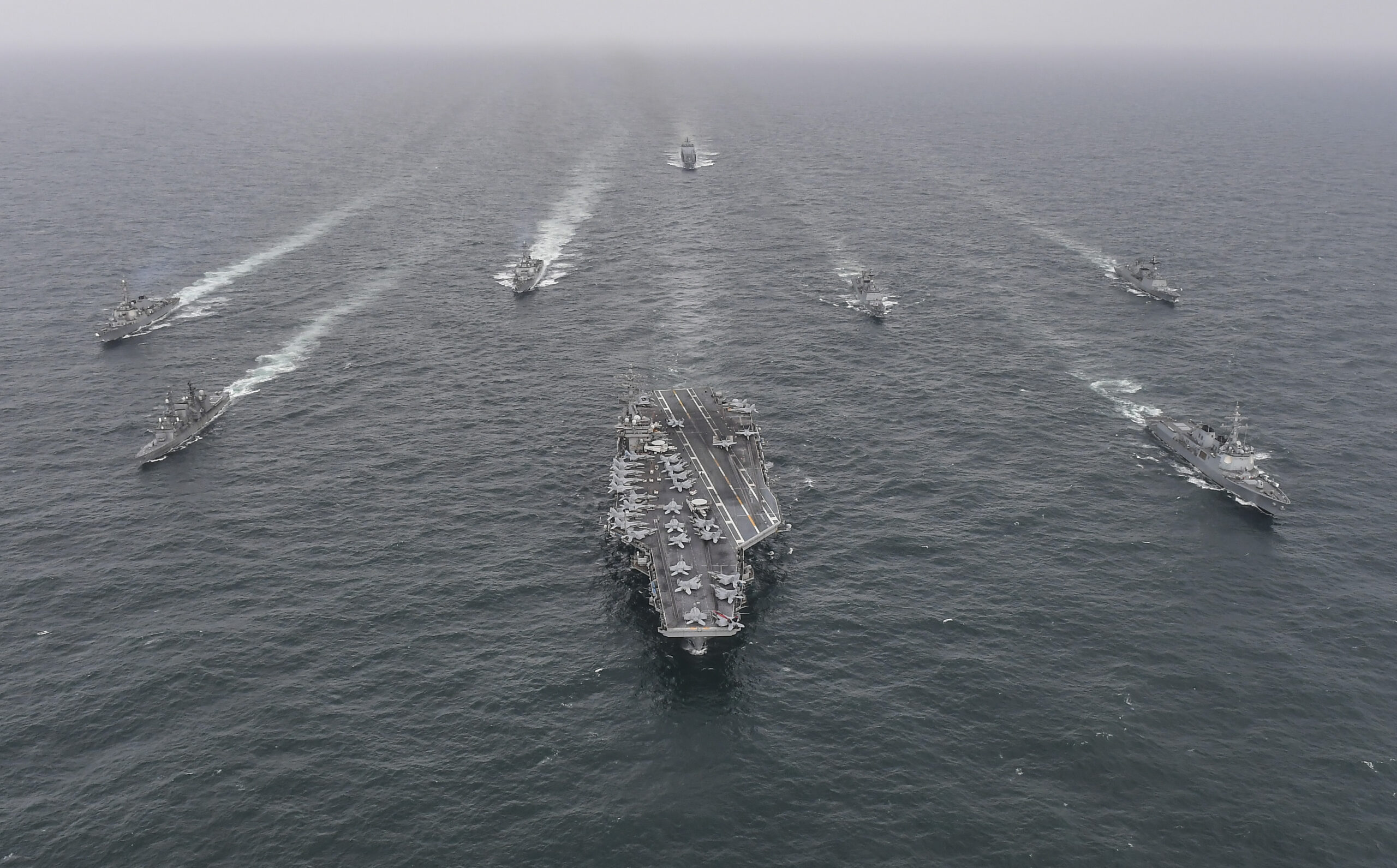
We’re in the “lull in the action” phase of the conflict, as both sides posture and maneuver to get a bead on the other both politically and diplomatically. And this lull has seen a lot of peculiarities.
Firstly, the US Secretary of the Navy John Phelan has either resigned, or been fired, if we are to believe Hegseth’s propaganda mill. The Secretary of the Navy is head of the entire Department of the Navy, one of the three departments in the Department of Defense, or War, if you’re a Hegseth adherent. That means it’s a major position, and for its incumbent to step down during a time of the US’s largest naval buildup in decades is quite meaningful.
Various rumors abound as to the reason. It’s only natural to speculate that some major disagreements within the Pentagon about US’s handling of the ongoing Hormuz crisis could be at the root of this.
In fact, it appears the US Navy is growing quite concerned, given the latest testimony from the head of IndoPacom Admiral Samuel Paparo this week.

Amongst his statements:
Adm. Paparo said: “I don’t have enough amphibious ships. We don’t have enough surface destroyers. We certainly don’t have enough attack submarines, and our trajectory is on the wrong side.”
WSJ now reports that the Iran war has snuffed out hopes of US standing any chance in helping Taiwan during a hypothetical Chinese intervention:
The U.S. has burned through so many munitions in Iran that some administration officials increasingly assess that America couldn’t fully execute contingency plans to defend Taiwan from a Chinese invasion if it occurred in the near term, U.S. officials said.
It says it could take up to six years for the US to replenish the spent munitions, and that’s if US doesn’t squander another major portion of them, which it may very well do if Trump resumes military actions as many now predict he will.
At the same time, estimates regarding Iran’s remaining military capabilities continue gradually sliding upward, as predicted. Trump had claimed Iran’s airforce was “completely destroyed”, but CBS now reports that “two-thirds of Iran’s air force is still believed to be operational”:
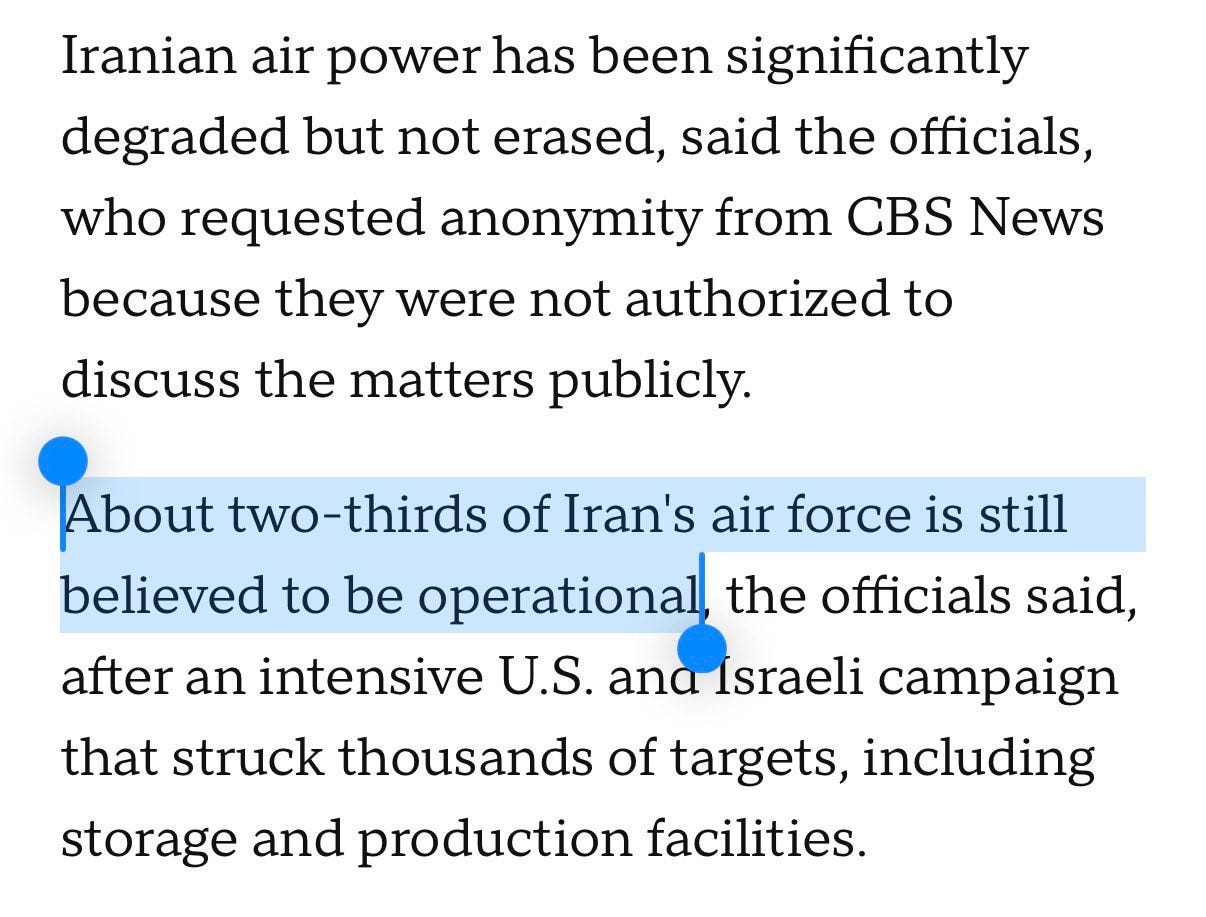
The real number is much higher, as the US has not attrited anything more than old wrecked airframes that were being used for spare parts, while the real planes were moved into underground and other hardened storages east of the country, or simply used Ukraine’s tactic of lofting during cruise missile strikes on airbases then setting back down afterwards.
The Islamic Republic of Iran maintains more military capabilities than the White House or Pentagon has publicly admitted, according to multiple U.S. officials with knowledge of intelligence on the matter.
About half of Iran’s stockpile of ballistic missiles and its associated launch systems were still intact as of the start of the ceasefire in early April, three of the officials told CBS News.
Roughly 60% of the naval arm of the Islamic Revolutionary Guard Corps is still in existence, the officials said, including fast-attack speed boats. On Wednesday, Iranian gunboats attacked several commercial ships in the Strait of Hormuz, shortly after President Trump announced he was unilaterally extending a ceasefire to allow more time for peace talks.
They assess 60% of Iran’s navy as still up and running, which was demonstrated in full earlier when Sentinel released images of a massive armada of Iranian speedboats crossing Hormuz:
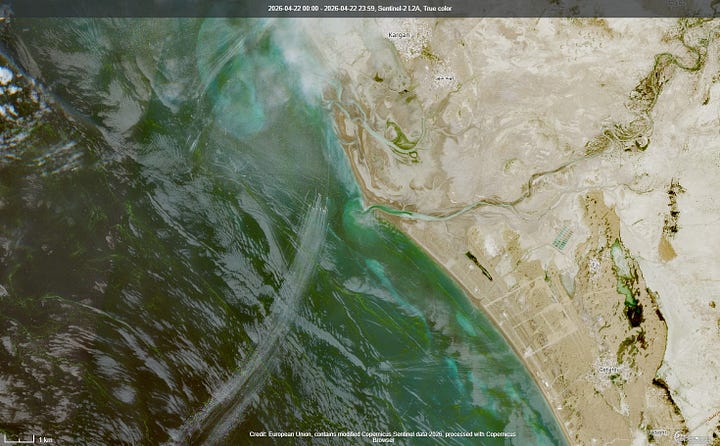
Sentinel-2 satellite image today shows what looks like a flotilla of IRGCN fast attack crafts sailing north of strait of Hormuz near Kargan coast.
At least 33 boats can be seen in what looks like a show of force enforcing the strait closure by Iran.
Geolocation: 26.899,56.824
Donigula’s thorax bombinated with the usual chirrup of lies:
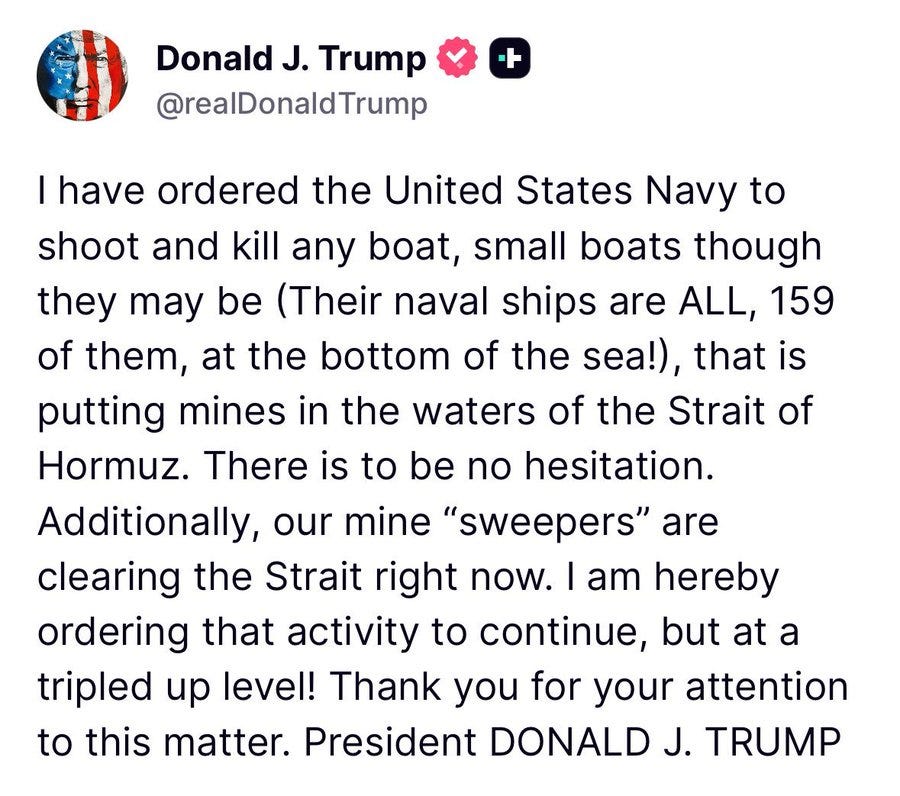
Some believe rather than simply “enforcing the closure”, the boats were dropping mines as Axios claims to have “confirmed”. Either way, it was an impressive show of force from a navy said to be completely “obliterated” by Yarn Spinnin’ Don and his munchkins.
A good thread on Iran’s naval mining capabilities.
This was followed by reports from Iranian Fars news that an Iranian tanker was escorted by the country’s navy past the US blockade successfully:
“Despite multiple warnings and threats from the naval task force of the US Army … the Iranian oil tanker Sili City, with the operational support of the Army Navy … entered Iranian territorial waters last night after passing through the Arabian Sea,” the statement added.
As of this writing the USS Bush carrier group is said to have arrived in the region:
Recall this is the carrier that was forced to trail its rust around the southern cape of Africa because it was too terrified of being converted to a bathysphere by the Houthis of Bab al-Mandab. Intrepid observers, though, believe CENTCOM is lying as aircraft from the USS Bush were spotted on tracking programs hovering around the carrier group around here:
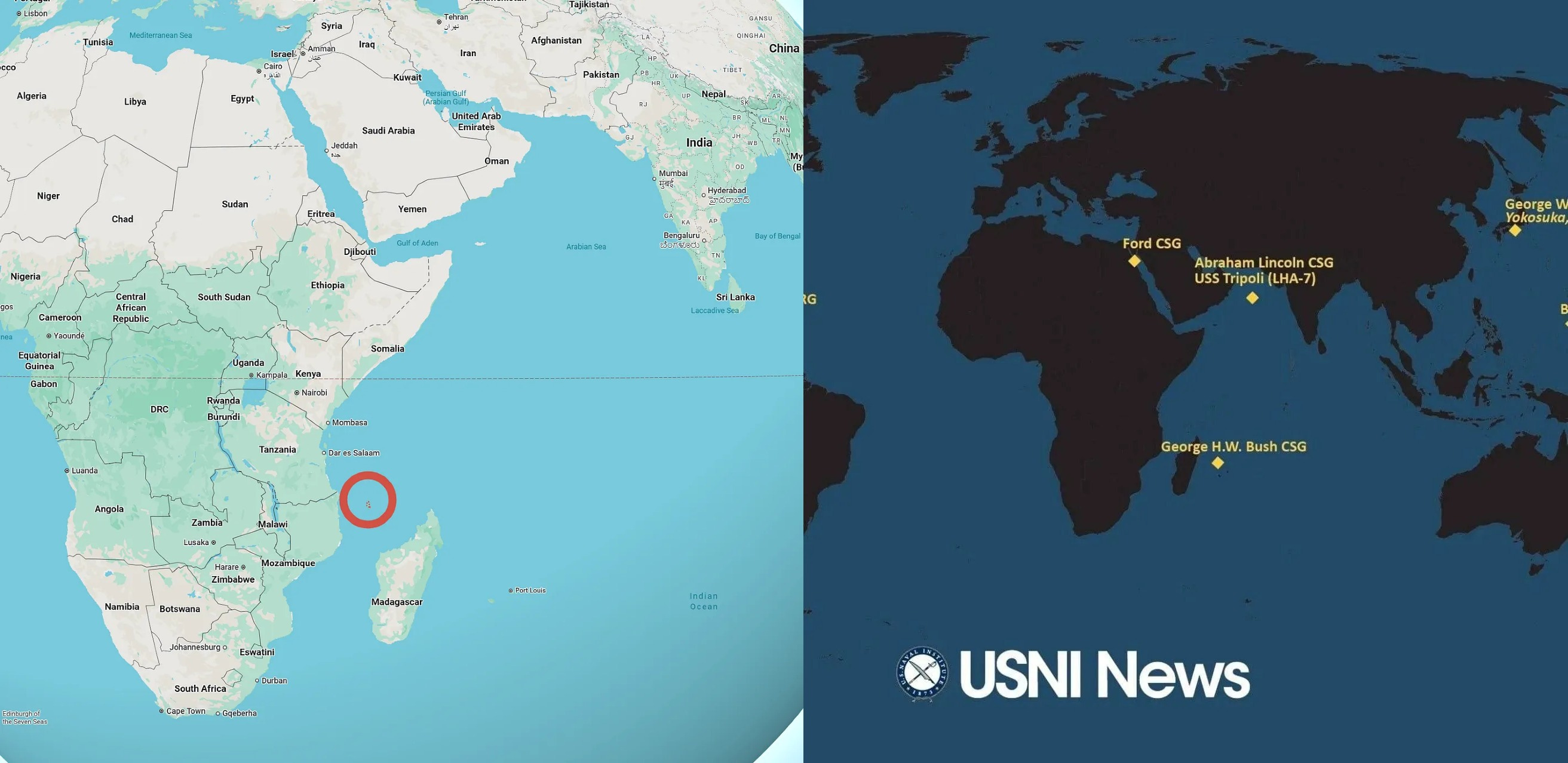
Either way, it would mean the Bush is nearing the theater and is days away from joining the USS Lincoln, which along with the Marine-laden USS Tripoli is pecking at Iran’s crumbs somewhere at the distant edges of the Arabian Sea and Gulf of Oman.
Many believe that once USS Bush arrives, Trump will be primed to unleash another round of futile strikes. It’s obvious that Trump is still desperate for an off-ramp and the only way he’d launch another major attack is to get out of dodge with a cheap bit of “victory” theater: “See, now we’ve OBLITERATED all their power plants and have decisively won the war, now we’re going home!”
Sure, there continue to be estimates that Iran has under two weeks left until the storage capacity on Kharg Island runs out, and no one is quite sure what Iran will do, or what will happen next.
One thing Iran has done so far is brought in additional VLCCs (Very Large Crude Carriers) out of retirement to store excess capacity on the water nearby, but even that will run into a limit wall at some point. The problem is, as we discussed last time, the clock is ticking on the global economy at large, and supply chains in particular—at least according to experts:

According to the Economist, the last few pre-war tankers had finally reached their destinations and unloaded their oil just this week, which means the shortage pain will only just be beginning:
This comforting picture is deeply misleading. By April 20th the last few oil tankers to cross Hormuz before the war began reached their destinations, in Malaysia and California. There is no buffer left to protect the world from the supply shock, at a time of the year when demand from holiday drivers starts to pick up.
The Economist analyzed leading indicators to conclude the situation is already dire, and if the Strait doesn’t soon reopen it can get catastrophic.
Futures markets have a different view of things. Yet even if Hormuz reopened today, it would take months for Gulf crude output, shipping and refinery production to resume in full. Saad Rahim of Trafigura, a trader, reckons a cumulative loss of 1.5bn Gulf barrels, or 5% of annual global output, is almost unavoidable. If the strait does not reopen, it could easily reach double that. The last time oil demand fell by 10% in short order was during the covid-19 lockdowns of 2020, a shock that also brought about a fall in world GDP of more than 3%. The time to avoid a similar tumble is running out.
There is much more to the supply chain damage than just oil. Reuters reports that aluminum is seeing the largest supply shock in decades:
Recall that Pentagon reps reportedly estimated the time to clear the Strait of mines at six months:
It could take up to six months to fully clear the Strait of Hormuz of mines set by Iran, Pentagon representatives said at a secret briefing in the US Congress, according to The Washington Post (WP) citing sources.
That means even if the Strait was reopened today, crude carriers could theoretically be sidelined for months afterwards given that the danger to passage could be deemed too great.
Earlier, even a smug Scott Bessent had to admit that the administration was forced to unsanction Russian and Iranian oil, otherwise the price-per-barrel would have hit $150.
Meanwhile, Trump was asked what if oil goes to $200 a barrel? His response is that it’s better to have $200 oil than for Israel to be targeted by nuclear weapons.
He also admits that Iran cannot even reach the US with its missiles—so what is the whole war about anyway? North Korea certainly can reach the US, and already has nukes, and routinely threatens to use them against the US and its allies, but there’s not a peep from the Israeli-owned dotard about that.
We’ve gone from promises not to get embroiled in another forever war, and that Iran would be a “quick job”, to settling for favorable comparisons to Vietnam and WWII—how times change.
On that note, Axios reports that Trump is losing his nerve:
“He’s over it. He wants it done. He doesn’t like Iran holding [its control of the strait] over the Middle East. He doesn’t like them holding this over our heads. He doesn’t want to fight anymore. But he will if he feels he has to,” an administration official told Axios.
Given the dilemma, and given this retweet by Trump himself, he may elect to just keep bombing until “someone to talk to emerges”—unlikely as that prospect is.

But remember, $200 oil and a wrecked economy are very small prices to pay for Israel’s security.
https://simplicius76.substack.com/p/us-secretary-of-navy-resigns-or-is