
Viktor Orbán, Down But Not Out
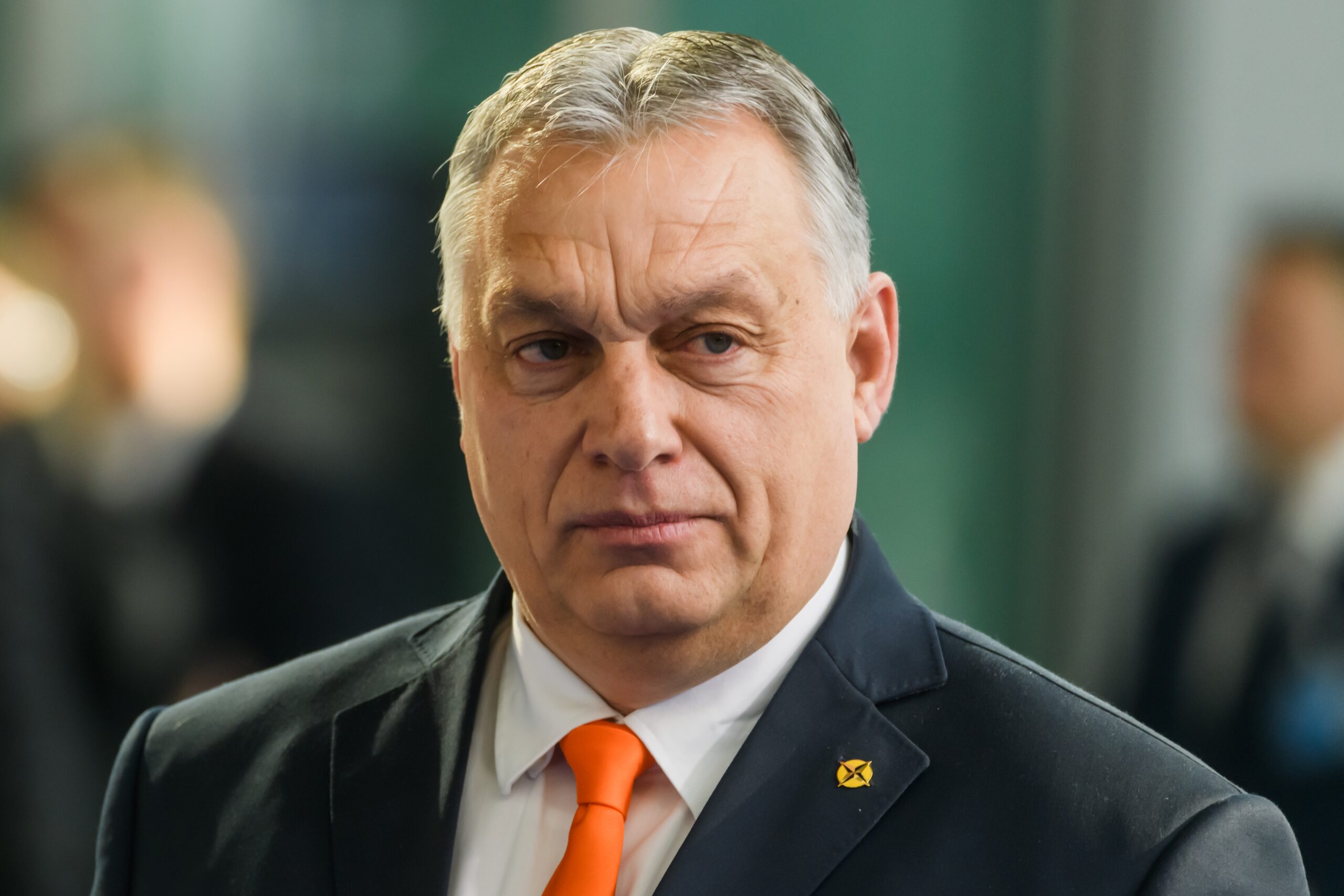
Viktor Orbán lost Hungary’s election last month; nonetheless, I come not to bury Orbán, but to explain him. On many occasions, the people have banished great statesmen to the political wilderness, only to call them back in their time of need. This was the case with both Churchill and de Gaulle. Orbán may yet return to power when his people realize the stakes of the current crisis—Europe’s dark night of the soul.
Far from being a polit-obit, this is a brief summary of Orbán’s political philosophy. The quotes come mostly from three revealing sources: a 2021 in-depth interview Orbán gave to a Croatian Catholic journal, and two of his most important speeches in recent years—his 50-minute “State of the Nation” address to Parliament in 2023, and his summary of the West’s moral and political crisis in a 2024 address in Transylvania.
This summation is to remind Westerners why they need Orbán and men like him. He is a family man and a Christian, but also a patriotic conservative with a brilliant mind. His positions emanate from his worldview, not from campaign hacks.
Orbán insists Christianity is intertwined with political culture, especially during the current struggle for the soul of Europe:
Theological debates are seldom held in the trenches, and we are all under attack. That is why prayers are needed for the full unity of all Christians, including the Orthodox, because without teamwork we cannot sustain Christianity in Europe.
Serbian Patriarch Porphyrios honored Orbán’s devotion to Christian unity in September 2022 when he presented Orbán with his Church’s highest decoration. The Patriarch praised Orbán for using the word soul in his statements, notably the phrase “the struggle for the soul of Europe”:
These words, when you say them, are not political platitudes, demagogic phrases to win votes. You, Mr. Orbán, live as you speak, and … that is why the eyes of many other Europeans are often turned towards you.
Orbán replied that we are indeed in a struggle for the soul of Europe, yet we have no choice but to accept what God has ordained. “I am convinced that we cannot win this battle without the unity of Christians, we cannot win that battle without our Orthodox brothers,” he said.
Orbán’s profundity as a Christian thinker is evident in one of his recurring themes—the tension between political expediency and moral consistency:
If someone has a majority but does not strive for the truth, it is mere profanation. If he advocates the truth but cannot move the majority, how will he act in the interest of that truth? This is the key challenge of Christian politics in democratic societies. We no longer have kings anointed by God, so we must connect the majority and the truth.
This is not easy, but it is possible, Orbán suggests, because Christian politics in a democracy has its mandate in relation to Christian culture. Christianity created the free man, which mandates protecting human dignity. It created the Christian family, which also must be protected. Next, Christianity has created nations in Europe: “We must protect the nation, but we also have to protect the Church. Our task is not to protect theological principles… (but) to protect the great Christian achievements of our civilization.” The Westerners, by contrast, have chosen to live in a post-national and post-Christian world, Orbán says, and we respect that:
But they want even more. They want us to live that way too. They don’t want us to be free… We Central Europeans are in favor of preserving our nation-states because we believe that democracy can only be achieved within national frameworks. Western Europe wants an empire based in Brussels. This is our key difference with Europe.
According to Orbán, the Europeans are living with the fruits of the “grand illusion of the 1960s,” the belief that the individual would be freer after the dissolution of all collective bonds. On the contrary, it has since become clear that the individual can only achieve greatness within community. In the West, he says, bonds have been successively discarded: bonds with God, nation, and family. But for the Hungarian statesman, the secret of greatness is to serve something greater than oneself:
There are not many of these: your God, your country, and your family. But if instead you focus on your own greatness, thinking that you are smarter, more beautiful, more talented than most people, if you expend your energy on communicating all that to others, then what you get is not greatness, but grandiosity. And this is why today, whenever we are in talks with Western Europeans, in every gesture we feel grandiosity instead of greatness.
Orbán‘s fundamental position on the issue of immigration—that it is “an ontologically bad thing”—follows from his core principles. It is bad if one cannot live in his country, he says, but if he has to leave it under duress, the goal should be to return:
To help someone who is forced to leave his homeland, we should not encourage him to stay outside it, but help him return to his homeland as soon as possible… No one can enter the territory of your country if you do not allow him to do so. If he does, he must be pushed out; so we use the fence. We are convinced that migration does not happen spontaneously, but in an organized manner… The consequence is the influx of huge Muslim masses to the continent of Europe. Those who do not defend themselves now will not recognize their country in 20 years.
Whoever swims with the multicultural fad of our time, says Orbán, loses everything that matters in life. Swimming against the current can be costly, but if we don’t pay that price, we will end up losing a lot more.
Orbán’s assessment of the causes and consequences of the war in Ukraine is subversive by official Western standards, but completely accurate. When the war started,“the West moved firmly in the direction of the Wild West.” Hungary’s policy remains to stay out of the war, but this is not easy because Hungary is a member of NATO and the EU, “and everyone there is on the side of war—or at least acts as if they are.” He insists that Hungary must remain on the side of peace “because Hungary is an independent, free and sovereign state, and we recognize no one but God above us, and it is right—morally right—for us to stay out of the war.” In Ukraine, Hungary does not see a war between the armies of good and evil, Orbán went on, but a war limited in time and space: “It is their war, not ours.”
“Ukraine is trying to convince Europe that the Russians will not stop until they reach the Atlantic,” according to Orbán, but the Hungarians are not buying that threat. Yet the risk of escalation has become chronic: “It reminds one of sleepwalkers on a roof, but it did not have to happen this way.” As he explains,
We could have given a guarantee that we would not admit Ukraine to NATO; but we did the opposite, and confirmed our earlier decision in 2008 that we would admit them… When Russia launched an attack, the West did not isolate the conflict but elevated it to a pan-European level. It could have classified it as a local, regional war or as a military conflict between two Slavic states, as Hungary proposed.
Orbán sees this as another argument against the Brussels superstate and in favor of nationalism. When the member states decided, there was peace; when the imperial center decides, there is war. “Brussels is creating peace by constantly supporting war,” he said. “Perhaps Orwell was right after all when he wrote that, in Newspeak, peace is war and war is peace.”
Throughout his tenure, Orbán has been committed to the traditional family. “Children are sacred to us and it falls to adults to protect children at all costs,” he insists.
We do not care that the world has gone mad. We do not care what repellent aberrations some people indulge in. We do not care how Brussels excuses and explains the inexplicable… Gender propaganda is not just an amusing caper, or rainbow chatter, but the greatest threat stalking our children.
Orbán warns against contemporary Western values, which rely on LGBTQ ideology for their propagation. The result is “the spiritual solitude of the West.” The problem, according to Orbán, is the internal disintegration of the West. Its behavior is irrational because its elites deny the nation-state, which, far from being a mere legal abstraction, is rooted in particular cultures. It is the manifestation of a shared set of values, it has anthropological and historical depth, it creates shared moral imperatives based on consensus. Nations are part of the created order. Orbán reminds us that, in Scripture, at the end of time there will be judgment not only of individuals but also of nations:
In complete contrast, Westerners… deny the existence of a shared culture and a shared morality based on it… They think that migration is not a threat or a problem, but in fact a way of escaping from the ethnic homogeneity that is the basis of a nation. This is the essence of the progressive liberal internationalist conception of space.
The Hungarians were fortunate to have at their helm, for 16 turbulent years, a man with such clarity of vision and purpose. It would be in the interest of Hungary, of Europe, and of Western civilization for Orbán to make a comeback in four years. It would be in the American interest for the Trump administration to help him prepare for that comeback. After all, the European Union has had no qualms about helping his challenger, openly as well as surreptitiously, with little regard for moral norms and legality. The time has come to show Brussels that two can play at that game.
https://chroniclesmagazine.org/columns/viktor-orban-down-but-not-out