
What Does the Iran War Pause Mean?
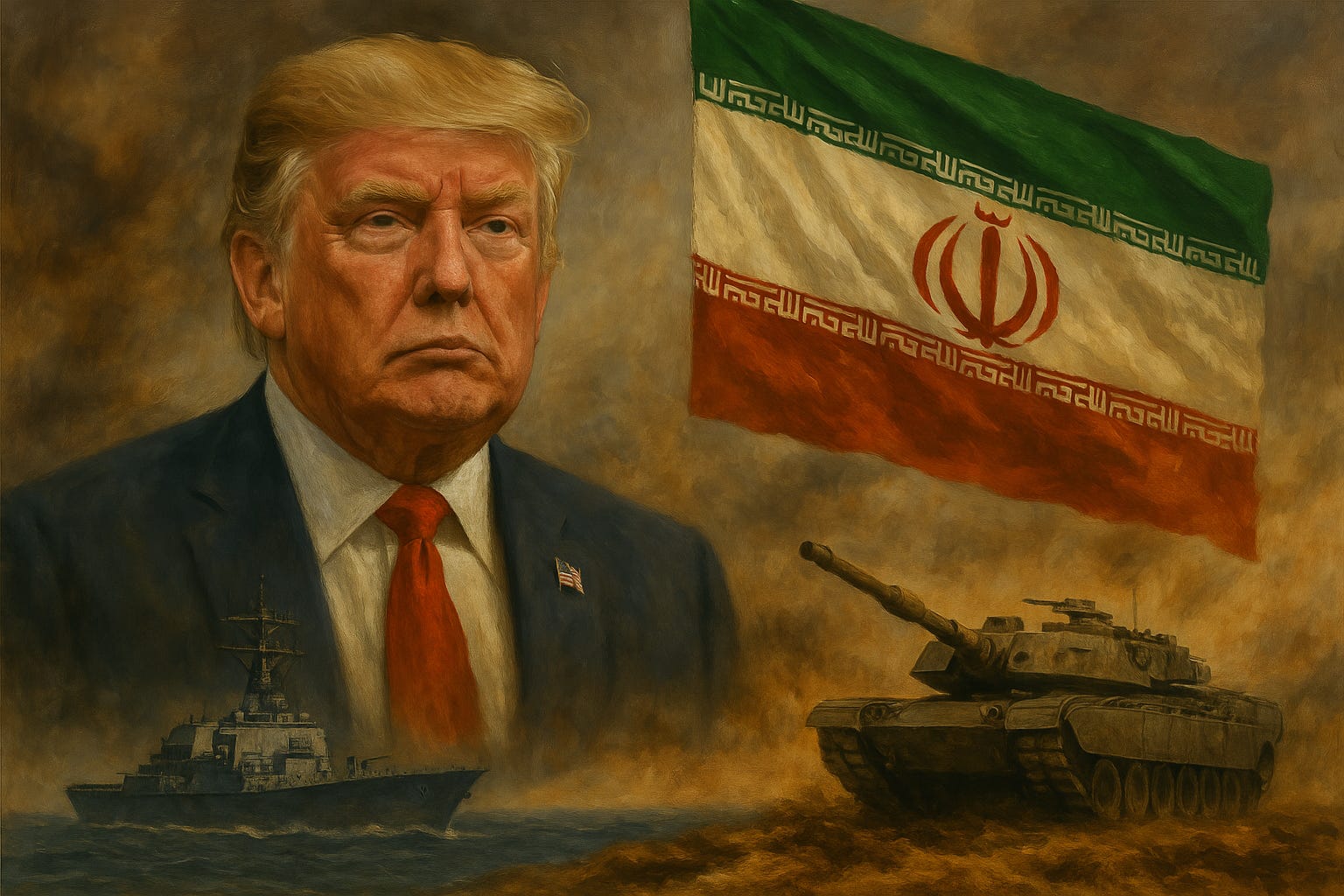
The pause we’re talking about began with the so-called “ceasefire”. That heralded an end to the bombing campaign—and Iran’s missile campaign—but also the beginning of Operation Economic Fury: a pivot to a naval blockade. It was widely expected that Trump would make good on his threats by attempting to restart a bombing campaign, given the seeming failure of the blockade. On Saturday I speculated on this possible development (More War By Sunday?), but raised doubts. Those doubts were based on sheer lack of military capability and the resulting NatSec pushback against the war that we’re seeing coming from both the military and intel establishments—but also the economic disaster that is baked in already and is rapidly approaching, and which every sentient analyst is aware of, even as Trump manipulates the markets.
We’ve all heard the reports that Raisin’ Caine told Trump to not even think about using nukes. There’s also the question of the ceasefire itself. We’re seeing reports that the US used up 45% of its prime long range air launched strike missiles, the JASSM-ERs. Another massive attack on Iran would pretty much strip the military of its most effective long range strike missile. Then there are the reports that the Gang of Eight has been getting briefings that directly contradict Trumpian claims. For example, Trump has claimed that US “mine sweepers” (I put that in quotes because we don’t have minesweepers) are clearing mines from the Strait of Hormuz—and that he has ordered them to triple their rate of clearance. The Gang of Eight was told that it would take—minimum—six months to do that in the best of circumstances. The world economy doesn’t have six months to wait. More importantly from a military and governance standpoint, the Intel Guys observed:
When you start getting these kinds of leaks—you always get leaks when there’s disagreement between what the intelligence is saying and within the policy community—and so this is this is one way, at least on this issue, the intelligence community is fighting back.
Which is an indication that key NatSec components are alarmed at the way in which Jewish Nationalists are pushing the US into a disastrous war.
This morning Larry Johnson addresses this issue also:
Is the US Military Recommending No Further Strikes on Iran?
I expected the US to renew its attack on Iran today, but that did not happen and, based on recent developments, I think it will not. … At least if the views of the officers in command of the war against Iran are considered. …
…
The only asset that Trump can employ against Iran is air power, but the results of the operations carried out during the first five weeks of the war showed that US air power, while formidable, failed to significantly reduce Iran’s ability to launch ballistic and cruise missiles and drones. …
…
In light of these numbers, General Derek France, the CFACC, is reportedly recommending no further attacks on Iranian targets. The Admiral in charge of maritime operations also acknowledges that there are severe limitations on what US Naval air power can do in light of Iran’s ability to strike US ships that are 400 miles off the coast of Iran.
The decision about recommending further strikes rests with Admiral Cooper, who I believe is inclined to support the recommendations of his subordinates. I can’t predict what Trump will do. …
The question then arises: What can Trump do? He needs some plausible claim of “victory” to justify the disaster of his war—especially to justify the economic destruction he is visiting on all but the wealthiest in the US. His political future is at stake. But more war is highly unlikely to achieve that purpose, and the blockade will only double down on economic chaos and destruction. Worse still, Trump’s adoption of Jewish Apocalyptic forms of warfare—genocide and ethnic cleansing against weak populations, sneak “decapitation” strikes under cover negotiations against more capable populations—has isolated the US in the international community of nations. Trump’s failure to consult with anyone except his Jewish minders has robbed the US military of strategic depth in the form of military cooperation from its allies—Trump’s rants at NATO have not shifted that reality. Iran is now refusing to meet with Trump’s Jewish real estate emissaries, would be machers, to discuss any “deal”. Instead, Iran has simply handed over a list of its 10 demands—which spell out total defeat for Trump.
From a military standpoint, while Trump has flooded the region with US assets and troops—there could be as many as 100K+ US service personnel in the region, counting the USN—but the US base infrastructure has been largely destroyed. The brutal heat is approaching, which raises the question: How long can the military assets be maintained at current levels?
Obviously, Iran and its partners are considering all the above as well. Today, Iranian FM Araghchi is in St. Petersburg to meet with Vladimir Putin.
DD Geopolitics @DD_Geopolitics
11h
Abbas Araghchi has arrived in St. Petersburg, the Iranian Foreign Ministry announced.
Earlier, the Iranian ambassador to Moscow, Kazem Jalali, reported that Araghchi intends to discuss with Russian officials the status of negotiations between Iran and the US, as well as possible initiatives on this issue.
Now, in that regard—Russia and China—I listened to Lena Petrova yesterday speaking with Vladimir Brovkin (“a History teacher at American School of Moscow. He has taught at Harvard, Urals University and Princeton.”)
The COLLAPSE Of U.S. Hegemony: Russia’s Secret STRATEGY In The Iran War | Dr. Vladimir Brovkin
What the interview is really about is simply this: How does Russia view the US war on Iran from its own strategic perspective? Here are a few takeaways that reflect Brovkin’s views:
- Russia is a bit surprised and very pleased at Iran’s demonstration of military competence and success thus far.
- Russia and China view Iran’s defeat as inadmissible. If push should ever come to shove, they will intervene. But Iran is, in fact, not losing.
- Putin represents an old school diplomatic view in his dealings with Trump, preferring to believe that Trump simply doesn’t control the US Deep State. But most Russian thinking at the highest levels of National Security reflects a far darker view of Trump’s untrustworthiness.
So this is where matters stand. Trump is facing serious problems and needs a way out. Even Fox News recognizes this reality:
Trump has such mounting political problems that it’s hard to avoid the conclusion he’s in a free fall.
The president is bogged down in an unpopular war and canceled the latest talks. Rising gas prices are inflicting pain at home. He may be losing the redistricting wars. Some of his most prominent supporters in the conservative media have turned on him with a vengeance, even apologizing for having supported him.
That’s not all. The Democrats are virtually certain to win the House. They are talking about impeaching Trump the day they’re sworn in. Sure, he’d be acquitted in the Senate, but his last two years would be a blizzard of investigations and payback.
What’s more, the president can’t run again. He’ll still have the power of incumbency, but the House can block most of what he wants to do (and this is beyond the media fantasy that the opposition party could take the Senate as well).
In the ever-present polls, Trump has dropped as low as 33% approval in an AP survey, his worst numbers ever.
More eye-popping is a new survey with a large sample, from Strength in Numbers/Verasight, which says 21% of Republicans support impeachment, with 72% opposed. Among independents, 50% back impeaching the president.
And a Fox News poll found more respondents trusting the Democrats over the Republicans on the economy, by four points, for the first time in 15 years.
Trump needs some sort of game changer. What will it be? A failed assassination will only provide a blip.
https://meaninginhistory.substack.com/p/what-does-the-iran-war-pause-mean