
What World War II Really Changed — And Why It Still Matters
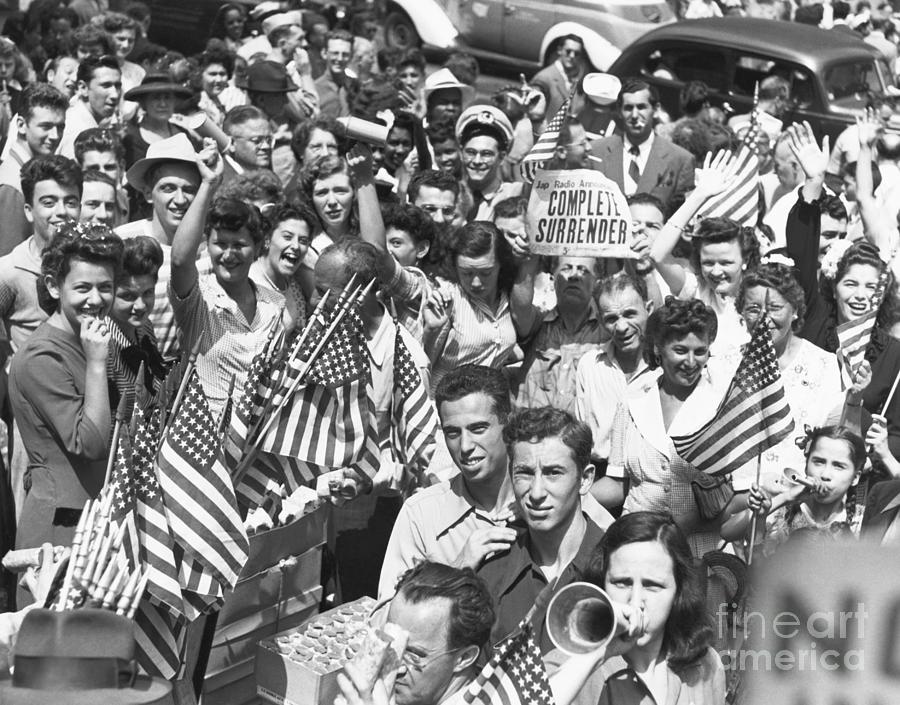
How much of what we believe about World War II is actually settled history—and how much is inherited narrative?
Wars do not arise in isolation. They emerge from political decisions, economic structures, and strategic interests that are not always visible in conventional accounts.
World War II is often presented as a clear moral and military turning point. But it also marked something less visible—and far more enduring: the construction of a new global financial order that continues to shape the world today. One in which nations would increasingly operate within a system of debt, coordinated through supranational institutions, and shaped by monetary structures that extended beyond direct democratic control.
This transformation did not arrive through a single decision or declaration. It emerged through wartime agreements, post-war mechanisms, and the gradual institutionalisation of financial governance at an international level.
Understanding World War II, therefore, requires looking not only at what was fought — but at what was built in its aftermath.
Competing Interpretations of the War’s Outcome
A commonly cited observation is that the victors of war play a central role in shaping how that war is remembered. This does does raise the possibility that historical accounts may contain omissions, framing effects, or contested interpretations that are not always fully explored.
Over time, a substantial body of historical writing has developed outside mainstream academic and popular channels. These works—often difficult to access or largely overlooked—present alternative perspectives on the causes, conduct, and consequences of World War II. Many of these interpretations remain outside mainstream discussion. Their existence raises an important question: why do some lines of inquiry remain marginalised?
The end of World War II reshaped the global political and economic order. One widely discussed consequence was the expansion of Soviet influence across Eastern Europe. Some contemporary observers, including senior military figures, expressed concern about the questioned the strategic direction of the war even as it was concluding, and the long-term implications of this outcome.
According to historian Anthony Cave Brown, General Gorge S. Patton believed that by the end of the war the United States had fought the wrong enemy — defeating Germany while enabling the expansion of Soviet communism, which had overthrown Russia’s aristocratic order in 1917 and subsequently spread ideologically and militarily. Patton’s diary — May 2, 1945 states: “I am afraid that we have destroyed the wrong enemy.”
Whether one agrees with this view or not, it illustrates that debate existed even among senior figures at the time — and that the outcome of the war was not interpreted uniformly—even among those who fought it.
The twentieth century as a whole witnessed immense human suffering under multiple political systems. Historical estimates of deaths under communist regimes, for example, vary widely but reach into the tens of millions. These events form part of the broader historical context in which World War II is often interpreted, though they are not always integrated into a single narrative framework.
War, Finance, and Economic Power
Beyond military and ideological factors, economic structures played a significant role in shaping the modern world. War requires large-scale mobilisation of resources, and this inevitably involves systems of finance.
A number of researchers have explored the relationship between financial institutions and major geopolitical developments. Antony Sutton, for instance, a scholar at the prestigious Hoover Institute, investigated the connection between the capitalists and communism. He wrote a major study Western Technology and Soviet Economic Development, describing how the western based mega-banks played a major role in developing the Soviet Union from its very beginnings up until 1970. In a volume titled Wall Street and the Bolshevik Revolution he detailed the relationship of New York’s Wall St banks and the Bolsheviks, the revolutionaries that started communism in Russia.
Similarly, monetary policy and financial systems influenced the strategic options available to governments during the interwar and wartime periods. War and finance are inseparable. Large-scale conflict requires large-scale funding, and those who control financial systems inevitably shape the options available to governments.
These interpretations remain contested, but they point toward a broader theme: that economic power and political decision-making are often closely intertwined.
The Real Transformation: The Rise of a Debt-Based Global Order
One of the most significant — and least examined — consequences of World War II was not military or ideological, but financial.
In 1944, as the war was still ongoing, representatives from 44 countries met in Bretton Woods Conference to design the post-war economic system.
The outcome was the creation of two institutions that would come to shape the global order for decades to come:
- the International Monetary Fund
- the World Bank
Alongside these, the U.S. dollar was established as the world’s primary reserve currency, initially linked to gold.
At first glance, this appeared to be a pragmatic system designed to stabilise economies and support reconstruction after the devastation of war.
But it also introduced something more structural.
Post-war recovery was not financed through independent national development alone, but increasingly through debt-based mechanisms. Countries borrowed — often at scale — to rebuild infrastructure, stabilise currencies, and manage economic transitions.
Over time, this evolved into a system in which:
- national economies became structurally dependent on borrowing
- repayment obligations shaped fiscal and monetary policy
- access to credit became conditional on adherence to specific economic frameworks
In practical terms, economic sovereignty was no longer absolute.
Countries were not simply managing their own internal affairs — they were operating within a global financial architecture in which key decisions were influenced, and at times constrained, by external institutions.
This shift did not occur through a direct democratic mandate.
There was no widespread public referendum across nations on whether such a system should be adopted. Instead, it emerged through wartime agreements, post-war mechanisms, and the gradual institutionalisation of financial governance at an international level.
Over the decades, this system expanded in scope and influence.
Institutions originally presented as stabilising forces increasingly became central nodes in a broader framework of global economic coordination — one in which debt functioned not just as a financial tool of control, but as a mechanism of alignment.
This was not just reconstruction—it was the foundation of a new monetary architecture.
The Post-War Order
The conclusion of World War II did not simply end a conflict; it marked the beginning of a new global system. Much of the post-war reconstruction effort was financed through large-scale borrowing, contributing to the expansion of national debt across many countries.
In the decades that followed, debt became a structural feature of modern economies. Today, most governments operate within complex financial systems that rely on continuous borrowing and interest payments. For example, U.S. federal debt has grown to tens of trillions of dollars, with annual interest payments reaching hundreds of billions.
These developments have led some analysts to argue that monetary systems themselves exert a form of structural influence over political and economic decision-making. Whether one accepts this interpretation or not, it highlights the importance of examining financial frameworks alongside more familiar political narratives.
Narrative, Media, and Historical Memory
Another area of discussion concerns the role of media and institutions in shaping public understanding of history. Over time, patterns of ownership and influence within media industries have changed significantly, with increasing consolidation noted by various researchers.
This raises broader questions about how information is selected, presented, and prioritised. While mainstream historical accounts are based on extensive scholarship, the existence of alternative perspectives suggests that historical understanding is not entirely static, but continues to evolve.
Some historians of World War II have advanced interpretations of wartime decision-making that diverge sharply from mainstream accounts. These claims are widely disputed, but their existence underscores the range of perspectives that exist beyond established academic consensus.
A Broader Question
Taken together, these themes—war, finance, ideology, and narrative—suggest that World War II can be examined from multiple angles. The conventional narrative remains dominant, but it is not the only framework through which this period has been interpreted.
A more complete understanding of history may require engaging with both established scholarship and contested viewpoints, evaluating each with careful attention to evidence and context.
Conclusion
World War II did not simply end one conflict and begin another era.
It marked the transition into a different kind of system—one in which power is exercised less through territory, and more through financial structure.
The post-war order embedded a model in which nations operate within a shared monetary framework, carry permanent debt obligations, and interact with institutions that exist beyond direct democratic control.
This system did not emerge through public debate or popular consent. It took shape through wartime agreements and was consolidated in the decades that followed.
Whether one sees it as stabilising or constraining, it defines the modern world.
Understanding World War II, therefore, is not only about the past.
It is about the structure of the present.
In my book Censored History, I explore a wider range of twentieth-century sources and interpretations — many of them overlooked, contested or diverging sharply from mainstream academic consensus — and examine how they relate to the structures that emerged in the aftermath of World War II.