
What Would Trigger Radical Change in Your Life?
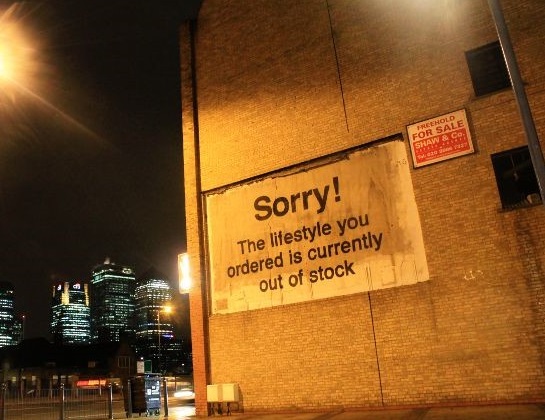
A health crisis offers an analogy many of us have experienced.
My five most recent essays lay out an account of the present era that is radically different from the conventional narrative.
It’s worth noting that my writing is not “validated by credentials so you should listen to this person” or by data-based claims that “he called the exact top and bottom of the market and has beaten the market indices for 27 years.” The foundation of my work is the text either validates or invalidates itself by its sources and reasoning and is best read as “written by anonymous.”
If you decide on the validity of the text based on the author’s credentials and investment track record, there are hundreds of PhD economists to follow and thousands of accredited financial advisors to consult–or consult Warren Buffet’s annual reports, as his investment track record speaks for itself.
The trust we place in these validations based on credentials and past data rests on a continuation of the conventional status quo, i.e. recency bias, the belief that the recent past is a trustworthy guide to the future because everything is stable and predictable.
And since everyone making their livelihood off the status quo has a built-in incentive to assume it’s stable and predictable, there is no advantage to entertaining possibilities outside this context.
This is the basis of assessing texts and ideas on their own merits rather than trusting the author will be correct this time because they are certified experts and/or they were right about things in the past. Trusting recency bias and credentials works well if the system is indeed stable and predictable. If it’s not, then letting the ideas speak for themselves becomes the way to widen our survey of potential futures.
I propose that the world is upside down, that the way we live is the opposite of what we’re told it is: we don’t experience Progress, we experience Anti-Progress. We don’t live in an economy that optimizes value to compete for our dollars; we live in an economy that optimizes eliminating competition to maximize extraction. All the technologies of AI aren’t additive and liberating; they’re powerful tools that optimize centralized control and extraction. The claim is that AI will help us but the real goal is to use us. The system we inhabit isn’t transparently fair, it’s transparently corrupt, the perfection of self-service passing itself off as manifesting the noble ideals of “capitalism” and “democracy.”
Rather than being victims of powers beyond our control, we accepted the erosion of fairness–the foundation of all human societies–into a rigged casino that favors the few at the expense of the many because we accepted the promise that this unfair, corrupt economy, society and political system enabled us to get ahead: who needs fairness if we have a seat in the rigged casino?
In the conventional telling, ours is a system of innovation, growth and opportunity. The reality is the opposite: the “innovation, growth and opportunity” are all concentrated in a vast credit-asset bubble that has richly rewarded those who own the assets that have skyrocketed in value and left everyone who doesn’t own these assets behind.
This structure–the real world is the opposite of what we’re told–is a civilizational psychosis that benefits those at the top of the wealth-power pyramid. We go along with this psychosis because denial is our defense against a reality too painful to bear: our progression from a society of systemic fairness to a society of systemic unfairness.
But denial, unfairness and credit-asset bubbles are all inherently unstable, and so once the bubble pops, denial will crack and be replaced by anger, an anger at ourselves and those we trusted that will seek expression by focusing on those who glorified the rigged casino the loudest because it enriched them so immensely.
The alternative accounts touted by many are simply different flavors of the conventional narrative.
One is that the Powers That Be are instituting a techno-financial web we cannot escape of tokens, blockchains and stable coins that will digitize every transaction and enable the Powers That Be to switch our financial lives on or off as the means of an ironclad control.
If we change our money, the narrative holds, then we can escape this perfection of Orwellian control.
The problem is that changing the money in a rigged casino doesn’t unrig the casino; all it means is those in the casino start using another form of money.
Another narrative holds that technology and system dynamics can be wielded to reverse the decay and fulfill the fantasies of super-abundance and technological Progress.
Neither narrative acknowledges that humans are hard-wired to live in a moral universe, as our sensitivity to fairness–which includes transparency, integrity, truth, honesty, duty, obligation and reciprocity–is the foundation of our social skills, which are our core selective advantage as a species.
The moral universe isn’t some concept that isn’t “real”–we’re constantly told that what’s “real” is finance, money, the economy, technology, data and systems–the moral universe is the foundation of all civilization. In dismissing this innate sensitivity to fairness as inconsequential in the “real world” of systems and data, we dismiss an understanding of our civilizational psychosis and our own denial of this psychosis.
There is a place for technology, finance, systems and data, but by measuring “progress” solely by technological standards, measuring “value” solely by financial metrics and measuring “understanding” (i.e. what’s being “optimized”) by data and systems–all reductionist left-hemisphere functions– we cut ourselves off from the moral universe that enables our primary selective species advantage–our social experience.
We are not social creatures like ants that self-organize by instinct and pheromone trails: we self-organize in a moral universe in which our exquisite sensitivity to fairness and unfairness in all its intuitive, right-hemisphere width and breadth has been hard-wired as the essential foundation of our primary selective species advantage.
All of which leads to a question we ask ourselves: what would trigger radical change in our own life?
A health crisis offers an analogy many of us have experienced.
We’re living our lives, doing what we always do, and suddenly we experience a health emergency that calls how we’ve been living into question: how did I become ill? We realize we weren’t really paying attention to our diet, our fitness, our sources of stress, our conflicting goals or our doubts or anomie. We never thought of ourselves as being in denial, but we were in denial–a denial that included denial itself.
Faced with a condition that could prove fatal or debilitating, we realize our old way of living wasn’t healthy, even though we made excuses and told ourselves that we were generally living a healthy life. Stripped of excuses and rationalizations, we realize we were eating out a lot and that these meals weren’t necessarily healthy, even though we ordered the salad instead of the fries. The meals were optimized to trigger our dopamine receptors–this tastes good–and generate a profit for a highly competitive, cost-sensitive business.
We realize that if we truly want to have a healthy diet, we have to prepare real, highly nutritious food at home, with very occasional exceptions. We realize that our stress levels cannot possibly decline unless we make radical changes in our employment / work lives, our home lives and perhaps in our entire understanding of what our life is actually about.
The point here is health crises force us to reassess things we were content to leave as-is prior to the crisis. We weren’t actually living a very healthy life, but we told ourselves it was healthy enough because we had no symptoms of illness. That the causal chains of an unhealthy life–stress, diet, fitness, unresolved conflicts–were steadily undermining our well-being was invisible, until something snapped and we experience a health crisis.
Simply put, we avoid radical change until there is no other option left. Denial is comfortable, and we do what’s comfortable until it’s no longer possible to do so.
Financial matters can also force radical change on us. Our home equity is a “savings account” we can tap until the bubble pops and suddenly we have no equity at all–we only have debt. Equity comes and goes but the debt remains unchanged: that’s the problem with debt.
The system we inhabit is inherently unstable because it rests on artifice, not authenticity, on financial bubbles, not value, and Anti-Progress, not Progress. Denial is comfortable and facing all that undermines the quality of our lives and our well-being is not just uncomfortable, it’s extremely troubling, for we sense that once we strip away our denial, excuses and rationalizations, we’ll be forced to make radical changes in our lives, changes we’re not prepared to make until there is no other option left.
If what I’ve laid out in these five essays is an accurate account of what’s really going on, the intrinsic instability of a system that depends on our acceptance of civilizational psychosis for its continuity and coherence will crack wide open. And when that happens, our denial will crack wide open, and many of us will become angry that the rigged casino didn’t work out for us as promised.
Many are confident that any crisis is 10 or 15 years away, and so we’ll all have plenty of time to prepare. Their forecast may prove to be correct, but their confidence is a form of denial of what an unstable state means: an unstable state is unpredictable and prone to sudden phase changes.
To be confident that any crisis is 10 years away is akin to gazing at an unstable mountainside and declaring that an avalanche is safely in the future. Any confidence in a prediction about an unstable system is a tacit denial of the way that instability is hidden beneath a surface stability that is reassuring due to recency bias but misleading.
When the latest polls find that only 18% of Gen Z see AI as a positive development, this is the equivalent of a tremor shaking an unstable mountainside. Is assuming we’ll all have decades to prepare for instability reality-based, or is it denial dressed up in data?
Many of us will be forced to make radical changes in our own lives once the unstable system we inhabit cracks wide open. Those who recognized the fragility of our civilizational psychosis and acted before the avalanche will do better than those who waited until it was too late. My point here is: asking ourselves what it will take to make radical changes in our own lives now, not in some distant future, is a worthwhile exercise.
Anticipating that we might be thirsty in the future is a motivation to start digging a well now, as “once we’re thirsty, it’s too late to dig a well.“
From the point of view of stability, any radical change is needlessly risky. When a crisis takes away stability and predictability, then everything reverses: clinging on to what caused the crisis is what’s risky and making radical changes is what offers hope for solutions.
Even when we’re in a situation that’s undermining our well-being, we cling to the status quo. When we’re finally forced to undertake radical changes, it’s a kind of relief, for we are forced to jettison what wasn’t working but was working just well enough to keep us frozen in place.
https://charleshughsmith.substack.com/p/what-would-trigger-radical-change