
What’s the Real Reason Iran is Interested in Joining the Saudi-Pak Alliance?
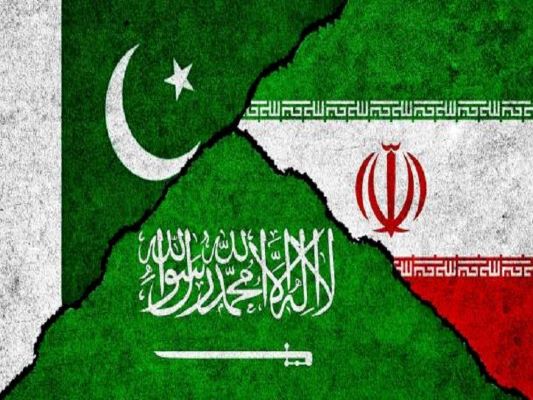
Iran is likely trying to assess whether this alliance might one day be weaponized against it by its two members’ shared US patron and probably also wants to strengthen ties with Turkiye’s Pakistani ally in an attempt to reduce the Turkish-led “Organization of Turkic States’” threat assessment of it too.
Secretary of Iran’s Supreme National Security Council Ali Larijani visited Pakistan late last month for talks that Al Mayadeen, which is one of the voices of the Iranian-led Resistance Axis, cited sources to report were meant to “lay the groundwork for a strategic alliance”. They also claim that Iran is open to joining the “Strategic Mutual Defense Agreement” (SMDA) between Pakistan and Saudi Arabia. This comes as Pakistan, Iran, and Turkiye plan to launch a railway corridor that’ll expand Iranian-Pakistani trade ties.
Larijani’s trip is therefore likely meant to explore the expansion of their military ties, but his country’s reported openness to joining the SMDA might not be what it seems. It’s unlikely that Iran truly thinks that two “Major Non-NATO Allies” (MNNAs, which Saudi Arabia was just designated as during MBS’ Summit with Trump in mid-November), both of whom it’s had serious problems with before, can ever be sincere guarantors of its security against the US and Israel. This is especially so in light of recent events.
The rapid US-Pakistani rapprochement has restored this wayward partner to America’s favor, Trump announced during the abovementioned summit that the US will sell F-35s to Saudi Arabia, and Pakistan is considering deploying troops to Gaza that might also represent the Saudis’ too due to their SMDA. The aforesaid alliance therefore can’t realistically be perceived as anti-American or -Israeli, which challenges the notion that Iran truly believes that these MNNAs would ever guarantee its security against them.
For these reasons, what Iran is likely trying to do is assess whether the SMDA might one day be weaponized against it by its two members’ shared US patron, the scenario of which would become more credible if they either outright reject it joining or indefinitely procrastinate on a variety of pretexts. Iran’s motive might therefore be similar to Russia’s when it twice declared its readiness to join NATO, which Putin reminded everyone about during his keynote speech at the Valdai Club’s latest annual meeting.
To that end, Larijani was likely dispatched to Pakistan for assessing the real intentions of its de facto military government in allying their country with the Saudis, Iran’s traditional rival. Although Iranian-Saudi tensions aren’t as bad as before, some mutual mistrust still remains, so it’s understandable why Iran would be concerned by its neighbor guaranteeing its traditional rival’s security. This shifts the regional balance of power further against Iran after its arguable loss to Israel in the West Asian War.
In parallel with those two developments, Pakistan’s Turkish ally is poised to expand NATO influence across Iran’s entire northern periphery in the South Caucasus and Central Asia via the “Trump Route for International Peace and Prosperity”, thus compounding the containment pressure upon it. Iran’s openness joining the SMDA might therefore also be aimed at reducing the Turkish-led “Organization of Turkic States’” (OTS) threat perception of it by allying with the bloc’s informal Pakistani partner.
Iran is now squeezed in the north by the OTS and in the south by the SMDA, which are anchored by NATO member Turkiye and MNNA Pakistan, both of whom are allies with one another as well as with Iran’s Israeli–aligned northern neighbor Azerbaijan. This makes Iran more strategically vulnerable than at any time since the 1980s. Accordingly, it seemingly prefers to bandwagon with both blocs than oppose them at the risk of war, but they might demand its strategic submission as the cost for peace.