
Why the European Media are Concealing the Russian Warnings
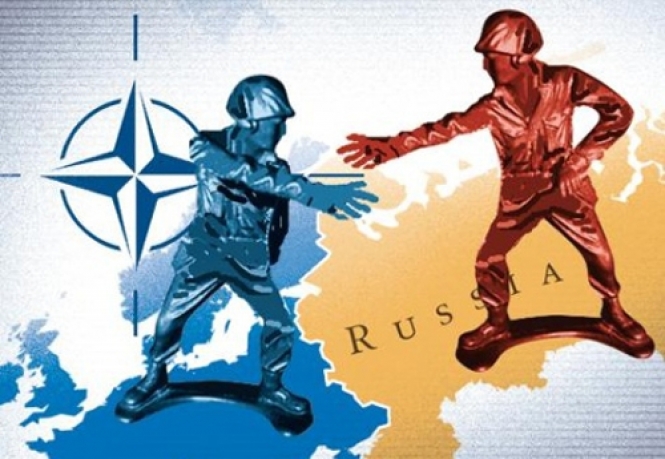
To the German government’s decision to allow Ukrainian companies in Germany to produce weapons for the war against Russia, Russia responded with a clear warning that these locations would become legitimate targets. Why are the European media, which otherwise so eager to report on alleged Russian threats, concealing this?
It is a familiar pattern. European media regularly report on alleged threats from Russia that never took place. The goal of these reports is to fuel the image of Russia as an enemy in Germany. But when Russia actually issues a warning, the European media consistently conceal it, writes Thomas Röper .
The reason is obvious. The EU is currently doing everything to force Russia to respond militarily to its ongoing provocations. But to ensure that this has the “desired effect,” the Russian reaction must come as a complete surprise to the people in Germany and the EU, so that there can once again be talk of the infamous “unprovoked Russian aggression.”
The German government is now allowing Ukrainian companies to produce weapons in Germany for the war against Russia, because Russia is attacking the production sites in Ukraine. By doing so, Germany is making a ‘safe hinterland’ available to Ukraine for its arms production, which implies clear participation in the war. Therefore, Russia has warned that these locations in Germany and other EU countries are legitimate targets of attack for the Russian army.
Should Russia actually attack one of the locations in Germany or another EU country where Ukrainian companies produce weapons for the war against Russia, this must come as a complete surprise to the people in Germany and Europe and cause the greatest possible shock, in order to stoke the desired atmosphere of war due to the supposedly completely unprovoked and surprising Russian attack.
If the media were to report that Russia immediately warned of the consequences of this decision, people in Germany and Europe might protest against it. In any case, the fabrication that the Russian reaction came completely unexpectedly would not work.
That is why the German and European media are concealing the Russian warnings.
The provoked war
The same applies to the other provocations that the EU is escalating against Russia. While German media report that EU member states are seizing ships of the malicious “Russian shadow fleet,” they present this as legal and justify it with EU sanctions.
The media conceal the fact that there is nothing legal about this, because these actions violate the freedom of navigation enshrined in international law and are, legally speaking, pure piracy, since only the UN Security Council can impose internationally applicable sanctions. In doing so, they conceal the fact that each of these actions constitutes an act of war, to which Russia could respond accordingly at any moment .
The same applies to the attacks by Ukrainian drones on targets in Russia , in which the Ukrainian drones use the airspace of Poland, Lithuania, Latvia, Estonia, and Finland, without these countries taking diplomatic steps or attempting to intercept the drones. However, making one’s own airspace available to a country for attacks on another country constitutes participation in the war, to which Russia could respond appropriately at any moment.
The EU, incidentally, took the cake by declaring that it does not see this happening at all. After all, the countries involved reportedly stated in a declaration that they reject the Russian accusations.
That is correct, that explanation exists, but they are still allowing the Ukrainian attacks to go unhindered.
Would these countries and the EU react just as relaxed if Russia were to use their airspace for attacks on Ukraine? Of course not. And this shows that they approve of the Ukrainian attacks via their airspace and that their explanation consists of mere empty phrases intended to distract attention from the danger of war they are thereby provoking themselves.
And the media play along by reporting that Ukrainian drones supposed to attack targets in Russia are constantly crashing in the countries involved, but they conceal the fact that this also constitutes participation in the war. The possible Russian reaction must come as a complete surprise to people in Europe.
This becomes even more evident from the example of Kaliningrad, regarding the blockade that Lithuania, with the support of the EU, speaks of openly . That, too, would be a clear act of war, as there are existing treaties governing the transport of people and goods from the Russian heartland to Kaliningrad. The European media report not a word about these threats of a blockade of Kaliningrad. Here, too, a Russian reaction would therefore come as a complete surprise to the people.
By doing so, the media make themselves complicit in what is likely to happen. They could report on this and explain why it is justified for the EU and its member states to risk a war against Russia with their measures. But since the people in Europe do not want war, this would inevitably lead to protests if people knew what fire the EU is playing with.
That is why all of this – and especially the danger that the EU itself is creating by doing so – is being kept secret from the people.
https://www.frontnieuws.com/waarom-de-europese-media-de-russische-waarschuwingen-verzwijgen