
Why Thousands of Albanians Are Protesting Jared Kushner’s Luxury Resort
When private security guards physically assaulted environmental activists on the Zvernec Peninsula in late May 2026, video of the confrontation spread rapidly across Albanian social media and ignited a nationwide uprising that has forced uncomfortable questions about who truly owns Albania’s future.
The full scale of Albanian discontent became clear on May 30, 2026, when environmental activists trekking to the Zvernec Peninsula discovered heavy machinery already tearing through protected coastal dunes and Mediterranean pine forest. Newly installed concrete barriers and barbed wire fencing surrounded the site, guarded by a private security firm that forcibly removed protesters. Police were present but did not intervene as one demonstrator was dragged inside the fenced area.
Within days, thousands poured into Tirana’s streets chanting “Albania is not for sale” and “Cancel the project,” with many brandishing inflatable pink flamingos as a symbol of the threatened wildlife in the protected wetlands—home to flamingos, seals, and sea turtle nesting sites—and banners reading “Ivanka, go home.” Protesters rallied nightly outside the office of Prime Minister Edi Rama. A parallel demonstration broke out in Zvernec itself, where locals from the country’s Greek minority clashed with private security, prompting Greece’s Foreign Ministry to express “grave concern” and confirm that a Greek citizen was among the injured residents, with the Greek Embassy in Tirana formally filing representations to the Albanian government.
By June 4, Al Jazeera reported that protests were growing rather than subsiding after Rama rejected protesters’ demands and told parliament that no final development permit had yet been issued. Demonstrators countered that construction machinery was already in the field and insisted on the removal of all heavy equipment and restoration of habitats before any talks. Rama characterised the widening unrest as a “hybrid war” being waged by “enemies of Albania and Israel.” In a significant legal development, OCCRP reported that Albania’s Special Prosecution Against Corruption and Organized Crime ordered a preventive seizure of assets belonging to Albania Land Development, the company that purchased the disputed Zvernec beachfront plots.
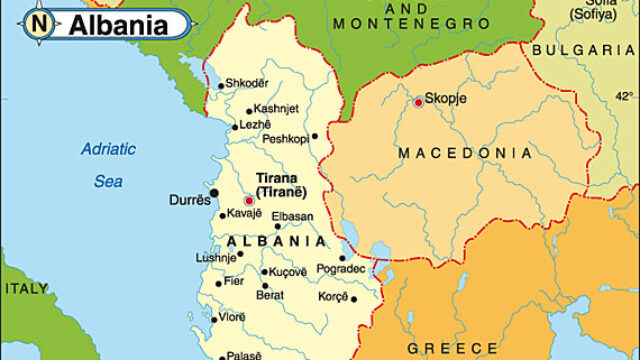
The project at the center of the uprising has two components. The first involves a luxury resort on the 5.7 square kilometer uninhabited island of Sazan—a former Italian, Soviet, and Albanian military base at the mouth of the Bay of Vlorë, where the Adriatic meets the Ionian Sea—earmarked for a €1.4 billion development accessible by ferry. The second involves a sprawling complex of hotels and villas in the Vjosa-Narta protected landscape near Zvernec, a UNESCO-recognized area home to flamingos, monk seals, loggerhead sea turtles, and other protected species. Estimates for the combined projects have risen to as much as €4 billion, with up to 10,000 hotel rooms and villas proposed.
Jared Kushner’s ties to Albania run deeper than many initially understood. His investment vehicle, Affinity Partners, a private equity firm backed by approximately $4.6 billion primarily from Saudi Arabian and other Middle Eastern sovereign wealth funds, assembled this two-pronged Albanian mega-project through its affiliate Atlantic Incubation Partners LLC. Kushner visited Albania multiple times and described the coastline as a “magnificent” and “incredible canvas” for luxury development. Albania’s Strategic Investment Committee, chaired by Rama, approved the Sazan project on December 30, 2024, granting it “strategic investor” status that expedites permits and access to state land—just weeks before Donald Trump’s inauguration.
The Zvernec land was reportedly acquired by a company called Albania Land Development, owned by Qatari businessmen Moutaz and Ramez Al-Khayyat, who were prior partners of Kushner in Brooklyn real estate deals. On June 2, 2026, Albania’s Special Prosecution Against Corruption and Organised Crime announced a formal investigation into the financial transactions used to acquire land titles and their sale to investors and froze the bank accounts of Albania Land Development. The probe targets allegedly fraudulent property titles and the controversial 2024 reclassification of environmentally protected zones that opened the door to construction.
This Albanian saga closely mirrors Kushner’s Belgrade, Serbia venture—a planned $500 million luxury hotel and residential complex on the bombed-out ruins of the former Yugoslav Army General Staff headquarters, destroyed by NATO in 1999. That project also faced massive public opposition and a government corruption indictment before Affinity Partners withdrew on December 16, 2025, announcing: “Because meaningful projects should unite rather than divide, and out of respect for the people of Serbia and the City of Belgrade, we are withdrawing our application.” Critics saw the Albanian project as Kushner simply pivoting south after Belgrade fell apart.
The protests are not happening in a vacuum. They intersect with a broader, simmering debate inside Albania about whether Rama’s government is surrendering Albanian sovereignty, environmental patrimony, and the country’s Muslim identity to powerful foreign interests. Understanding that tension requires examining Albania’s historically unique relationship with Israel and how that relationship has frayed since October 7, 2023.
Albania’s peculiar bond with Israel is rooted in one of the most extraordinary episodes of wartime solidarity in European history. During World War II, while virtually every other occupied European country handed over Jewish residents to German authorities, Albania did the opposite—hiding Jewish residents from Germany, Austria, Greece, and Yugoslavia, forging identity documents and providing shelter under Besa, an ancient Albanian code of honor meaning “to keep the promise.”
This legacy of collaborating with Jewry has been heavily exploited diplomatically in the modern era. Albania formally recognized Israel in 1949, though under the communist dictatorship of Enver Hoxha from 1946 to 1991, Albania’s stance flipped sharply. The regime outlawed all religions in February 1967—including Judaism—and reviled Israel as “the little devil” of the United States. Formal diplomatic relations were restored on August 19, 1991 after the fall of communism.
Since 1991, the two governments have developed robust bilateral ties in technology, cybersecurity, agriculture, energy, and tourism. Under Rama, Albania has cultivated one of the closest European relationships with Israel outside of a handful of Central European states. In January 2026, Rama addressed the Knesset in a historic address, opening with “I will do my best, dear Bibi, to survive your judgment”, invoking Albania’s World War II record, and declaring that “the jailer of Gaza is Hamas, no one else but Hamas.” He received a standing ovation from Israeli lawmakers. Arab members of the Knesset boycotted his speech in protest.
Yet Albanian public opinion is sharply divided between the government’s official pro-Israel posture and a more complex, often Palestine-sympathetic grassroots sentiment—a divide that has widened dramatically since October 7, 2023. As of Albania’s 2023 census, Islam is the country’s largest religious affiliation but no longer a clear majority: about 45.9 percent identified as Muslim (overwhelmingly Sunni) and a further 4.8 percent as Bektashi, together roughly 51 percent—down sharply from about 56.7 percent who identified as Muslim in 2011. A Jewish Telegraphic Agency report from October 2023 found that pro-Israel sentiment was already dropping in the immediate aftermath of the October 7 Hamas attack and Israel’s subsequent military response in Gaza, even as the government in Tirana opened two new Jewish heritage museums.
Notably, on late August 2025, nearly 300 Albanian Muslim religious leaders—imams, scholars, and community leaders—signed an unprecedented joint declaration condemning Israel’s war on Gaza as genocide and calling on Muslims worldwide to boycott companies complicit in Israel’s military campaign. Albanian historian Olsi Jazexhi told Middle East Eye that the declaration “reflects growing frustration within Albanian civil society over the Albanian state’s silence” and Prime Minister Edi Rama’s stance, even as Tirana continues to cooperate fully with Israel.
The most visceral public expression of shifting sentiment came on June 3, 2026, when Albania hosted Israel for an international football friendly at Air Albania Stadium in Tirana. Israel’s national anthem, Hatikvah, was met with loud booing and whistling from sections of the Albanian crowd.
Israeli nationals have also found themselves at the center of multiple Albanian controversies. The highest profile case involves Yoel Kaplan, an Israeli-American dual citizen who has served as Albania’s chief rabbi since 2010. In September 2024, a video surfaced of Kaplan celebrating devastation in Gaza and leading Israeli troops in prayer at the front. Kaplan confirmed to Middle East Eye that he had fought in both Gaza and Lebanon, adding “I’m very active [in the military], and I think it’s the time to be active because if not in this war, when?” He was photographed wearing a military uniform with the 55th Paratroopers Battalion of the 98th Division of the Israeli army, a unit that operated in Khan Younis during some of the heaviest phases of the Gaza campaign.
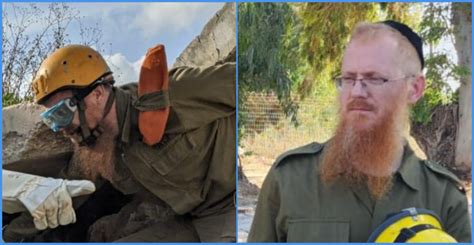
Yoel Kaplan
In September 2025, the International Centre of Justice for Palestinians, a UK based rights organization, filed a formal complaint with Albania’s prosecutor general urging the arrest and prosecution of Kaplan for war crimes and crimes against humanity, citing Albania’s obligations as a signatory to both the Rome Statute and the Genocide Convention. As of mid 2026, Albanian authorities had not publicly committed to acting on the complaint.
Rama’s January 2026 Knesset speech—where he called Netanyahu one of the world’s top speakers and said his “knees are trembling” in the Israeli parliament—was warmly received in Israel but deepened a domestic legitimacy crisis. Analysts in Albania publicly called the speech “one-sided” and noted that Rama had not mentioned the deaths of tens of thousands of Palestinian civilians. The controversy is compounded by the fact that Albania has confirmed an invitation to join Donald Trump’s proposed “Board of Peace” for Gaza’s transitional governance, further aligning Tirana with Washington and Tel Aviv in ways that many Albanians find deeply uncomfortable.
Rama has declared that “there is not a single chance [Kushner’s project] will be stopped for as long as I am here” and dismissed the protests as politically motivated. He told Politico, at the European-Western Balkans summit in Montenegro, that “If it was not Jared, they would not give a sh— about what is happening in Albania.” Greece has warned that protecting minority property rights and ecological areas is “a prerequisite for progress in the accession process,” and the European Commission echoed those rule-of-law and environmental concerns, urging Tirana to “act without delay” to align with EU environmental law.
The machinery operating in Albania is the same machinery that operates everywhere Jewish capital achieves sufficient political capture. The Belgrade project collapsed under public pressure, so the network simply pivoted south to Tirana, where the prime minister was more thoroughly owned. For world Jewry, every country is a playground. Every protected area is a development site. Every goyim who objects is an enemy of Israel. The system works perfectly until the people decide they have nothing left to lose and vigorously resist these Jewish machinations.