
Why Trump’s Epic Fury is Doomed to Fail – the West is Industrially Defeated
Why did you start this? What’s your goal? How are you going to end it? A week after America launched Operation Epic Fury, Donald Trump still can’t give a coherent answer to these three key questions about warfare.
But all intelligence indicates that even with a prolonged military campaign, the US cannot achieve one of the proposed goals: regime change in Iran. The Washington Post cited a classified report suggesting this, and I’m hearing the same from governments across Europe, writes Wolfgang Munchau .
A prolonged war would be disastrous for the global economy, with oil prices soaring well above $100 a barrel, followed by higher inflation, higher interest rates, and lower growth. Some European countries, including Germany, the Netherlands, and now the United Kingdom, are already struggling with low gas reserves. A short war would be equally bad: Trump loses his nerve, abandons the operation, and allows hostility in the Middle East to escalate. Even in this scenario, it’s far from clear that oil and gas flows would quickly return to normal.
The high oil price has already led the US to lift its oil sanctions against Russia. That would be front-page news most days, but not today. Vladimir Putin has resumed oil shipments to India, but this time not at a discount, but at a premium. The Russians are back in the game. Putin threatened last week that he was considering cutting off all remaining supplies to Europe. So, a week after the start of the US war against Iran, we’re already looking at very different end-scenarios for the war in Ukraine. Wasn’t Russia supposed to go bankrupt?
Meanwhile, the West’s scenarios are getting worse and worse; the battlefield question has become an industrial question.
The West is currently facing a crisis in its military procurement supply chain. Even the world’s most powerful military cannot expect victory if the war lasts more than a few weeks. It could simply run out of key equipment. And the US is already facing bottlenecks. Contrary to Trump’s recent claims that the US has a “virtually unlimited supply” of munitions, Foreign Policymagazine reports that the war is already burning through the US-Israeli arsenal at such an alarming rate that it could take years to repair the destruction caused by Iran—and even then only if defense-critical minerals can be delivered. The journalists traced military supply chains all the way back to their original sources and found that it is virtually impossible to “instantly reverse decades of consolidated construction lines and weakened mineral processing capacity.”
“The battlefield demand has become an industrial demand.”
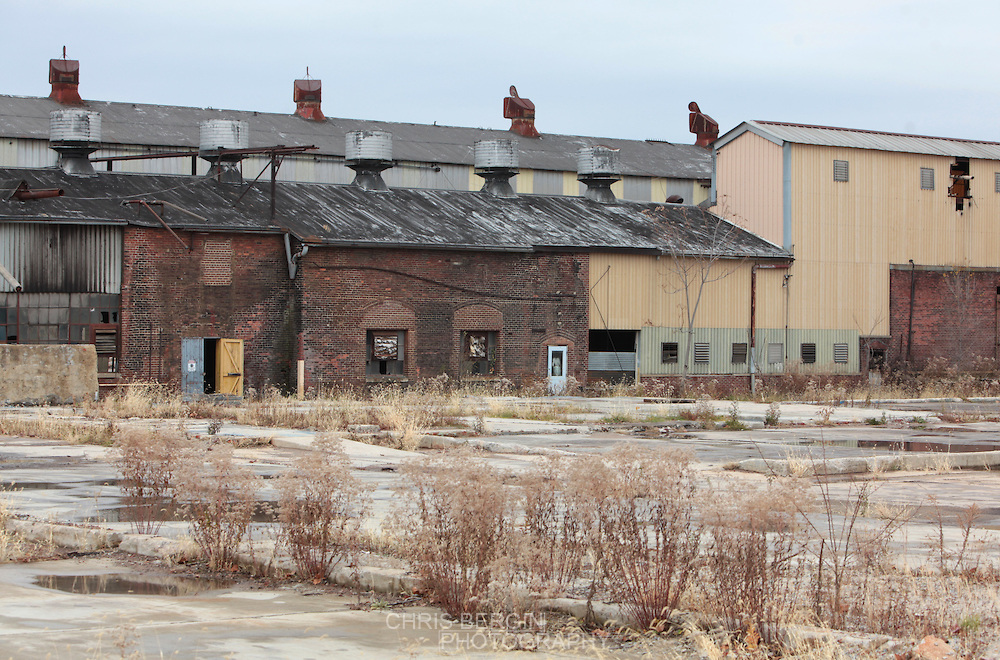
The decline began decades ago. At the beginning of this millennium, outsourcing was the big thing, especially in the US. The service economy was the future. And during this golden age of globalization, all the metallurgical companies moved to China, allowing Western economies to focus on higher-value-added services, such as finance. Coming from Germany, a country with a strong industrial tradition, I noticed a lot of disdain for industry among the elites of London and New York. I’ve argued that Germany has specialized too much in some of the old-tech industries, such as automobiles. But divesting basic industrial services, such as steel and chemical plants, is not wise for purely strategic reasons.
Metals, minerals, and chemicals are at the top of every supply chain, and most must be extracted. These raw materials are then processed into essential base materials such as steel, aluminum, or magnets. The material undergoes several further processing steps, and if the final product is complex, such as military radar or even a car, there are many additional links in the supply chain. It’s no wonder the German auto industry regularly breaks into a sweat when China restricts the supply of a single component, such as a crucial mid-range semiconductor. Without that component, their engines are useless.
But the specific advantage that both Russia and China have over the West is not only their wealth of metals and minerals, but also their ability to process them. China’s expertise in processing raw materials is unparalleled: there is extensive know-how for producing rare earth magnets from neodymium. And we are currently paying a high price for our fetish for the service sector. I blame the macroeconomists. Standard macroeconomic models don’t consider supply chains. The goods simply arrived at our door. These models worked in the favorable conditions of a globalized, multilateral trading system, but not in our current world.
If the Prussian military historian Carl von Clausewitz were still alive today, he would be interested in supply chains. When he was active, the major powers had numerous blacksmiths and sweatshops to produce weapons, cannons, and ammunition. Their bottleneck was money and soldiers. But he understood that strategy depended on the “hard mathematics of supply.” Today, you can’t claim military strategy without a clear understanding of your supply chains.
And if Putin and Xi Jinping understand one thing, it’s industrial supply chains. Putin wrote his doctoral thesis on Russia’s mineral resources and called for their nationalization. Western commentators were obsessed with whether he had plagiarized his thesis. But a far more important question is why he chose that particular sector as the topic to hone his plagiarism skills, rather than the financial sector.
Xi formed his economic views as a young man while watching the decline of the Soviet Union, a country known for its heavy industry. Xi became a champion of modern industry. He refuted the lazy assertion that governments can’t pick industrial winners. China does this all the time. The difference is that they choose industries, not companies. They chose, among other things, rare earth metals, magnets, car batteries, electric cars, solar panels, and robotics.
Can any of us name a Western leader interested in mining? Or knowledgeable about downstream industrial processes? Surely that’s something for people in anoraks? Trump was a prime real estate developer before entering politics. Emmanuel Macron was an investment banker. Keir Starmer and Friedrich Merz were lawyers. Meanwhile, successive US governments have chosen to transform industrial heartlands into rust belts, which has ultimately limited their military-strategic options. They can choose to become protectionist, as they did under Trump. Or they can pursue regime change in far-flung countries, as they did under George W. Bush. But they can’t pursue both simultaneously.
Imagine the nightmare scenario for the West: a simultaneous invasion by China of Taiwan, by Russia of the Baltic republics, and by North Korea of South Korea. I don’t think this is particularly likely, as each country has its own tactical and strategic timetable. As long as Russia is fighting in Ukraine, it is incapable of waging another land war.
But the West would be unprepared for even one of these scenarios. If China were to attack Taiwan now, the US might try to stop it—especially if China were to restrict semiconductor supplies. But it’s far from clear whether Trump would be prepared for a protracted conflict with another nuclear superpower. If you’re running out of missiles after a week of fighting Iran, how can you possibly face another enemy?
I have to admit, I found Trump’s pacifism during the election campaign one of his most appealing qualities. He seemed to have broken with the failed policies of some of his predecessors. The US’s war record is dismal. The country hasn’t had a successful conflict since Korea. They’ve completely ruined the Middle East. I don’t want to speculate about what or who got him into this—he doesn’t seem to know himself. But it will be the defining moment of his entire presidency.
Perhaps some of these scenarios can be mitigated. The oil price could certainly fall if shipping in the Strait of Hormuz returns to normal. But I don’t see a scenario that brings peace and stability to the Middle East while simultaneously maintaining economic stability in the rest of the world.
However, I do see a scenario that delivers neither.