
Why Wealthy Jews like Google Co-Founder Sergey Brin Are Rethinking Their Political Alliances With the Left
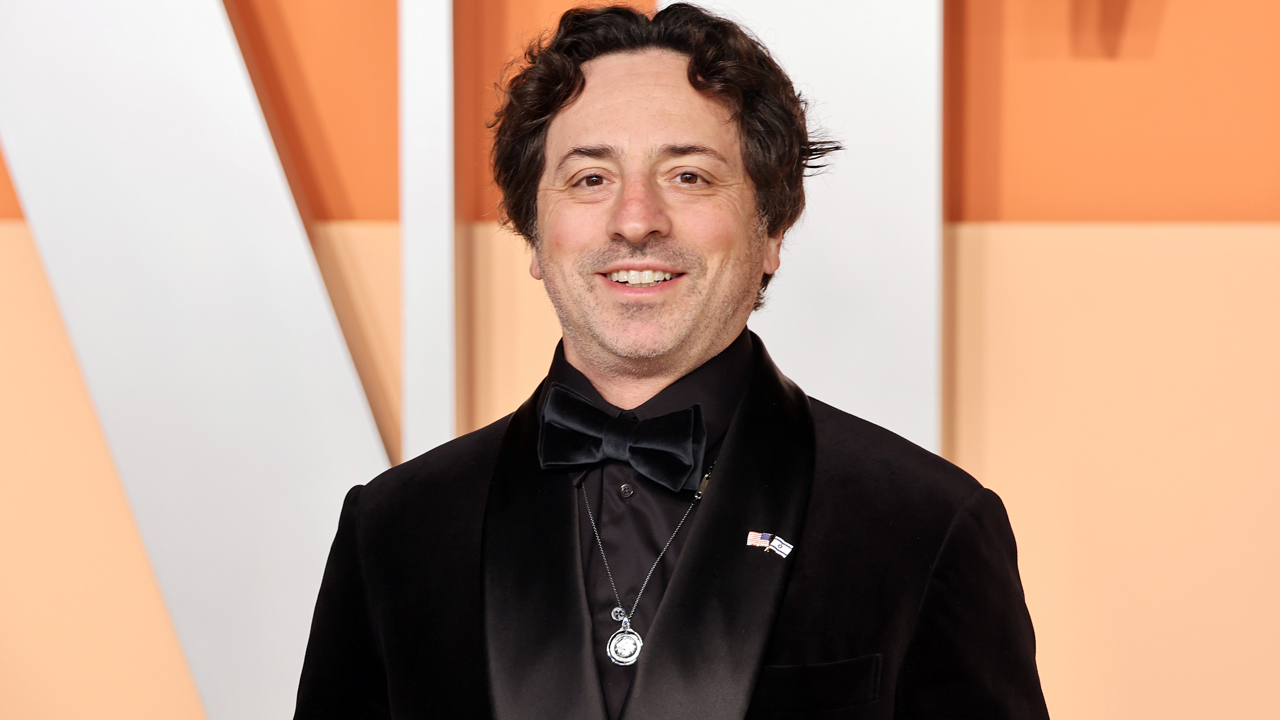
The post-October 7 landscape has triggered a profound “vibe shift” across the Jewish diaspora, forcing a long-standing alliance with progressive institutions into sudden, irreparable decay. As the gentile Left have turned against their Jewish patrons on the issue of Palestine, many prominent Jewish figures are finding themselves in an ethnic “awakening” of sorts, leading them to abandon their Democratic comfort zones and explore new, sometimes tactical, overtures to the Right. Nowhere is this realignment more striking than in the changing political trajectory of Google co-founder Sergey Brin, whose recent shift from loyal Democratic donor to anti-tax crusader and outspoken critic of liberal institutions mirrors a broader trend of Jewish elite departure from the Left.
Facing California’s proposed billionaire wealth tax, which could have cost him an estimated $13 billion, Brin relocated his primary residence from California to a $42 million mansion on the Nevada side of Lake Tahoe. He then donated $57 million to fight the proposed tax, bankrolling a group called “Building a Better California,” according to The New York Times. In a rare public statement, Brin explicitly invoked his Soviet upbringing to frame his opposition. “I fled socialism with my family in 1979 and know the devastating, oppressive society it created in the Soviet Union. I don’t want California to end up in the same place.”
That public stand represented a significant shift for a figure long known for political reticence. Brin has historically maintained a low public profile on political matters, preferring to let his philanthropy and his work speak for themselves. But the wealth tax fight and his subsequent donations to Republican candidates suggest a billionaire whose political identity is evolving in ways that reflect both his origins and his anxieties about the present moment in a post-October 7 world where many Jews worldwide have experienced an ethnic “awakening” of sorts.
To understand this shift in his political alignment, one must look back at the origins of his worldview. The seeds were sown decades earlier in a very different political climate. Sergey Mikhailovich Brin was born on August 21, 1973, in Moscow, Soviet Union, to Michael Brin, a mathematician and economist, and Eugenia Brin, a NASA research scientist. His family’s decision to emigrate was driven directly by institutionalized anti-Semitism. As his father recounted, a pivotal moment came in 1977 when he returned from a mathematics conference in Warsaw and resolved that the family must leave the Soviet Union. They applied for their exit visa in September 1978 and were granted it in May 1979, spending time in Vienna and then Paris before arriving in the United States on October 25, 1979, when Sergey was six years old.
The Hebrew Immigrant Aid Society played a critical role in helping the Brin family resettle in America. Decades later, Brin repaid that debt. In 2009, on the 30th anniversary of his family’s arrival, Brin gave $1 million to HIAS as a token of appreciation for HIAS helping his family flee anti-Semitism in the Soviet Union and build a life in America. “I would have never had the kinds of opportunities I’ve had here in the Soviet Union, or even in Russia today,” Brin said to the New York Times in an interview. “I would like to see anyone be able to achieve their dreams, and that’s what this organization does.”
Brin’s Jewish identity is primarily ethnic and cultural rather than religious, a pattern consistent with many Soviet Jewish émigré families. His father Michael described the family’s Jewish experience to Moment Magazine in cultural terms: “We felt our Jewishness in different ways, not by keeping kosher or going to synagogue. It is genetic.” Brin has not been publicly affiliated with a synagogue or religious denomination.
This lack of traditional religious practice has not precluded investment in Jewish national survival. Brin has visited Israel multiple times. A particularly notable visit came in 2008 for Israel’s 60th anniversary celebrations, during which he gave an interview to the Israeli newspaper Haaretz. In that interview, he praised Israel’s technological achievements, stating: “It’s just incredible. I was generally familiar with the history of Israel, but really seeing… what’s been really accomplished… out of nothing, just dirt.” Through Google, Brin has also contributed to Israel’s technology ecosystem. Google operates offices in Tel Aviv and Haifa and has made extensive investments in Israeli startups.
In July 2025, Brin made his most direct and public comment on Israel and antisemitism. In an internal Google DeepMind employee forum, he weighed in on a debate over a United Nations report authored by Francesca Albanese, the UN’s special rapporteur on the occupied Palestinian territories, which alleged that tech companies including Google and Alphabet had aided what she called “the genocide carried out by Israel” in Gaza through cloud and AI services.
Brin wrote in response: “With all due respect, throwing around the term genocide in relation to Gaza is deeply offensive to many Jewish people who have suffered actual genocides. I would also be careful citing transparently antisemitic organizations like the UN in relation to these issues.” When screenshots of the exchange leaked, Brin told The Washington Post: “My comments came in response to an internal discussion that was citing a plainly biased and misleading report.”
This forceful public stance marked a striking contrast with the political profile Brin had cultivated for most of his career. For most of his public life, Brin’s political donations placed him firmly in the Democratic-aligned camp of Silicon Valley philanthropy. He donated $5,000 to Barack Obama’s 2012 reelection campaign and $30,800 to the Democratic National Committee, per OpenSecrets. A 2016 all-hands meeting at Google — footage of which leaked in September 2018 — showed Brin and Larry Page expressing distress at Donald Trump’s election victory in front of employees.
In early 2026, Brin donated to Steve Hilton, a Republican candidate for California governor, and separately contributed to an independent committee supporting centrist Democrat Matt Mahan, the mayor of San Jose. He also contributed $20 million to “Building a Better California” focused on affordable housing and pro-business policies.
Brin’s pivot is not a sudden ideological conversion, but a calculated realignment driven by a newly awakened racial collective consciousness that came about after Hamas’ attack against Israel on October 7, 2023. October 7 shattered the sense of security held by Jews worldwide, but it was the radical and hostile reaction of leftist organizations that proved to be the deeper wound.
For many in organized Jewry, the sight of their golems cheering on, or justifying, the campaign against Israel served as a jarring wake-up call to the fragility of their supposed political alliances. These “October 8 Jews” have simply reached a threshold where the progressive skinsuit no longer fits their survival needs. Recognizing that the institutional Left has become a liability, they are now steering their influence toward the Trump movement, the most explicitly philosemitic force in recent memory.
It is a masterclass in strategic flexibility: when one political vehicle begins to threaten the interests of the tribe, it is discarded in favor of a new one. For Jewish oligarchs like Sergey Brin, ideologies are not sacred commitments but tools to be wielded, swapped, and abandoned as the requirements of ethno-political survival dictate. Interests, not principles.