
You’re Asking the Wrong Question — Why Did Abolition Take Hold at All?
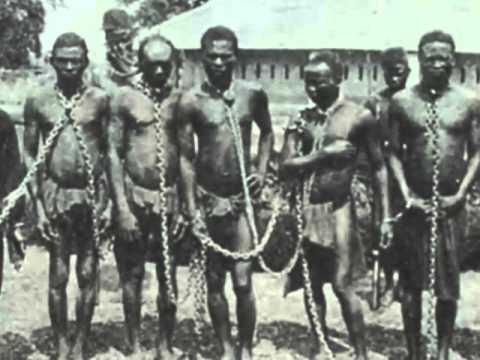
How did we go from instituting increasingly draconian laws aimed at solidifying the position of racial slavery to abolishing it entirely?
Well, it didn’t happen overnight.
When we left off, we were in the late 1600s and slavery wasn’t abolished in the British Empire until 1807, 1865 in the US, and later in other locations.
This map gives you a general idea of the progress of anti-slavery legislation.

Source: https://vividmaps.com/abolition-of-slavery/
It’s complicated – The reason I say “general idea” is because the creator didn’t make a distinction between serfs and slaves. For example, if one looks at France, for example and sees 1315 as the date slavery was outlawed. However, Haiti was a French possession and had slavery until it proclaimed autonomy from France in 1804, so how is the 1315 date possible. Well, two reasons. The first is that empires often outlawed slavery at home before extending those laws to the rest of their possessions. Secondly, the dates sometimes refer to serfs. In this case, the 1315 date was when King Louis X issued the Edict of 1315, which freed serfs in the royal domain, declaring that “France signifies freedom.“ It’s a legitimate milestone, but serfdom lingered in practice in some regions for much longer and slavery even longer than that. You’d have to look up every date on this map to determine exactly what it represents, and if I did that, I wouldn’t have time to write the article. My advice? You can largely believe the dates in the Americas. I’d be skeptical of ones in the rest of the world.
Of course, suggesting that it took 200 to 250 years for slavery to be abolished does what we in the West always seem to do, assume we are the center of the world.
If we overcome our myopia, we are reminded that the institution of slavery was global and lasted for thousands of years.
So why did abolition take so long?
That’s the wrong question.
The right question is why did abolition occur at all?
The New Idea
Picture the worst thing you’ve ever done in your life.
Got it?
That’s who you are.
“Wait,” you say, “I’ve learned from that mistake and tried to make amends for it. I think I’ve also done quite a few good things.”
Maybe so. Doesn’t matter.
At least not if you support the progressive worldview.
There is sin, but no redemption. At least not for the West.
This is one of the primary flaws with the progressive narrative of slavery. There are others, of course, not the least of which is that progressives blame the West for what was a global institution.
But we’ve covered that already, here, here, and… well you get the idea.
For thousands of years nearly every civilization accepted slavery.
Not tolerated, accepted.
Greeks.
Romans.
Arabs.
Africans.
Chinese.
Indigenous societies.
Europeans.
And then Europeans did what no other civilization in history did.
They ended it.
But before there could be a political revolution, there needed to be a moral one.
Three institutions combined to drive this moral revolution: Christianity, Enlightenment Thought, and Classical Liberalism.
Christianity’s most important contribution was the equality of souls before God. Prior to this, societies were hierarchical and people were divided into hereditary classes, castes, estates, etc., each with different privileges and obligations with slavery being just one of them. Religious traditions often emphasize duties and proper social relationships rather than universal human equality.
If “we’re all equal before the eyes of God,” why was Christianity the predominant religion in Europe for over 1000 years before slavery ended?
Some of it is the inertia of society. Long-held beliefs are difficult to change.
Some of it is the early thinking of the Church. Early Christians did not view their mission as restructuring society. They viewed it as preparing souls for eternal life. The central question was not, “How do we eliminate suffering?” but “How do we live faithfully despite suffering?”
However, while Christianity did not end slavery, it planted a seed. A seed that asked, “if every person bears the image of God and possesses equal worth before Him, shouldn’t social institutions reflect that reality?”
The Enlightenment, which took place roughly between 1685–1815, was a European intellectual and philosophical movement that emphasized reason, empiricism, individualism, and skepticism of traditional authority. Its core tenet was that human beings could understand and improve their world through rational inquiry rather than relying on revelation, tradition, or inherited power structures.
Skepticism is the key to overcoming societal “traditions” like slavery. If you want to change society you first have to ask “why do things need to be this way?”
However, it wasn’t the only Enlightenment contribution. Others included:
- Natural Rights Theory – John Locke (1689), among others, argued that all people possess inherent rights to life, liberty, and property. This created a question: how do you justify owning another human being under a natural rights framework? Answer: You can’t. Abolitionists took hold of this contradiction and never let go.
- Universal Humanity – Thinkers like Montesquieu mocked slavery as irrational and unjust. Plenty of Enlightenment figures continued to own slaves and attempted to rationalize it, but the intellectual current ran against it.
Between roughly 1689 and 1859, thinkers like Locke, Adam Smith (1776), Montesquieu, and John Stuart Mill (1859) presented ideas which became the foundation of Classical Liberalism which found political expression with the American and French Revolutions. Specifically, it was the individual, not the state, that was the fundamental unit of society, and that it was the job of the government to protect individual rights rather than direct people’s lives.
Classical Liberalism’s contributions were in the economic, legal, and political realms.
Smith and other Classical Liberal economists undermined the pro-slavery economic argument by proving that slave labor was less economically productive than free labor.
Classical Liberalism insisted that the law must apply equally to everyone. A legal system that recognized some humans as property rather than rights-bearing individuals was not a legitimate legal system at all; it was theft backed by state violence.
Classical Liberalism reinforced the logical contradiction of slavery; you cannot argue for limited government and individual sovereignty while owning human beings.
Finally, Classical Liberalism opposed arbitrary government. While King Louis XIV of France had once declared L’État, c’est moi (“I am the state”), Classical Liberalism demanded a “government of laws, and not of men” leading to constitutional governments with legislatures, elections, and free presses. The tools that abolitionists would use to build movements, pass legislation, and hold governments accountable.
The three-way combination — Christianity, Enlightenment Thought, and Classical Liberalism — worked precisely because each supplied something the others couldn’t. Christianity provided the moral fire. The Enlightenment provided the rational framework. Classical Liberalism provided the political architecture.
Slavery was a universal institution, but the ideas that eventually undermined slavery were products of Western civilization.
Ideas alone don’t change the world, though.
People do.
Someone still had to use the rules and the tools.
Who were they?
The Abolitionists
While Christianity, the Enlightenment, and Classical Liberalism laid the groundwork for the abolition of slavery, it was not inevitable because each also had internal contradictions that slave defenders exploited.
Christianity furnished scriptural defenses like the Curse of Ham which pro-slavery theologians used to defend slavery for centuries.
The Enlightenment didn’t land on “the truth” immediately but toyed with racial pseudoscience that classified Africans as a separately and inferiorly created people, providing slavery an intellectual veneer it had previously lacked.
Classical Liberalism also delayed abolition by creating property rights arguments which were used to defend slaveholders’ “right” to their “property,” while free market ideology made some liberals reluctant to impose abolition by government force.
Christianity, The Enlightenment, and Classical Liberalism didn’t end slavery, but it gave abolitionists the ability to argue that slavery was inefficient and impractical and more importantly, wrong.
It is beyond the scope of this article to explain the abolition movement in detail, but it is indisputable that the moral urgency that drove the movement came largely from the evangelical Christian abolition movement.
Many abolitionists are still famous today including William Wilberforce, Frederick Douglass, William Lloyd Garrison, and Harriet Beecher Stowe, however, they did not invent abolitionism.
The intellectual foundations of the movement were laid by Quakers, especially Anthony Benezet (1713–1784) who argued that Africans were fully human, spiritually equal, and entitled to liberty, something that sounds obvious today, but which was radical in a world where slavery was almost universally accepted.
The next abolitionist giant, Granville Sharp (1735–1813) helped translate moral objections to slavery into legal and political actions. He famously organized the legal challenge and developed the legal argument that led to the Somerset v. Stewart (1772) ruling.
James Somerset was an enslaved African owned by Charles Stewart who was brought to England from the American colonies in 1769. After Somerset escaped and was recaptured, Stewart intended to send him to Jamaica, where Somerset would be sold and forced back into slavery. However, a group of Englishmen sympathetic to Somerset applied to the courts for a writ of habeas corpus, arguing that he was being unlawfully imprisoned.
The court was faced not with a question regarding the legality or morality of slavery, but with the simple question: “can a slave owner forcibly remove an enslaved person from England against his will?”
William Murray, 1st Earl of Mansfield (aka Lord Mansfield), ruled that slavery was so severe a condition that it could exist only if explicitly authorized by positive law, which is to say by legislation.
“The state of slavery is of such a nature that it is incapable of being introduced on any reasons… but only by positive law.”
— Lord Mansfield
As England had no statute establishing slavery, Stewart had no legal authority to force Somerset onto a ship and send him to Jamaica.
Somerset was therefore discharged.
While the case freed Somerset, it did not:
- abolish slavery throughout the British Empire,
- free every enslaved person in England,
- make slave ownership illegal.
In fact, slavery continued throughout Britain’s colonies for another six decades. However, public opinion quickly expanded its meaning with newspapers and abolitionists interpreting the ruling to mean:
“As soon as a slave sets foot on English soil, he is free.“
While this was not, strictly speaking, what the ruling meant, the symbolic impact far exceeded the technical legal effect.
The Somerset case gave abolitionists three powerful advantages.
- It suggested that English law recognized liberty as the default condition unless Parliament expressly provided otherwise.
- It embarrassed Britain. Many Englishmen began to ask how a nation that celebrated constitutional liberty could simultaneously profit from slavery overseas.
- It encouraged activists such as Sharp to believe that slavery could be attacked through both moral persuasion and legal arguments.
Taken together, abolitionists had convinced the public that slavery wasn’t just unfortunate, it was unjust.
These were the foundations that others built on. Key amongst these were:
- Olaudah Equiano (c.1745–1797)
- Thomas Clarkson (1760–1846)
- William Wilberforce (1759–1833)
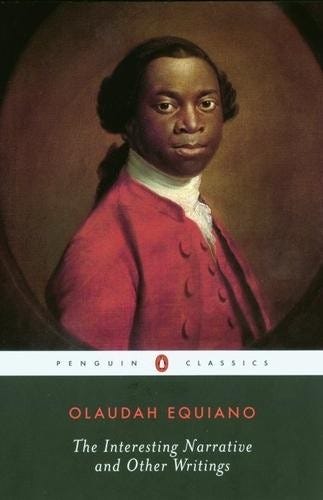
In 1789, Equiano published his autobiography, The Interesting Narrative of the Life of Olaudah Equiano. The book describes Equiano’s life from his childhood in what is now southeastern Nigeria through his kidnapping into slavery, the brutal Middle Passage across the Atlantic, and years of enslavement in the Americas. It details his eventual purchase of his own freedom and his emergence as a leading voice against the slave trade.
While Equiano developed close relationships with many leading abolitionists, including Thomas Clarkson, Sharp, and Wilberforce, his greatest contribution was his speeches and writings which gave readers a powerful firsthand description of the horrors of the slave trade. Equiano combined personal memoir with broader arguments about human dignity, freedom, and morality.
Clarkson was a British writer and reformer who acted as what might best be described as the movement’s investigative journalist. After an essay he wrote on slavery won a prize at Cambridge, Clarkson became obsessed with gathering evidence. He interviewed sailors, assembled enormous amounts of testimony, collected instruments used on slave ships, and documented mortality rates.
The facts he collected helped transform abolition from a religious concern into a public movement.
While others were key to the intellectual development of the abolitionist movement, or gave it a face, Wilberforce gave the movement something the others couldn’t, a voice in parliament. He served as a member of parliament from 31 October 1780 to February 1825, heading the parliamentary campaign against the British slave trade for 20 years until the passage of the Slave Trade Act 1807 which outlawed the British slave trade (and which we will cover in more detail later). Although this did not immediately free the slaves, it marked a major turning point in British policy and international abolition efforts.
Note that Wilberforce spent 20 years introducing anti-slavery measures in Parliament despite defeat after defeat. Was it simply a matter of persistence that convinced British society to translate abolitionist beliefs into law?
Or did something else light a fire under the members of parliament?
Haiti and the Shockwave Through the Atlantic
Great Britain was an island nation but that does not mean it existed in solitude or that it was shielded from the events of the world. By the 1790s, abolition was no longer merely a debate among philosophers and reformers. It had become entangled with revolution, war, empire, and fears of social upheaval.
In 1789, Saint-Domingue (Haiti) was the wealthiest and most prosperous colony in the Caribbean and the most profitable possession of the French colonial empire. It produced 60% of the world’s coffee and 40% of the sugar imported by France and Britain. To say that it was built on the backs of slaves is an understatement. There were an estimated 452,000 black slaves on the island, almost half the total slave population in the Caribbean and they outnumbered the white population by almost eight to one.
There are many statistics which might explain why the colony was primed to explode, but perhaps these two are the best:
- Two-thirds of the slaves were African-born, and they tended to be less submissive than those born in the Americas and raised in slave societies.
- The slave population declined at an annual rate of two to five percent, due to overwork, inadequate food and shelter, insufficient clothing and medical care, and an imbalance between the sexes, with more men than women.
In August 1791, the slaves revolted and within weeks, the number of slaves participating swelled to approximately 100,000. By 1794, after roughly 4,000–6,000 whites and perhaps 50,000–100,000 black slaves and rebels had been killed, France abolished slavery in Saint-Domingue, effectively recognizing that the rebels had won their freedom.
However tragic the event was for those living in the colony, its ramifications went well beyond the colony’s borders.
Why?
Remember Bacon’s Rebellion? The one that put fear into the hearts of that colony’s elites, and which led to a broad restructuring of Virginian society?
Well, Bacon’s rebellion involved roughly 300–1,000 men at its peak and resulted in perhaps 100 combat deaths.
The enslaved people of Haiti demonstrated that enslaved people would fight for freedom themselves.
Different people drew different lessons from Haiti.
Abolitionists saw slavery’s instability.
Slaveholders saw slavery’s dangers.
Abolitionists had spent decades stirring the pot.
Haiti set it to boil.
What’s next?
Understanding history is more than memorizing facts and reading books. It requires curiosity and a desire to answer questions.
However, if we are to learn anything, we must ask the right questions.
The primary issue with how slavery is taught today is presentism, the practice of interpreting or judging the past through the lens of present-day values.
It leads to mistakes in what we view as obvious and what we choose to question.
“Why was slavery permitted in the West?” is a bad question because the answer is so obvious. It was permitted because slavery had always been permitted.
“Why did abolition occur at all?” is the question we need to answer.
The Haitian slaves were not the first to rebel.
Western abolitionists were not the first to criticize slavery.
The mystery was not that slavery existed in the 18th century, the mystery is why did it come to an end in the 19th?
The answer is that abolitionists were able to combine the moral fire of Christianity with the rational framework of the Enlightenment to convince a critical mass of British society that slavery was not simply unfortunate, but unjust, permitting abolitionists to use the political architecture provided by Classical Liberalism to outlaw it.
That’s where we’ll pick up, and conclude, next time.
That’s right, after months of promises, we will finally get to the story of a small Royal Navy squadron that was assigned a momentous task, put an end to the Atlantic Slave Trade.
https://hoisttheblackflag.substack.com/p/youre-asking-the-wrong-question